Is Dipladenia (Mandevilla) in the Apocynaceae family toxic? Planting methods and flowering period explained
Mandevilla, also known as red wrinkled trumpet vine, double-gland vine, double-happiness vine, Confederate jasmine, and red allamanda, so what are the planting methods for Mandevilla? When does it bloom? Is it toxic? According to available information, Mandevilla likes a warm, humid environment with plenty of sunlight, and can also grow in shade. Mandevilla has strong adaptability to soil, but sandy loam rich in humus with good drainage is best.
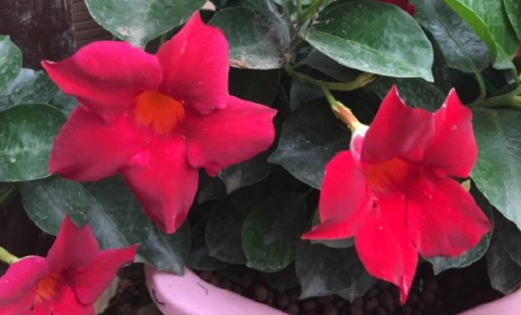
1. What are the planting methods for Mandevilla?
Light requirements
Mandevilla likes a warm, humid environment with plenty of sunlight. Sufficient light is needed to ensure normal growth of Mandevilla; partial sun to full sun is fine. Of course, Mandevilla can also be kept in a slightly shaded location.
Water and fertilizer management
Water and fertilizer management should be done well during the care of Mandevilla. When watering, watering should be controlled; do not let it become waterlogged or too dry, which would cause poor plant growth. Good water and fertilizer management can form a well-developed root system, and only then will Mandevilla grow vigorously. During the growing season, a compound fertilizer can be applied 3—5 times as a top dressing.
Temperature requirements
The optimal temperature for Mandevilla growth is between 20—30°C, and it is best not to exceed 35°C. In winter, when the temperature is too low, it is prone to cold damage, so attention should be paid to maintaining the temperature in winter, preferably not lower than 10°C.
Soil selection
Mandevilla does not have high soil requirements and has strong adaptability, but sandy loam rich in humus with good drainage is best.
Propagation methods
Mandevilla is generally propagated by cuttings, and tissue culture can also be used for rapid propagation.
Pruning
There are generally two times for pruning Mandevilla. Pruning after the flowering period and pruning in spring. Pruning after the flowering period can shape Mandevilla and make it more attractive. Pruning old plants in spring can promote the sprouting of new branches.
Precautions
Light should be sufficient; insufficient light will cause Mandevilla to bloom less.
When fertilizing, the amount of nitrogen fertilizer applied should be controlled, so that the Mandevilla plant does not grow too vigorously due to excessive nutrients, which would affect flowering and reduce the number of blooms.
Although Mandevilla has strong stress resistance and is less susceptible to diseases, attention should still be paid to preventive measures.
2. When does it bloom?
Flowering period
The flowering period of Mandevilla is actually quite long, mainly concentrated in summer and autumn. From blooming in April to the flowers falling in October, it can last nearly half a year. It can be said to be very long-lasting.
Notes on flowering
The flowering period of Mandevilla is mainly summer and autumn, but if cared for properly, it can also bloom in other seasons.
After a long flowering period, Mandevilla has already entered autumn. Flowering consumes a large amount of nutrients, and after the flowers fall, a large number of old branches, dead branches, and spent flowers remain. Therefore, pruning can be done after the flowering period; pruning at this time is mainly for shaping, to make the whole plant look more attractive.
Reduced flowering may be due to insufficient light or excessive fertilizing. In daily care, attention should be paid to increasing light exposure and fertilizing reasonably to avoid excessive nutrients and overgrowth of the plant.
3. Is it toxic?
Many plants in the Apocynaceae family are toxic, but whether Mandevilla is toxic currently has no clear conclusion. Mandevilla has a strong fragrance, and some people worry whether this scent could poison people. However, so far, there appear to be no cases of poisoning from growing Mandevilla. Everyone likes this fragrance, and few people feel discomfort because of it, so although Mandevilla's fragrance is strong, everyone can still grow it with peace of mind.
Precautions for growing Mandevilla
When growing Mandevilla indoors, attention should be paid to providing sufficient light. If light is insufficient, or the growing environment is too shaded, it will cause Mandevilla to bloom less.
Growing Mandevilla indoors can purify the air, and these beautiful flowers also give off a strong fragrance, making the indoor environment purer.
In addition, when growing Mandevilla, as long as you pay more attention, you can reduce the possibility of poisoning. You should know that Mandevilla may also have effects you never expected!