-
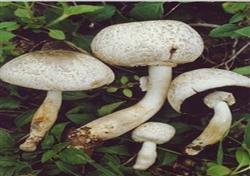
What to Do About Dead Mushrooms in Straw Mushroom Cultivation? Detailed Control Measures
Straw mushroom (Volvariella volvacea) is a fungus that fruits at high, constant temperatures, and it has strict environmental requirements. Based on the biological characteristics of straw mushroom and the author's years of experience in straw mushroom spawn production and cultivation practice, this article briefly discusses the causes of dead mushrooms in straw mushroom cultivation and the countermeasures, for readers' reference. 1. Causes of dead mushrooms in straw mushroom cultivation. 1. Poor coordination between ventilation and moisture retention in the mushroom house. Straw...
-
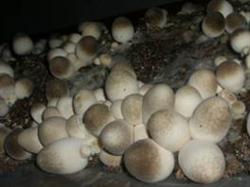
What exactly causes the death of young straw mushroom (Volvariella volvacea) fruiting bodies?
1. The primary condition for early cultivation of straw mushrooms is to have a mushroom house with a certain degree of heat preservation and moisture retention. At present, mushroom houses generally take three forms: those built with vegetable pipe sheds, those built with foam boards, and those converted from brick-and-tile structures. 2. For early cultivation of straw mushrooms, low-temperature strains should be selected: choose low-temperature strains and keep the mushroom house temperature at around 26°C...
-
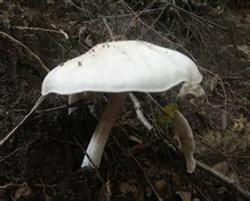
Chemical control methods for weed molds and pests in straw mushroom cultivation
Control measures for Coprinus (ink cap) weed molds: (1) Use fresh compost material as much as possible; sun-dry it for 2 days before use, or soak the raw material in lime water. (2) Control the nitrogen content of the compost; when using fermented material or fermented cultivation, the amount of wheat bran or rice bran added should not exceed 5%, and poultry and livestock manure should be kept at 3%. Regardless of the material used for cultivation, double fermentation is best...
-
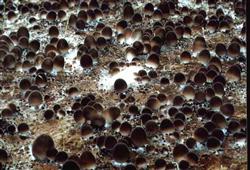
What are the common problems in the process of straw mushroom cultivation
1. Appearance of clustered mushrooms: Too large a seeding rate and uneven seeding will lead to clustered mushrooms. Therefore, the seeding rate should be controlled at 0.2-0.3 kg/sq m. The seeding method can be layer seeding, mixed seeding or broadcast seeding; it is best not to use hole seeding. 2. Aging of spawn: If aged spawn is used, although mycelial germination and colonization are normal, and the yield of the first flush is also good. But the yield of the second and third flushes is significantly reduced, and the overall yield decreases. Therefore, when purchasing spawn, you must pay attention.
-
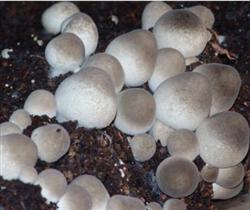
How to Increase Straw Mushroom Yield? Master These Four Key Measures
I. Timing and Production Methods Indoor cultivation can use mushroom houses and other idle rooms. Outdoor cultivation can use either small arch sheds or plastic greenhouses. Whichever method is used, it must meet the requirements of shading, wind protection, heat preservation and moisture retention. The extended cultivation time is basically close to but still below the optimum for straw mushroom growth...
-
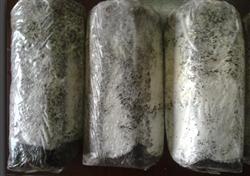
How to prevent vigorous mycelial growth in straw mushrooms? Three practical methods
(1) Do not make the growing medium too wet; the moisture content should not exceed 70%. When the temperature is low, choose noon or the afternoon for appropriate ventilation. (2) After spraying the fruiting water, open the doors and windows or remove the film to ventilate and exchange air, so that the medium temperature drops appropriately; ventilate until there are no water droplets on the surface of the medium, then appropriately close the doors and windows or cover with film again. (3) When cultivating with cottonseed hulls or waste cotton...
-
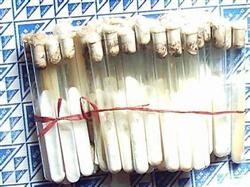
Detailed Guide to Methods and Tips for Selecting Straw Mushroom Spawn
Superior straw mushroom spawn is produced on a straw substrate and overwintered (10-15°C). After overwintering, those proven by early cultivation to be high-quality and high-yielding are selected. Mother spawn (first-generation spawn) is then obtained through tissue isolation and further expanded for culture, to supply spawn for that year's production. Mushroom growers should pay attention to the following points when selecting straw mushroom spawn: 1. Straw...
-
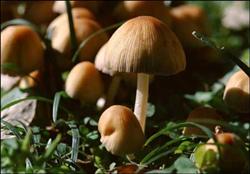
How to prevent red mushroom disease in straw mushrooms? Introduction to practical methods
"Red mushroom disease" may be brown rot, also known as blister disease, wet bubble disease, etc. It mainly affects button mushrooms, straw mushrooms, oyster mushrooms, etc. The disease is caused by a pathogen called Mycogone perniciosa. The main symptoms are: the conidia and chlamydospores of Mycogone perniciosa only infect the fruiting bodies, not the mycelium. When the fruiting body is lightly infected, ...
-
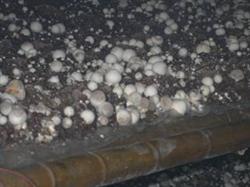
Summer cultivation of straw mushrooms is timely; the planting window must not be missed
1. Cultivation season: Straw mushrooms are a high-temperature mushroom species. The suitable temperature range for straw mushroom mycelium growth is 15-40°C, with the optimum temperature being 30-35°C. The fruiting body growth temperature is 26-34°C, with the optimum temperature being 28-30°C. Cultivation is generally carried out from June to August each year. 2. Cultivation materials: cottonseed hulls, rice straw, corncobs...
-
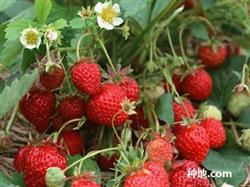
Detailed Explanation of Key Techniques for Keeping Strawberries Safe Through the Summer
How can strawberries be kept safe through the summer? Please advise. To keep strawberries safe through the summer, the following methods can be used: irrigate to retain moisture, shade to lower the temperature. Strawberry roots are relatively shallow and have weak drought resistance, and the leaf area is relatively large, so evaporation is vigorous. If the plants are not watered frequently to keep the soil moist, the stems and leaves can easily wilt and die. Therefore, when the ground surface turns white...
条件筛选