-

Key Technical Points for Cultivating Edible Mushrooms with Rice and Wheat Straw
Technique for Cultivating Edible Mushrooms with Rice and Wheat Straw
-
-
Application of Heating Agents in Straw Cultivation of Edible Mushrooms and Methods of Disease Prevention and Control
Heating Agents and Their Application in Straw Cultivation of Edible Mushrooms
-
Edible Mushroom Pest and Disease Control Methods and the Utilization of Dry Rice Straw as a New Substrate
Dry Rice Straw as a New Substrate for Edible Mushrooms
-
How are edible mushrooms cultivated? A detailed guide to rice straw and wheat straw cultivation techniques
Techniques for cultivating edible mushrooms with long rice (wheat) straw
-
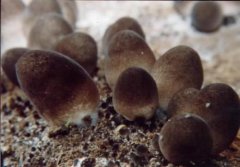
Straw Mushroom Spawn: The Difference Between Straw Mushrooms and Shiitake Mushrooms, How Much Do Straw Mushrooms Cost Per Jin, and Do Straw Mushrooms Need Blanching?
Do you know what straw mushrooms look like? What difference is there between them and shiitake mushrooms? How much do straw mushrooms cost per jin, and when cooking them, do they need to be blanched in advance? Straw mushrooms and shiitake mushrooms grow in different environments, which is the biggest difference between the two. Wild straw mushrooms mostly grow on
-
Key Technical Points for High-Efficiency Cultivation of Straw Mushrooms in Winter
Straw mushrooms (Volvariella volvacea) are a high-temperature, high-humidity type of fungus, suited to growing in an environment of constant temperature and stable humidity. The suitable growing temperature for straw mushrooms is 23-25°C, and the relative air humidity is 85%-95%. Therefore, to move the high-temperature straw mushroom to cultivation in the lower temperatures of winter, it must be grown in greenhouses with good insulation capacity, which increases cost inputs such as heating. Moreover, straw mushrooms produced in winter sell for 2 times the price of those from conventional summer cultivation, so appropriate adjustments should be made in aspects such as the culture material formula and cultivation management, in order to
-
What to Do About Dead Straw Mushrooms? A Detailed Guide to New Prevention and Control Techniques
I. Causes of Dead Straw Mushrooms 1. Poor coordination between ventilation and moisture retention in the mushroom house. Straw mushrooms are aerobic fungi and need plenty of water; too much ventilation easily leads to water loss and death. Insufficient ventilation easily causes excessive carbon dioxide and death from oxygen deprivation. 2. Sudden temperature changes in the mushroom house. In southern China, most straw mushroom cultivation uses foam mushroom houses, which play an important role in maintaining constant temperature and humidity. However, if doors and windows are not closed in time when a typhoon strikes, or heating is not applied in time when freezing damage occurs, or ventilation and cooling are not carried out early enough during sustained high temperatures, or too much well water is sprayed on the floor,
-
Detailed Explanation of Key Points on Straw Mushroom Harvesting and Processing Techniques
After piling the straw and sowing, mushrooms begin to appear in 10-15 days (as quickly as about one week). The appropriate harvest time for commercial straw mushrooms is when the mushroom buds are about to rupture and the caps inside the volva have not yet opened. The specifications for canning are a diameter of 2 cm or more, a neat mushroom shape, an unruptured outer veil, and an unelongated enclosed stipe. The requirements for making dried mushrooms are a diameter of 4 cm or more and an unruptured outer veil. Those with a ruptured outer veil are slightly lower in quality, and those with opened caps are even worse; the latter can only be sold as substandard fresh mushrooms. For dried mushrooms, the mushroom buds should be cut longitudinally into two connected halves, arranged on a bamboo sieve or wire mesh sieve, placed on the racks of a specially made drying room, and dried over a slow fire. The initial drying temperature is 35-40°C, and as the moisture decreases, the temperature is gradually raised to 60-65°C, until the moisture content of the straw mushrooms reaches 12-13%.
-
Analysis of the Reasons for the High Economic Returns of Winter Cultivation of Straw Mushrooms
Straw mushrooms (Volvariella volvacea) are a type of fungus that thrives in high temperature and high humidity, suited to growing in an environment of constant temperature and stable moisture. Therefore, moving the heat-loving straw mushroom to winter cultivation requires growing it in greenhouses with good insulation capacity, which increases cost inputs such as heating. However, straw mushrooms produced in winter sell for 2 times the price of those conventionally cultivated in summer, so appropriate adjustments should be made to the substrate formula and cultivation management, among other aspects, in order to increase the input-output ratio and improve economic returns. The main techniques for winter cultivation of straw mushrooms are introduced as follows: 1. Select a suitable substrate formula, build a pile and ferment the straw mushrooms.
条件筛选