-

Pesticide levels exceed limits in Japanese strawberries and Chilean cherries
On the 15th, the Food and Drug Administration announced a list of 6 border inspection failures, among them a Canadian-imported energy bar, "POWER CRUNCH Whey Protein Crisp Lemon Meringue Pie Flavor," which was found to have excessive sweetener; 69.12 kg was intercepted at the border and destroyed.
-

Only 20% of imported Japanese strawberries pass pesticide residue testing
The Consumers' Foundation sampled local and imported strawberries in January this year. Of the twelve strawberry samples tested, only the Korean strawberries had no pesticide residues detected; the remaining eleven strawberry samples were found to contain one to seventeen types of pesticide residues, and six of them did not meet the allowable agricultural residue limits, giving an overall failure rate of 50%. Broken down by place of origin, Japan's failure rate was even higher
-

Amazon self-driving car company Zoox acquires strawberry-picking robotics startup Strio.AI
Zoox, now an Amazon-owned self-driving car company, announced earlier that it has acquired Strio.AI, a startup that builds robots for harvesting strawberries, and plans to integrate its technology into its self-driving vehicle designs.
-
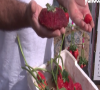
Giant Ilan Strawberry: Israel Grows a Palm-Sized World's Largest Strawberry, Each Weighing a Record 289 Grams
Israeli farmer Chahi Ariel from the Kadima area grew a giant strawberry in his own strawberry patch in 2021, weighing 289 grams, 5 times the weight of an ordinary strawberry, as if several strawberries had fused together, forming a fan shape, 18 cm long and 4 cm thick
-

Which fruits and vegetables have the most pesticide residue? 12 items including cherries, strawberries and bell peppers make the list
Fruits and vegetables contain dietary fiber, and parents all want their children to eat more of them. An American organization has listed 12 fruits and vegetables with the most pesticide residue, most of which are foods children love to eat. Parents, remember to wash your ingredients thoroughly! During the growing process, fruits and vegetables are sprayed with pesticides, and residue may remain even after washing. US Environmental
-

Korea Trade-Investment Promotion Agency (KOTRA) Invests in Smart Strawberry Farm in Australia
Smart Agriculture Report by Nongxun.net: According to a recent report by Yonhap News Agency, with the support of the Korea Trade-Investment Promotion Agency (KOTRA), a Korean smart agriculture company successfully signed a smart farm cooperation project with an Australian company. It is reported that the project will use Korean smart greenhouse and vertical farm technology in Australia
-
What are the main strawberry varieties bred in South Korea?
According to statistics from the Food and Agriculture Organization of the United Nations, in 2019 South Korea's total strawberry planting area was 6212 hm2, total production was 193,000 t, and export volume was 5259 t; South Korea's strawberry industry scale ranked 3rd in Asia and 7th in the world. Before 2000, most of the strawberry varieties grown in South Korea were Japanese varieties such as Toyonoka and Akihime.
-
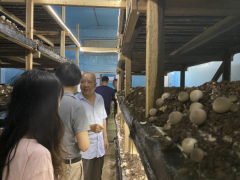
How to Grow Straw Mushrooms? A Hangzhou Farmer's Method of Turning Waste into Gold
Hu Qing Yu Tang is a well-known traditional Chinese medicine family in Zhejiang, producing a large amount of herbal residue every day. On nights when it rains a little, Chen Chunlin keeps watch over his mushroom shed, getting up once every hour at night to check the temperature and humidity of the mushroom beds. Chen Chunlin is the general manager of Hangzhou Gelyuying
-
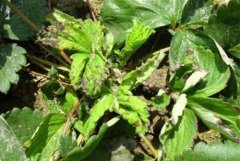
What to Do When Strawberries Get Anthracnose? A Detailed Guide to Prevention and Control
What should you do when your strawberry gets sick? Just take it to see a doctor, free of charge! The Miaoli District Agricultural Research and Extension Station has pioneered anthracnose molecular detection technology, and farmers can submit samples at no cost. Take a quick look. Once strawberry seedlings are infected with anthracnose, they easily die, and it is difficult to judge whether they are healthy just by their appearance.
-
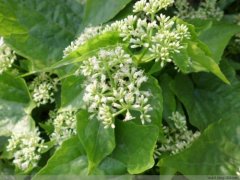
Big and plump strawberries grown with mile-a-minute weed biochar-based fertilizer and vinegar liquid
Mile-a-minute weed biochar combined with vinegar liquid produces big and plump strawberries. Want to learn how? Then read the introduction below. Huang Ying-pin, senior researcher at the Ecosystem Technology Laboratory of the Central Branch of the Industrial Technology Research Institute, says that mile-a-minute weed (Mikania micrantha) is native to Central and South America, harms crop growth, is known abroad as the "mile-a-minute weed", and is also regarded as the "green cancer" of the plant world. Mile-a-minute weed spreads rapidly in Taiwan, China, and is a plant that forestry units want to eradicate as quickly as possible, but it is not entirely useless. Research has shown that mile-a-minute weed is rich in micropores and is a very good charcoal material, which can be converted into "biochar" and "vinegar liquid" through carbonization technology; biochar can be used for soil improvement, and combined with vinegar liquid it becomes a pest and disease control agent or a plant growth promoter.
条件筛选