-
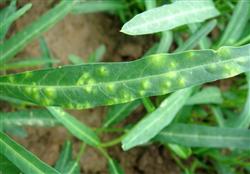
What are the control methods for white rust in water spinach?
Because of the high temperature and frequent rain after early summer, water spinach is prone to white rust. Once the disease occurs, it not only reduces the yield but also affects the quality. 1. Symptoms At the early stage of the disease, spots first appear on the upper surface of the leaves as pale yellow to yellow spots, which later gradually turn brown. The spots are relatively large. On the underside of the leaves, white raised blister-like pustules form, nearly round or elliptical to irregular, sometimes coalescing into larger pustules. Later, the pustules rupture and release white sporangia. When the leaves are severely damaged, the spots are dense, the diseased leaves become deformed, and the leaves fall off.
-
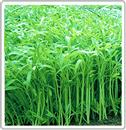
Detailed Explanation of the Key Technical Points for Water Spinach Cultivation and Management
Water spinach, also known as bamboo-leaf vegetable, tongxin cai, weng cai, tong cai or vine vegetable, is a fast-growing leafy green vegetable that has been actively introduced in various regions in recent years. Its main management techniques are as follows: (1) Raising seedlings. The seed coat of water spinach is relatively thin and not hard, and it absorbs water rather quickly, so sowing dry seeds and allowing them to germinate is sufficient. Soaking seeds to promote germination and then sowing. ...
-
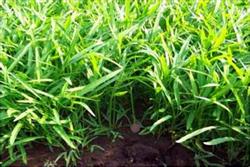
Key Cultivation and Management Techniques for High-Quality, High-Yield Water Spinach
I. Sowing. Both direct sowing in the open field and seedling transplanting are acceptable; the sowing period is generally mid-to-late April. For direct sowing in the field, drilling or hill sowing may be used, with a row spacing of 30-35 cm and a hill spacing of 15-20 cm, sowing 3-4 seeds per hill; water immediately after sowing, and seedlings will emerge in about 7 days. Dense sowing may also be used, and once the seedlings reach 17-20 cm in height...
-
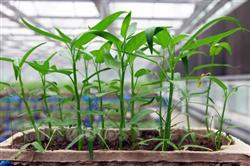
How to fertilize water spinach? Master these methods for high yield and good quality
Water spinach (Ipomoea aquatica) is not strict about soil, but soil that is rich in water and nutrients and has strong water- and fertilizer-holding capacity is more favorable. Water spinach grows vines and leaves rapidly, has a high nutrient demand and strong tolerance to fertilizer. With sufficient fertilizer and water, high quality and high yield can be achieved, but seed-production plots should have fertilizer and water controlled, otherwise the plants easily grow leggy and fail to flower. The base fertilizer for water spinach is mainly farmyard manure and dung...
-
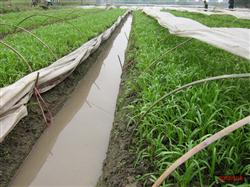
Detailed key points for water spinach cultivation, teaching you to grow water spinach well
Water spinach, whose scientific name is swamp cabbage (Ipomoea aquatica), also known as bamboo-leaf vegetable, vine vegetable, and tung choy, is an annual or perennial trailing plant of the Convolvulaceae family. Water spinach is eaten for its tender stems and leaves. Water spinach has a long harvest period and is a leafy vegetable that grows in summer, which can make up for the market structure in Liaoning in summer where leafy vegetables are scarce and fruiting vegetables are abundant. The branches that water spinach sends out from the leaf axils to produce tender shoots can...
-
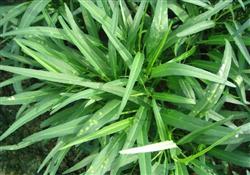
What to do when water spinach gets white rust? Detailed control methods
①Use disease-free seeds or treat seeds with 0.3% of seed weight of ridomil-mancozeb seed dressing. ②This disease is limited to infecting Convolvulaceae vegetables; after 2~3 years of crop rotation, the control effect is good. ③Pay attention to field drainage and thin out plants for ventilation. ④At the early stage of the disease, spray 48% metalaxyl-mancozeb wettable powder, 40% metalaxyl-copper wettable powder...
-
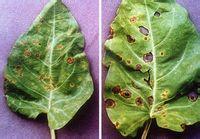
Symptom Identification and Control Methods of Brown Spot Disease in Water Spinach
Symptoms initially appear as small yellowish-brown spots, which later expand into circular to oval, or irregular dark brown lesions, 4-8 mm in diameter, with distinct edges. In severe cases, the lesions merge with each other, and the diseased leaves turn yellow, wither and die. Disease conditions: It is prone to occur in rainy and humid weather or during off-season cultivation. Control methods...
-
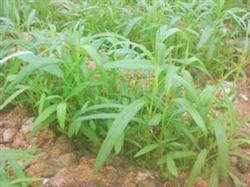
Detailed Explanation of Key Techniques for Winter Plastic Greenhouse Cultivation of Water Spinach
Water spinach is widely cultivated throughout our province and is a major green leafy vegetable that fills the gap in summer and autumn. Water spinach likes high temperatures and high humidity, has strong heat tolerance, and is not tolerant of frost; when frost occurs, the stems and leaves wither and die. The optimum growing temperature is 25-30°C, and growth stops below 10°C. Therefore, plastic greenhouses should be used for off-season cultivation in winter. 1. Varieties...
-
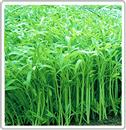
Detailed Explanation of Key Points of Pollution-Free Cultivation Techniques for Water Spinach
Water spinach, also called water convolvulus, tong cai, or rattan vegetable, is a fast-growing leafy green vegetable that has been actively introduced in various regions in recent years. Its leaves and tender stems are eaten, and it can be served cold-dressed, stir-fried, or boiled in soup. It is not only rich in nutrients but also has medicinal value such as clearing heat and detoxifying, promoting urination, and stopping bleeding. It has now become one of the specially needed vegetables for major hotels and restaurants....
-
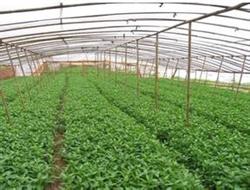
What are the winter management measures for water spinach in greenhouses?
1. Deeply plow the land, apply sufficient base fertilizer, and keep the soil merely moist. Adjust the temperature according to the needs of the plants. Spraying New High Lipid Film can effectively prevent aboveground moisture from evaporating and seedling moisture from transpiring, shorten the seedling recovery period, and help the plants quickly adapt to the new environment and grow healthily. 2. Water reasonably, fertilize in a timely manner, cultivate and weed,...
条件筛选