-

Detailed Guide to Identifying and Controlling Common Diseases of Water Spinach
Common Diseases of Water Spinach and Their Control
-

Key Technical Points and Management Methods for Growing Overwintering Spinach
Overwintering Spinach Cultivation Techniques
-

Spinach Planting Time and Method Explained in Detail, When Is the Best Time to Plant
Spinach Planting Time and Method
-
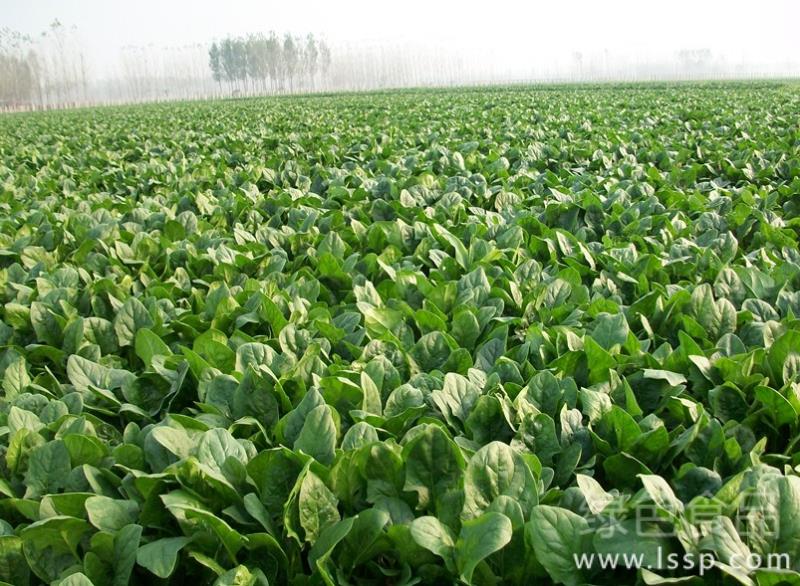
Key Techniques for High-Yield Open-Field Cultivation of Spring Spinach
Key Techniques for High-Yield Cultivation of Open-Field Spring Spinach
-

Detailed Guide to Malabar Spinach Cultivation: Planting Methods and Management Key Points
Cultivation Techniques for Malabar Spinach
-

Detailed Explanation of the Key Field Management Techniques for Water Spinach
Field Management of Water Spinach
-

How Does Water Spinach Propagate? A Comprehensive Explanation of the Common Methods
How Water Spinach Propagates
-

How to Fertilize Water Spinach? A Detailed Guide to Scientific Fertilization Methods
How to Fertilize Water Spinach
-

Don't underestimate this fertilizer shop in rural Yunlin. They cracked the fertilizer code, saved a water spinach crisis, and call for using less fertilizer, yet they still became the Taiwan general agent for a global giant!
Don't underestimate this fertilizer shop in rural Yunlin. They cracked the fertilizer code, saved a water spinach crisis, and call for using less fertilizer, yet they still became the Taiwan general agent for a global giant!
-

A Detailed Guide to the Key Cultivation Techniques and Management Methods for New Zealand Spinach
1) Cultivation characteristics and features. The New Zealand spinach plant grows in clumps, has strong branching ability and fast growth, and can produce side branches at every leaf axil. After topping, under suitable temperatures, side branches reach harvest standard in about 15 days. The stems grow prostrate and can reach 120 cm in length, and the leaves are triangular and alternate. The leaf flesh is thick, and small yellow flowers are borne at each leaf axil; the flowers are very few and have no petals. The ovary is inferior, and the fruit is a nut, rhombus-shaped, resembling spinach, containing several seeds, with a 1000-seed weight of 83-100 grams. New Zealand spinach prefers warmth and is heat-tolerant, low-temperature-tolerant, drought-resistant, salt-alkali-tolerant, moisture-loving but afraid of waterlogging. Its root regeneration ability is weak. In summer, with high temperature and heavy rain, if plants are too dense, stems rot easily and the plants die. It is not frost-tolerant, but has good low-temperature adaptability. In summer drought and strong light, the leaves become hard, curled and poor for eating. During the seedling stage, drought and strong light can induce viral disease. Under weak light and high humidity, the stems and leaves are tender. New Zealand spinach grows vigorously, and there are very few pests and diseases throughout the entire growing period, making it a natural pollution-free vegetable. One planting of New Zealand spinach can be harvested continuously; sown in spring, it can be harvested after 50 days, until frost, and cultivation is very easy. New Zealand spinach seeds shed easily and are not easy to harvest, so they need to be harvested in batches; seeds that fall to the ground can germinate in autumn or after overwintering in the following spring.
条件筛选