-
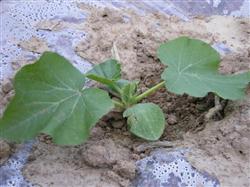
How should base fertilizer be applied correctly when growing pumpkins?
How do you apply base fertilizer when growing pumpkins? Please advise. Base fertilizer for pumpkins is mainly organic fertilizer, combined with a nitrogen, phosphorus and potassium compound fertilizer. Commonly used base fertilizers include barnyard manure, compost or green manure, etc., applied in fairly large amounts, generally accounting for 1/3 to 1/2 of the total fertilizer application, with 3000 to 4000 kg of organic fertilizer applied per 667 sq m. All or...
-

How should pumpkin seeds be treated before planting?
How should pumpkin seeds be treated when planting? Please give guidance. When planting pumpkins, the seeds can be treated before sowing by referring to the following methods: Seed quantity and treatment: 1. Use 8 packets of seed per mu. 2. Sun the seeds for 1-2 hours before sowing. 3. Soak the seeds in 55°C warm water (two parts boiling water mixed with one part cold water) mixed with a 500-fold dilution of carbendazim for 30 minutes, then soak them in clean water for 6-12 hours, scoop them out and rub them with your hands a few times to remove the waxy coating on the seeds.
-
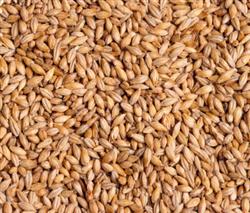
How should rice seedling stunting be prevented and controlled?
How can the quality of rice seeds be identified? Please guide. To identify the quality of rice seeds, you can refer to the following methods: Check the uniformity. Seeds mixed with other rice grains have irregular grain shapes and different degrees of grain plumpness. Check the glume color. The grain color of good seeds should be relatively consistent and the color relatively fresh...
-
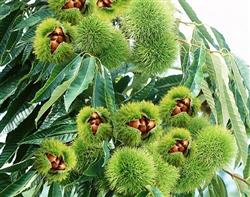
How should chestnuts be planted and managed to achieve a high yield?
How can chestnuts be made to yield heavily? Please explain the methods. To make the chestnut trees you plant yield heavily, you can refer to the following methods: 1. Close planting. Reasonable close planting can not only increase early yields and obtain economic benefits as quickly as possible, but also facilitate intensive management of the orchard. Planting density: the spacing between plants and rows is generally 2m x 4m, 3m x 4...
-

What precautions should be taken when soaking rice seeds in chemical agents?
What should be noted before and after rice harvest? Please note the following four points before and after rice harvest. 1. Drain early. Drain the water in the paddy field as much as possible, and if necessary, dig ditches to drain the water from low-lying areas early and dry the field. 2. Harvest at proper maturity. For manual harvesting, harvest when more than 95% of the rice husks in the field have turned yellow...
-
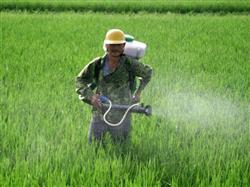
What precautions should be taken for foliar fertilization of rice?
What should be noted in foliar fertilization of rice? Please advise. Foliar fertilization has the advantages of low dosage, strong targeting, fast absorption, obvious effect and low cost. At present, rice is in its vegetative growth stage. How can the rapid growth of rice roots, stems, leaves and tillers be promoted? The author reminds farmers that when carrying out foliar fertilization on rice, they should...
-
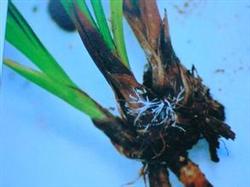
How should orchid rhizome rot be prevented and treated?
Orchid rhizome rot is a bacterial disease. It mainly occurs on the tiller buds. Initially, a water-soaked lesion the size of a mung bean appears at the base of the bud, which later becomes a dark green, scald-like large patch that extends to the outside of the bud sheath, showing dark brown rot; diseased leaves are easy to pull out. Control measures: ① Control soil moisture content; for already diseased potted flowers, stop watering...
-

Why jasmine should not be kept in the bedroom
Jasmine is not very suitable for the bedroom, though it is fine if there are only a few plants. Its fragrance is very strong and can affect people's normal rest, and may even cause symptoms of nausea; some people are also allergic to its pollen. In addition, the soil will attract some small insects, and at night it will also compete with people for a portion of the oxygen.
-

Correct watering method for the money tree (Pachira aquatica): should you water at the roots?
You can water the money tree at the roots, but there must be no standing water in the potting soil. Watering at the roots should not be too frequent; once a week is enough. When humidity is low, you can mist appropriately to increase humidity. In addition, in summer, avoid watering at noon; do it in the morning or evening. In winter, when temperatures are low, water at noon to avoid damaging the roots.
-
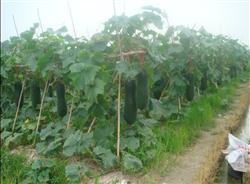
What should be noted when growing winter melon?
What should be noted when growing winter melon? Please provide guidance. When growing winter melon, note the following key points: 1. Soil selection. For growing winter melon, choose a well-drained, deep, fertile sandy loam or clay loam, with a previous crop field where no cucurbit crops have been grown for more than three years; a previous rice crop is even better. 2. Timely sowing. In the Guangzhou area, winter melon cultivation is divided into spring planting and autumn planting, with spring planting being more common, generally sown in January-February. Under the premise of taking cold-protection measures for winter melon seeds, early sowing is better than late sowing, so in recent years it is mostly sown in early to mid-January, which can extend the growth period, especially the vegetative growth period, so that winter melon sets fruit around the rainy season when air humidity is relatively high and the temperature is above 20°C. Autumn-planted winter melon is generally sown around Minor Heat (early to mid-July).
条件筛选