-
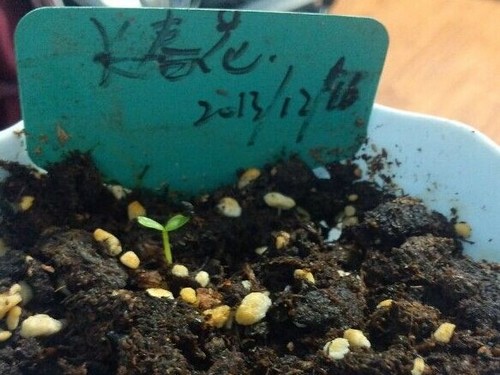
Detailed Guide to Seed Sowing and Propagation of Catharanthus roseus in Pots
Catharanthus roseus has 750 seeds per gram, and the suitable germination temperature is 18-24°C. Spring sowing can be done in April, using a sowing tray filled with a mixed soil of sterilized leaf mold, culture soil and fine sand; germination occurs 14-21 days after sowing. After seedlings emerge, shade for 2-3 hours is needed at noon when light is strong and the temperature is high. When the seedlings are 5 cm tall
-
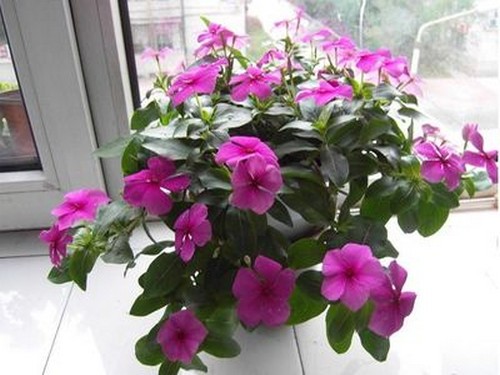
How to Propagate Catharanthus roseus? A Detailed Guide to Common Propagation Methods
Catharanthus roseus has a long flowering period, bright colors and graceful form. In recent years, cultivated varieties have produced increasingly larger flowers, making it very suitable as a potted ornamental plant with unexpected effects in home decor. Catharanthus roseus prefers warm, sunny conditions and moist, fertile sandy loam. In hot summers, it should not be exposed to strong sunlight.
-
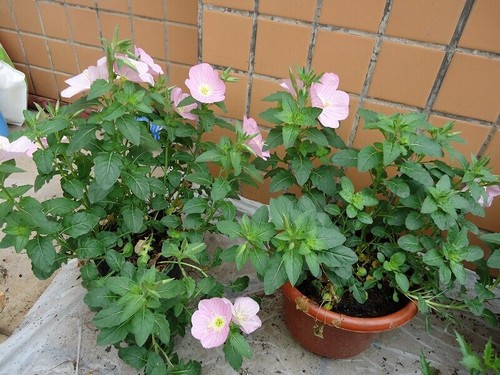
Detailed Explanation of Key Points on Evening Primrose Seed Sowing and Propagation Techniques
Evening primrose, also known as late cherry primrose, its flowers slowly bloom in the evening and wither at dawn. The flower blooms for only one night, and legend says its blooming is specially for the moon to admire, which is how it got the name evening primrose. Like the epiphyllum, evening primrose blooms at night, hence it is also called "night-blooming cordate telosma" (night-blooming cordate telosma), with a pleasant fragrance, suitable for adorning night scenes
-
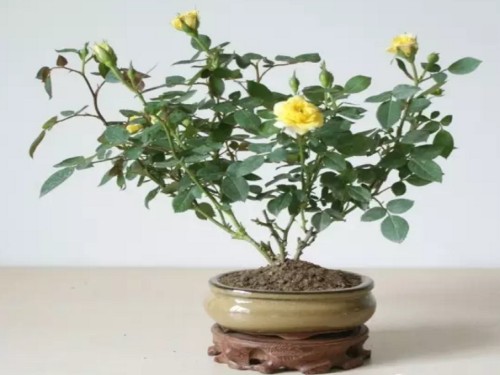
How to Prune Roses - Pruning Methods for Potted Roses
Pruning is one of the important measures in rose management. Pruning must be carried out at every stage of growth to ensure abundant flowers and lush foliage throughout the four seasons. During the growing season, bud thinning, bud pinching and removal of spent flowers should be carried out. Bud thinning means removing the excessive young shoots that grow in spring, keeping 2 to 3 on the main branches and removing all the rest.
-

Detailed Explanation of Rose Cutting Propagation Techniques and Seedling Methods
I believe everyone has seen the beautiful rose, and the rose is exactly my favorite flower! Its stems and leaves change with the seasons: in spring, it has just grown a few small purplish-red leaves, the branches and stems are tender green, and the flowers are still sleeping inside the buds; in summer, many flowers have bloomed, and the rose is no exception
-
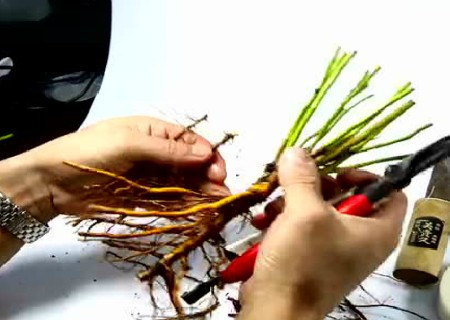
Rose root grafting technique - a root grafting method for bare-root rose grafting
Speaking of root grafting, we need to first talk about grafting. Why? Because root grafting falls under the "scion grafting" category of the two grafting methods, "scion grafting" and "bud grafting." Grafting is one of the artificial vegetative propagation methods for plants. That is, grafting a branch or bud of one plant onto the stem or root of another plant.
-
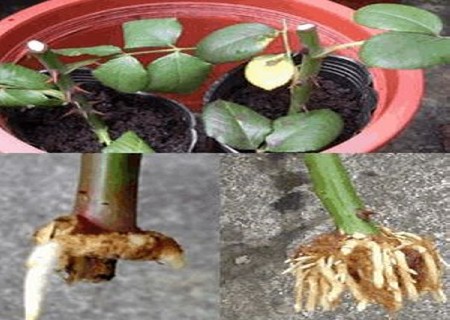
Rose Ring-Barking Cutting Technique - Illustrated Guide to Rose Ring-Barking Propagation
Ring-barking means removing a ring of bark, that is, after a ring of bark is peeled from the root, the nutrients in the trunk will not flow back to the root in autumn and winter. Then in spring, when plants sprout, the nutrients from the root are transported upward, and by the time the wound peeled last year has healed, the flowers on the tree have already bloomed and the young fruit has already formed. Ring-barking
-

Detailed guide with pictures and text on water propagation of roses, beginners can learn it at a glance
Roses, known as the queen of flowers and also called "monthly red", belong to the Rosaceae family. They are evergreen or semi-evergreen low shrubs that bloom in all four seasons, mostly red, occasionally white. They can be used as ornamental plants and as medicinal plants, and are also called rose flowers. Roses are propagated by water cuttings, and the survival rate is highest in spring and autumn. In spring and autumn the climate is warm
-
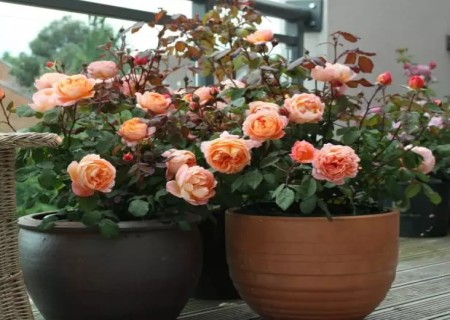
Detailed guide to air layering propagation for roses, all the operation steps are here
Roses come in a vast number of varieties and bloom all year round, with extremely rich colors: red as if painted with vermilion, white like plain jade, yellow like brocade, purple like gems, with vivid colors and dazzling variety, unmatched by many other flowers. Among rose propagation methods, air layering is one of the commonly used methods
-

How to propagate and grow roses from bud cuttings? The method is easy to understand with illustrations
Roses are heavily pruned before winter, and the following spring a large number of new buds sprout up and down the branches. To make the plant shape symmetrical, concentrate nutrients, and produce abundant flowers, some of these new buds must be thinned out. These thinned spring buds, used as cutting material, have strong vitality and root easily, and after rooting they grow vigorously. It is a simple and easy propagation method
条件筛选