How to Propagate Catharanthus roseus? A Detailed Guide to Common Propagation Methods
Catharanthus roseus has a long flowering period, bright colors and graceful form. In recent years, cultivated varieties have produced increasingly larger flowers, making it very suitable as a potted ornamental plant with unexpected effects in home decor.
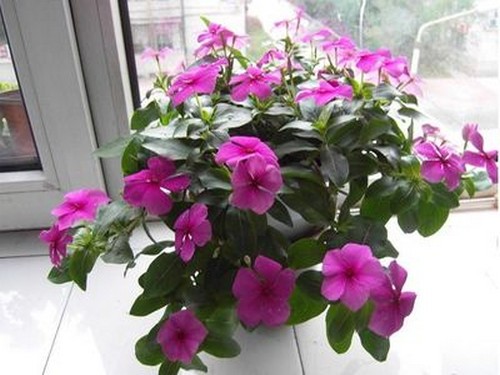
Catharanthus roseus prefers warm, sunny conditions and moist, fertile sandy loam. In hot summers, it should not be exposed to strong sunlight. It should be watered frequently to keep the potting soil moist, and dry heat must be avoided. At this time, providing a little shade can promote abundant flowering. The flowering period is from June to October.
Propagation can be done by sowing or cuttings. For sowing, sow in open ground beds in early April, or sow in greenhouse pots earlier between January and February. The germination temperature is about 20°C. After germination, transplant once, and when 4-6 true leaves have grown, plant into small pots. Later, as the seedlings grow, transfer them into correspondingly larger pots. For those cultivated in open ground, transplant and then plant out in flower beds. Catharanthus roseus can also be propagated by cuttings during the growing period, but cutting-propagated plants are always less vigorous than seed-grown plants, so this method is used less often.
Catharanthus roseus is mostly propagated by sowing. However, the ripe fruits of Catharanthus roseus can split open on their own and scatter the seeds. Watch carefully for when the fruits turn yellow and pick them promptly, otherwise it is difficult to collect the seeds. Below is a detailed introduction to 3 propagation methods for Catharanthus roseus:
1. Seed propagation
Catharanthus roseus is mostly propagated by sowing, generally sown around April in early spring. Each gram contains 750 Catharanthus roseus seeds, and the suitable germination temperature is 18-24°C. Use a sowing tray filled with a mixed soil of sterilized leaf mold, potting soil and fine sand. Germination occurs 14-21 days after sowing. After seedlings emerge, shade them for 2-3 hours at noon when the light is strong and the temperature is high. When the seedlings are 5 cm tall and have 3 pairs of true leaves, they can be potted. When they have 6-8 pairs of true leaves, they can be planted out. If planted out in flower beds in May and watered once every 3-5 days with appropriate additional phosphorus and potassium fertilizer, they will produce many flowers and lush leaves.
2. Cutting propagation
In spring or early summer, cut young shoots 8-10 cm long from overwintered old plants, keeping some leaves attached. Remove the lower leaves and keep 2-3 pairs of leaves at the top. Insert them into a sand bed or leaf mold, keeping the cutting medium slightly moist at a room temperature of 20-24°C. Pay attention to shading and maintaining humidity. Roots form 15-20 days after cutting. When the seedlings are 10 cm tall, pinch the tops to encourage bushing out, then plant into three-inch pots and gradually move them into seven-inch pots.
3. Tissue culture propagation
Use stem tips as explants. After sterilization, cut the stem tips into several segments, each 0.4-0.6 cm, and inoculate them on MS medium supplemented with 6-benzylaminopurine 5 mg/L and naphthaleneacetic acid 0.2 mg/L. After 1 month of culture, adventitious buds grow. Then transfer to 1/2 MS medium supplemented with kinetin 0.2 mg/L and indoleacetic acid 2 mg/L. After half a month, white roots begin to grow, forming complete plantlets.
Catharanthus roseus is suitable for potted accents and also suitable for mass planting for ornamental display. Its brilliant colors and relatively long flowering period are advantages, making it one of the popular flower varieties. If you like Catharanthus roseus, be sure to save its propagation methods.