-

Downy Mildew in Lisianthus: Occurrence Patterns and Control Methods
Lisianthus plants grow 30-100 cm tall. The leaves are opposite, broadly elliptic to lanceolate, nearly sessile, with the leaf base slightly clasping the stem; the leaf surface is blue-green. The stamens and pistils are prominent, the bracts are narrow and lanceolate, and the petals are arranged in overlapping fashion. Flower colors are rich, including solid and bicolor forms, with single and double petal types.
-

Occurrence Patterns and Control Methods of the Soybean Hawkmoth
Damage symptoms: The soybean hawkmoth feeds on leaves as larvae. Young larvae eat leaves into a net-like, notched pattern, and after the third instar the larvae can eat all the soybean leaves, preventing the plants from setting pods and greatly affecting yield. Occurrence patterns: Mid-to-late July to early August is the peak period for adult egg-laying, late July to late August is the peak period of larval damage, and in early September the light-yellow mature larvae enter the soil to overwinter. Life habits: Adults: Adults hide by day and come out at night, and have a strong tendency toward black light lamps. They begin activity in the evening and are strong fliers with strong migratory ability. They mate at night, and lay eggs 3 days after mating. Eggs are mostly scattered on the undersides of soybean leaves, generally 1 to 2 eggs per leaf, and the eggs hatch into larvae after about 7 days. Larvae: Larvae are photophobic, mostly staying on the undersides of leaves or on stems during the day, and feeding strongly at night; on cloudy days they can feed all day. First and second instar larvae eat little and generally do not move between plants to cause damage; after the fourth instar they have the habit of moving to cause damage; fifth instar larvae show a sharp increase in food intake, accounting for about 90% or more of the total food consumption. The larval stage lasts 30 to 35 days.
-
Occurrence Patterns and Control Methods of Cotton Seedling Diseases
Cotton seedling diseases are characterized by a concentrated onset period, generally occurring 15-30 days after sowing. The primary infection source comes mainly from the soil, with a small portion from seeds. Around April 20 this year, many provinces experienced continuous rainy and low-temperature weather, so seedling diseases are bound to be severe, and timely control measures should be taken in all areas. I. Symptom Manifestations (1) Damping-off. When cotton seedlings are affected before emergence, it causes seed and sprout rot. When disease occurs after seedling emergence, lesions initially appear as yellowish-brown and later turn black and sunken at the base of the young stem near the soil surface. The lesions gradually expand,
-
How to control broad mites in greenhouses and sheds? Understanding the occurrence pattern is key
In greenhouse fruit and vegetable production, curled and shrunken growing points of plants, deformed and cracked fruits are often seen, causing serious losses to production. Because the temperature and humidity inside the greenhouse are very suitable for the growth and reproduction of broad mites, and fruit vegetables are their main targets, and the mites are extremely small and invisible to people, timely control is impossible. Therefore, in recent years, the area of occurrence and damage has been growing larger and larger, which should attract great attention from producers. Broad mites belong to the class Arachnida, order Acariformes, family Tarsonemidae, and are harmful microscopic pests. They mainly damage cucumbers, eggplants, and tomatoes among greenhouse vegetables.
-
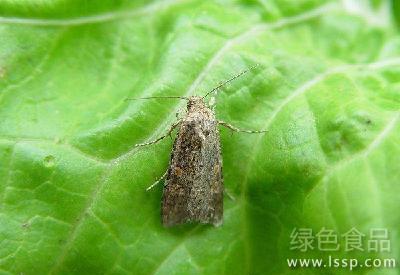
Occurrence Patterns and Control Methods of the Beet Armyworm Pest
Occurrence Patterns and Control Methods of the Beet Armyworm Pest
-
Damage Patterns and Control Methods of Spider Mites on Ginkgo Trees
Ginkgo biloba is a large deciduous tree, with a trunk diameter at breast height reaching up to 4 m. The fruit of the ginkgo tree is commonly known as white fruit (baiguo), hence the ginkgo is also called the white fruit tree. The ginkgo tree grows slowly and has an extremely long lifespan. Under natural conditions, it takes more than twenty years from planting to bearing ginkgo fruit, and only after forty years can it produce fruit in large quantities, so some people also call it the "grandfather-grandson tree"
-
How to prevent and control cotton root rot in northern Xinjiang? Understanding the patterns of occurrence is key
In 2007, northern Xinjiang suffered varying degrees of cooling and rainfall in April, May and August respectively, and cotton root rot occurred rather severely, with the disease incidence in cotton fields reaching 20%-50%, causing a certain impact on cotton yield in northern Xinjiang. 1. Disease symptoms The pathogen overwinters as chlamydospores on plant residues in the soil and germinates to infect the following year. After cotton is infected, the leaves shrink or wilt, and soon afterward the plant lodges and dies. The stem base and roots of diseased seedlings are purplish brown and gradually rot, with the cortex drying and rotting; when pulled from the soil, the roots are decayed brown.
-
Occurrence Patterns and Control Methods of Cotton Red Leaf and Stem Blight
Disease symptoms and occurrence patterns: Cotton red leaf and stem blight is an explosive disease that frequently occurs in the middle and late stages of cotton growth. It can cause leaves to turn red from bottom to top until they drop off. The leaf veins remain green, the leaf mesophyll turns red, and the leaves become thicker, brittle, and wilted before finally dropping. When the stem is cut open, it does not change color, which distinguishes it from cotton Fusarium and Verticillium wilt. Generally, in old cotton-growing areas, the disease is more severe in cotton fields with continuous cropping year after year, sandy soil, too shallow a plow layer, or insufficient fertilizer lacking potassium fertilizer. Drought in the middle and late stages, along with severe potassium and zinc deficiency in the soil, can also easily accelerate the occurrence of this disease.
-
Occurrence Patterns and Control Methods of Major Pests and Diseases of Osmanthus
Osmanthus, also known as muxi (Osmanthus fragrans), is a precious aromatic plant native to China. Xianning is located in southern Hubei and has long been known as the "home of osmanthus." In recent years, damage from osmanthus pests and diseases has increased, reducing its ornamental value.
-
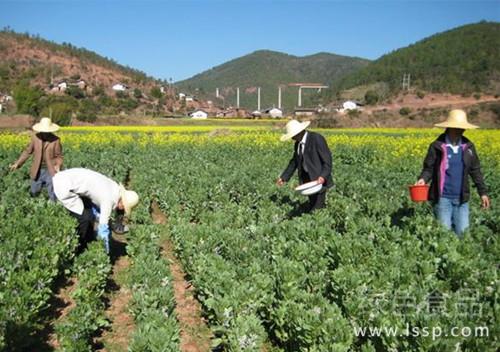
The flowering stage of broad beans is the peak period of fertilizer demand: understanding the fertilizer demand pattern and fertilization methods
The flowering stage is the peak period of fertilizer demand for broad beans: fertilizer demand pattern and fertilization methods for broad beans
条件筛选