Occurrence Patterns and Control Methods of the Beet Armyworm Pest
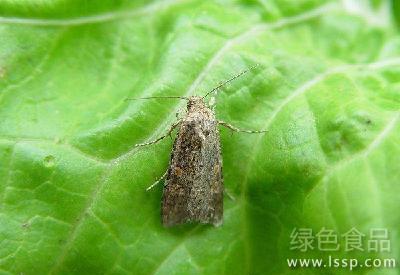
Beet armyworm
The beet armyworm belongs to the order Lepidoptera, family Noctuidae. It is also called the cabbage brown noctuid and the corn leaf noctuid, with the alias: greedy noctuid, commonly known as the green bagworm. This insect has very omnivorous feeding habits, and its hosts include kidney beans, cowpeas, soybeans, cabbage, Chinese cabbage, radish, lettuce, scallions, spinach, celery, cucurbits, solanaceous fruits, as well as cotton, apples, medicinal plants, forage grasses and more than 170 other plant species. Occurrence patterns:
I. Biological characteristics:
The beet armyworm occurs for about 5 generations per year in Beijing and Shandong, generally 5 to 6 generations in the middle and lower reaches of the Yangtze River, and can occur continuously year-round in tropical and subtropical regions with no overwintering phenomenon. In Shanxi, Shaanxi, Shandong, Jiangsu and other places, it overwinters as pupae in earthen cells. The main occurrence period throughout the year is from June to September, with the most severe damage occurring in August and September.
Adults hide during the day in weeds, clods of soil, soil crevices, dead branches and fallen leaves, and can fly short distances when disturbed. They are most active at night from 20:00 to 23:00, feeding, mating and laying eggs. Adults have a strong tendency toward black light lamps.
Eggs are mostly laid on the underside of leaves, in egg masses arranged in a single or double layer, with the egg masses covered by white scales. The pre-oviposition period of adults is 1 to 2 days, the oviposition period is 3 to 4 days, and each female lays 100 to 200 eggs, with a maximum of 1,700 eggs. In Shandong, the egg period is 3 to 4 days for generations 2 to 3 and 6 to 7 days for generation 4, with an average hatching rate of 79.3%.
Larvae have 5 instars in total, with some having 6 instars. Newly hatched larvae gather and form webs on the underside of leaves, gnawing the leaf mesophyll and leaving only the epidermis, so that the damaged leaves show transparent small holes. As the larvae grow older, they disperse to cause damage, eating the leaves into holes or notches, and in severe cases forming a net-like appearance. After reaching advanced instars, larvae can eat the entire leaf leaving only the veins. The food consumption of 5th to 6th instar larvae can account for 88% to 92% of the total food consumption of the entire larval stage. In the hottest season, larvae can inhabit the tops of crops, causing the tender tips to wither, and can also burrow into the surface soil to damage the roots. In addition, beet armyworm larvae can also bore into bean pods, green peppers, tomato fruits and cotton buds and bolls. Larvae have a feigning-death habit and drop to the ground when disturbed. When population density is too high and food is lacking, larvae may kill one another. When temperatures are high, pest numbers are large, or food is lacking, larvae can migrate in groups.
After the larvae mature, they burrow 4 to 9 cm into the soil, spin silk and build cells to pupate. If the surface soil is hard, they may pupate in the surface soil. The pupal stage lasts 7 to 11 days.
II. Relationship with environmental conditions:
The beet armyworm is a pest with intermittent outbreaks, and the severity of occurrence varies greatly from year to year. The population density at different times within a year also varies greatly, and it can break out into disaster in local areas. The beet armyworm has a certain resistance to high temperatures. Eggs exposed to 46°C for 30 seconds show little effect on hatching rate. At 43°C for 4 hours, there is no obvious effect on larval development and adult lifespan. This insect also has relatively strong cold resistance. Pupae can endure several days at a low temperature of -12°C, but cannot withstand low temperatures for long periods; eggs have a mortality rate of only 40% at -20°C. However, adults and larvae have weaker cold resistance, and larvae can die after several days at 2°C. Therefore, prolonged low temperatures in winter are unfavorable for their overwintering. At the same time, whether the insect stage in the field has cold resistance when temperatures drop in late autumn is an important factor determining overwintering mortality and the base population for the following year. Winter temperatures in the north are relatively low, overwintering mortality is high, and spring occurrence is relatively low. In addition to temperature, the beet armyworm prefers a dry climate with little rain, and abundant rain is unfavorable for its pupation and emergence. Thus, when the end of summer is hot and dry, it often breaks out severely in autumn.
Control methods:
1. Light trapping to kill adults:
The beet armyworm has a relatively strong phototaxis, and light trapping is an effective measure. Black light lamps and frequency-vibration insect-killing lamps can be used for trapping, with 3 lamps set per hectare.
⟧ 2. Plowing soil in late autumn or early winter to destroy pupae:
The beet armyworm overwinters as pupae in many areas, and plowing the soil can destroy some of the overwintering pupae.
3. Manual collection of eggs and capture of larvae:
The egg masses of the beet armyworm are on the underside of leaves and are covered with yellow-white scale hairs, making them easy to identify. Larvae before the 3rd instar are mostly concentrated on the heart leaves and are relatively clustered. Where conditions permit, especially where each contracted household has a small planting area, this measure can be adopted.
4. Clean the fields and hoe out weeds:
In March to April in spring, combine intertillage and soil loosening to clear weeds and eliminate young larvae on the weeds.
5. Chemical control:
When the beet armyworm breaks out severely, chemical control is a powerful measure. The appropriate control period is before the larvae reach the 3rd instar. The following can be used: 40% Nongdile emulsifiable concentrate at 1,500 times dilution, 75% Lavin (thiodicarb) wettable powder at 1,000 to 1,500 times dilution, 20% carbosulfan (Haoniandong) emulsifiable concentrate at 2,000 times dilution, 48% Lorsban emulsifiable concentrate at 1,500 times dilution, 50% malathion emulsifiable concentrate at 500 to 800 times dilution, 50% phoxim emulsifiable concentrate at 1,000 times dilution, 40% prothiophos emulsifiable concentrate at 1,000 times dilution, or 2.5% deltamethrin emulsifiable concentrate at 2,000 times dilution, 3% matrine aqueous solution at 100 times dilution, 15% Anda suspension concentrate at 3,000 times dilution, 30% Quanleida water-dispersible granules at 5,000 times dilution, 1.5% Caixi suspension concentrate at 800 to 1,000 times dilution, 48% Cuisha (spinosad) at 10,000 times dilution, 24% Meiman (tebufenozide) emulsifiable concentrate at 1,500 times dilution, 10% Chujin (chlorfenapyr) emulsifiable concentrate at 3,000 times dilution, 5% Regent (fipronil) emulsifiable concentrate at 3,000 times dilution, 1.8% abamectin emulsifiable concentrate at 4,000 times dilution, 1% emamectin benzoate emulsifiable concentrate at 5,000 times dilution, 25% Mieyouniao No. 3 suspension concentrate at 1,800 times dilution, 20% Shalingniao (fufenozide) suspension concentrate at 8,000 times dilution, 5% Yitaibao (chlorfluazuron) emulsifiable concentrate at 3,000 times dilution, 5% Cascade (flufenoxuron) emulsifiable concentrate at 3,000 times dilution, 10% cypermethrin emulsifiable concentrate at 1,500 times dilution, 5% beta-cypermethrin emulsifiable concentrate at 1,500 times dilution, 10.8% Kaisa (transfluthrin) emulsifiable concentrate at 2,000 times dilution, etc. Be careful to spray the pesticide on the underside of leaves and the lower leaves.