-

Introduction to the Characteristics of the Japanese Yellow Sweet Potato, Orange Love Variety
The Japanese Yellow Sweet Potato is a rare sweet potato treasure introduced from Japan by relevant Chinese experts in the spring of 1999. It is a new variety for fresh eating and roasting. This yellow sweet potato sets tubers early and in a concentrated manner, and can be harvested in July. The skin is smooth and yellow, and the flesh is orange-red, making it very attractive. It tastes sweet and fragrant, with an excellent mouthfeel. After cooking, the skin separates from the flesh. Besides being suitable for roasted sweet potatoes and sweet potato preserve processing, it is also good for fresh eating and various cooked foods. This sweet potato has strong disease resistance, high yield, early maturity, and high quality, making it an ideal variety to replace China's Beijing 553 yellow-skinned roasting sweet potato.
-
How to control the citrus black scale in orange orchards? The pure yellow aphelinid wasp comes to the rescue
[Morphological characteristics] Female wasp body length 0.92-1.18 mm, yellow, without color spots. The posterior margin of the scutellum has dark brown stripes. The base of the forewing has short black stripes; the ventral side of the antennal scape is dark brown, and the remaining segments are deep fuscous. Legs yellow. Compound eyes with fine hairs. Thoracic hairs thick and black; the scutellum bears 4 hairs; the forewing is 2.25 times as long as wide; the ovipositor is 1.9-2.01 times the length of the middle tibia. Male wasp body length 0.71-0.92 mm; the forewing is wider than that of the female, 2.2-2.33 times as long as wide. Important differences from Aphytis chrysomphali: the pure yellow aphelinid wasp of the citrus black scale is a bisexual species, and the propodeum is shorter, 0.75-0.8 times the length of the scutellum. The fan-shaped projections are large and elongated. Strongly overlapping; the thorax and venter of the mature pupa are dark brown, with only the abdominal tip lighter in color. Aphytis chrysomphali is a unisexual species, with males rarely seen in nature; the propodeum is longer, equal to or slightly longer than the scutellum. The posterior margin is broadly arched; the fan-shaped projections are small, rounded, and not overlapping. The mature pupa is yellow, with only a single black longitudinal line on the mesothoracic ventrite.
-
Processing Methods and Technical Points for Mandarin Orange Peel Food Products
Mandarin orange peel accounts for about 20% of the total weight of the fruit. In China at present, aside from a small amount used as traditional Chinese medicine, dried tangerine peel, and for extracting essential oils, most of it has not yet been utilized. In fact, mandarin orange peel contains large amounts of vitamin C, carotene, protein, sugars and various trace elements that are beneficial to human health, has high nutritional value, and can be processed into many kinds of health foods or food ingredients, making it an important food resource. Orange peel jam: take mold-free orange peel, wash clean, soak in clean water, then remove and drain, chop and put into a pot with water to soak, bring to a boil over high heat, then switch to low heat
-
Method for trial-producing rutaceous tea from mandarin orange flowers
Mandarin orange flowers contain sugars such as fructose and glucose that aid digestion and promote health; phosphorus, which has a stimulating effect on the nerves; multiple vitamins that resist capillary fragility; large amounts of rutin and aromatic oils that soothe the liver and purge the lungs and help regulate qi and resolve phlegm, as well as starch and other substances, making them highly nutritious. At the Shili orange orchard in Liangshitang, Shaodong County, we watched as nearly 300 dan of flowers removed from more than 100,000 young Wenzhou mandarin orange trees not yet intended for production were wasted for nothing, which was truly a pity. After repeated trials, we roughly produced some "rutaceous tea." "Rutaceous tea" is simple to make. Take 9 parts tea leaves
-

How to manage navel oranges during the fruit expansion period? Key technical points explained in detail
How should navel oranges be managed during the fruit expansion period
-
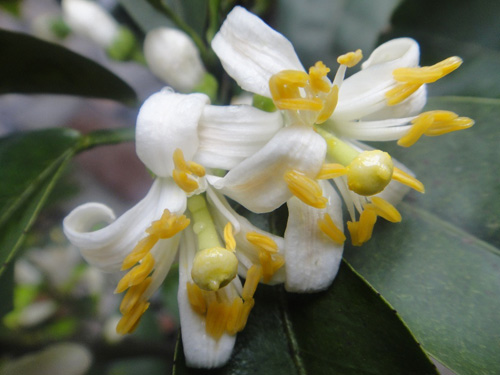
How to grow bitter orange (Citrus aurantium)? A detailed guide to cultivation methods
Bitter orange (Citrus aurantium) synonyms: Daidai, Daidai fruit, Daidai flower, sour orange, bitter orange, Huíqīngchéng. Family and genus: Rutaceae, Citrus. Morphological characteristics: Evergreen shrub. Branches sparsely bear short thorns, young twigs are angular. Trunk bark green, with volatile oil glands. Leaves alternate, leathery
-
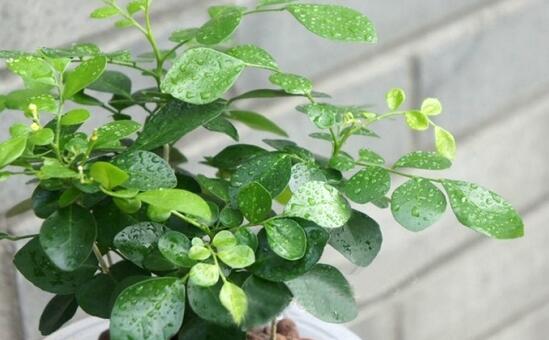
What to do when orange jasmine leaves turn yellow: pay attention to 5 points to easily solve it / too little light and not enough water
As an excellent indoor plant, many flower lovers grow orange jasmine (Murraya paniculata) in pots at home. It not only has a graceful plant form and beautiful flowers, but its fragrance during the flowering period is also very pleasant, so it is deeply loved by people. However, during the growing process, for various reasons, symptoms of yellowing leaves can appear. So what should be done when orange jasmine leaves turn yellow?
-
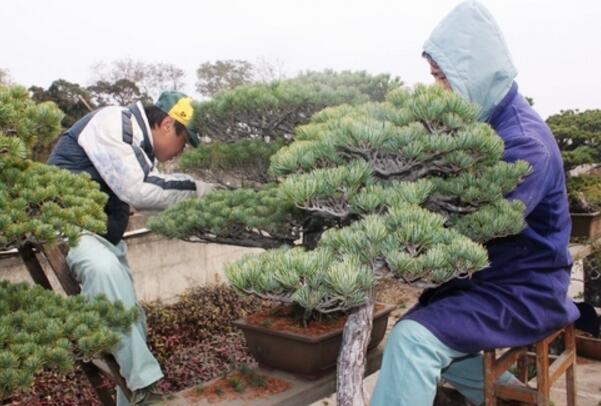
How to prune Orange Jessamine? Cut off diseased and weak branches before and after flowering
As a highly ornamental plant, Orange Jessamine (Murraya paniculata) is grown by many flower enthusiasts, but very few people can grow it beautifully. The reason for this phenomenon is closely related to pruning, because for a tall plant like Orange Jessamine, the plant's shape is very important. So how do you prune Orange Jessamine?
-
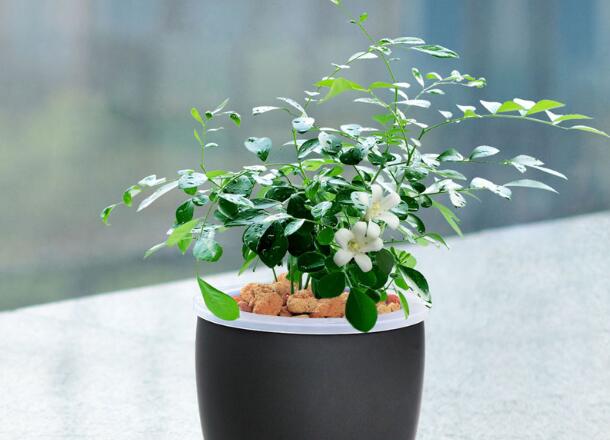
How does Orange Jessamine get through the winter? Reduce watering, ensure light, and prune appropriately
Everyone has probably heard of Orange Jessamine (Murraya paniculata). It lives up to its name: when it blooms, its fragrance can drift nine li away. Of course, that is a bit of an exaggeration, but it does not stop us from growing it. However, in the care that spans all four seasons, Orange Jessamine needs special attention in winter, because problems of all kinds can crop up if you are not careful
-
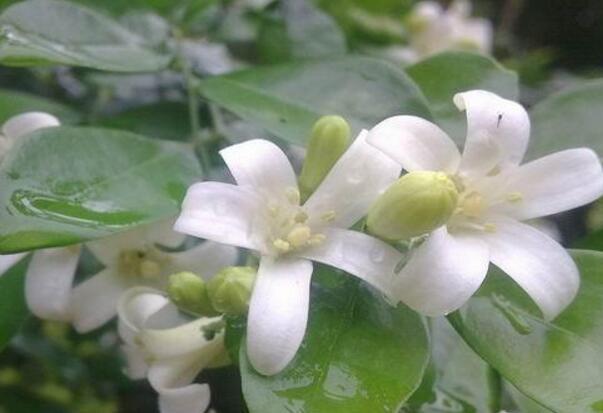
When does Orange Jessamine bloom? The flowering period runs from July to April.
Orange Jessamine (Murraya paniculata), a plant with an elegant form, beautiful flowers and a rich fragrance, is often kept indoors and is deeply loved by flower enthusiasts. However, Orange Jessamine generally takes 3-4 years from sowing to blooming, so when Orange Jessamine blooms is a question everyone wants to know.
条件筛选