What to do when orange jasmine leaves turn yellow: pay attention to 5 points to easily solve it / too little light and not enough water
As an excellent indoor plant, many flower lovers grow orange jasmine (Murraya paniculata) in pots at home. It not only has a graceful plant form and beautiful flowers, but its fragrance during the flowering period is also very pleasant, so it is deeply loved by people. However, during the growing process, for various reasons, symptoms of yellowing leaves can appear. So what should be done when orange jasmine leaves turn yellow? Now let the editor explain it to everyone.
1. What to do when orange jasmine leaves turn yellow: find the cause
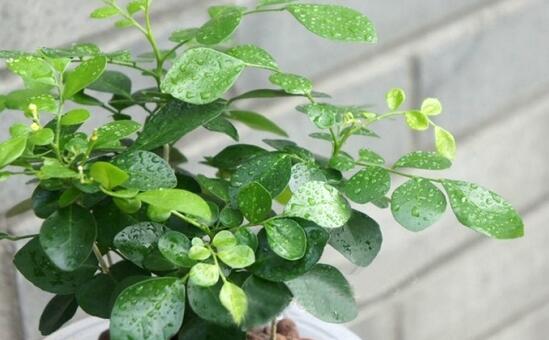
In the cultivation methods for orange jasmine, we introduced the related requirements for orange jasmine, and once we fail to meet those requirements, the leaves of orange jasmine will turn yellow. As for what to do when orange jasmine leaves turn yellow, we must first find the cause, and then solve it accordingly. Below are several causes of yellowing leaves summarized by the editor, along with solutions. Let us continue reading.
2. What causes orange jasmine leaves to turn yellow / solutions
1. Sudden environmental change
When it comes to the causes of orange jasmine leaves turning yellow, there are actually many, but the first thing we should think of is environmental problems. Because if your orange jasmine was bought online, it may not have adapted due to a relatively large sudden change in its growing environment, and after being grown for a period of time, symptoms of yellowing leaves will appear.
Solution: Before buying, communicate with the seller to understand the growing environment of orange jasmine. After buying it back, keep it unchanged. Even if the environment needs to be changed, do it gradually so that it has a process of adaptation. If the yellowing leaves are caused by the environment, flower lovers can place the orange jasmine in a ventilated place to let it recover, and wait until the plant returns to normal before caring for it in the normal way.
2. Insufficient light
During the cultivation of orange jasmine, we need to give it sufficient light. Once we fail to provide it with sufficient light, or place it in a dark place for a long time, yellowing leaves will appear on orange jasmine.
Solution: Give orange jasmine sufficient light time. If placed indoors, it is best to choose a place with plenty of sunlight. If it cannot be placed in sunlight all day, then it must be in sunlight for at least 5 hours to 6 hours every day.
3. Improper watering
Besides environment and light, improper watering is also one of the causes of orange jasmine leaves turning yellow. It is understood that orange jasmine is very sensitive to moisture. Everyone should not water too frequently, nor let it dry out completely. Both excessive dryness and excessive wetness will cause poor plant growth, resulting in yellowing leaves and even leaf drop.
Solution: If watered too much, stop watering immediately, and it is best to loosen the soil more to let the moisture evaporate; if watered too little, in order to prevent water loss, immediately place the orange jasmine in a semi-shaded place and water it lightly, not too much at once. At the same time, loosen the cracks on the pot wall so that water can drain out through the gaps.
4. Pests and diseases: red spider mites
Besides the above points, pests and diseases are also causes of orange jasmine leaves turning yellow. It is understood that red spider mites are one of the pests and diseases of orange jasmine. They survive by sucking the sap from orange jasmine leaves. If not removed in time, they will cause nutritional imbalance in the plant, resulting in symptoms of yellowing leaves.
Solution: When red spider mites are found, everyone should promptly spray pesticides. You can choose to use 20% dicofol emulsifiable concentrate at 2000 times dilution for spraying and killing. Spraying several times will be enough.
5. Orange jasmine leaves turning yellow in winter
It is worth mentioning that in winter, orange jasmine leaves very easily turn yellow. The main causes are: 1. The potting soil is too dry or too wet; 2. The environment is not ventilated; 3. It is dry and stuffy.
Solution: In winter, the potting soil should be kept moist, ensuring it is neither dry nor wet, maintain indoor air circulation, and keep the room temperature above 5°C. To ensure the air is not dry, appropriately increase the frequency of spraying water on the leaf surface.
Overall, orange jasmine is relatively easy to grow, but during the cultivation process, if you are slightly careless, the plant will show various problems. But since we are growing it, we should grow it well, so everyone must be careful to avoid the appearance of yellow leaves. Regarding orange jasmine leaves turning yellow, the editor will introduce it here, hoping it can help everyone.
What are the cultivation methods for orange jasmine?
Orange jasmine has a graceful plant form and beautiful branches and leaves, and during the flowering season it has a rich fragrance. It has extremely high ornamental value and is one of the common plants in art gardens and home courtyards. So what are the cultivation methods for orange jasmine in daily life? Let us take a look below with the editor at the cultivation methods for orange jasmine!
Cultivation method 1 for orange jasmine: growing environment
Orange jasmine likes to grow in a moist environment, so it is not suitable to place it indoors for cultivation. It is best to place it in a ventilated semi-shaded place. The temperatures in spring and autumn are most suitable for the growth of orange jasmine, while in summer attention must be paid to sun protection, and it must not be exposed to sunlight for a long time. In winter, attention must be paid to keeping it warm, and it should be placed in a greenhouse, and the indoor temperature must not be lower than 5 degrees. Too high or too low a temperature will affect its growth rate.
Cultivation method 2 for orange jasmine: fertilizing
When cultivating orange jasmine, fertilizer is also an indispensable nutrient component. It can promote the growth of orange jasmine's branches, leaves, flowers and fruits, and promote the growth of the stem and roots. Therefore, it must be fertilized at intervals so that the soil has enough nutrients. However, during fertilization, attention must also be paid to the appropriate amount. Do not apply too much fertilizer at one time, otherwise it may have the opposite effect.
Cultivation method 3 for orange jasmine: moisture
Moisture is indispensable for any plant, so when cultivating orange jasmine, its moisture is also very important. It should be noted that the tap water used for watering should be stored in a water vat for one day before use, and the watering tool is best a spray pot with a showerhead, so that the moisture can be distributed evenly and orange jasmine can absorb it better. However, during watering, the amount must also be appropriate. If there is too much moisture, orange jasmine will develop yellow leaves, root rot and other phenomena, affecting its growth.
Conclusion:The above is what the editor introduced to everyone about the cultivation methods for orange jasmine. Orange jasmine is a plant with strong vitality and is very easy to grow. As long as you pay a little attention during the cultivation process and water and fertilize it at intervals to ensure sufficient nutrients in the soil, it will grow quickly and repay you by blooming beautiful flowers.
[Related links]:
⊙How to grow peonies ⊙What to do when lucky bamboo turns yellow ⊙Cultivation methods for ivy ⊙When is the best time to eat bananas
⊙How to grow white magnolia ⊙Cultivation methods for serissa ⊙What does the blue enchantress rose represent ⊙Effects and functions of lobelia
⊙Asparagus fern leaves turning yellow ⊙Cultivation methods for bougainvillea ⊙Cultivation methods for clivia ⊙Effects and functions of kiwi fruit
Cultivation methods for areca palm, complete collection of areca palm pictures
Areca palm is native to Madagascar in Africa. Because of its elegant and graceful form and evergreen foliage throughout the four seasons, areca palm plants are cultivated in many tropical regions around the world, and have been introduced and cultivated very widely in China. It is a plant with strong potted ornamental value. In addition, areca palm also has the effect of absorbing harmful gases. Below, the editor will combine areca palm pictures to tell everyone about the cultivation methods and effects of areca palm.
[Areca palm] Cultivation methods for areca palm, effects of areca palm, areca palm pictures——————————————————————————————————————————————
[Plant profile]
——————————————————————————————————————————————
Chinese name:Areca palm
Scientific name:Chrysalidocarpuslutescens
Alias:Yellow coconut, purple palm
Family:Arecaceae
Genus:Dypsis
Origin and distribution:Native to Madagascar in Africa, and now cultivated in tropical regions around the world.
Morphological characteristics:Clumping evergreen shrub or small tree. Leaf stalks, leaf axes, and leaf sheaths are all pale yellow-green; leaf surface smooth and slender, simple leaves, pinnately parted, 40-150 cm long, leaf stalks slightly curved, apex soft; leaf sheaths cylindrical, clasping the stem. Spadix paniculate, born under the leaf sheath, much branched, about 40 cm long, 50 cm wide; stem smooth, yellow-green, without hairs or spines, covered with wax powder when young, with obvious leaf scars on it, in ring-like patterns; flowers small, golden yellow, flowering period March to April. Fruit nearly round, 1.2 cm long, 1.1 cm wide, orange-yellow. Seeds 1-3, ovate to elliptical. Many tillers at the base, growing in clumps.
[Traditional Chinese medicine properties]——————————————————————————————————————————————
[Name]Areca palm
[Nature and flavor]Slightly bitter, astringent, cool. Enters the liver meridian.
[Effects]Astringes and stops bleeding.
[Indications]Can be used for various bleeding disorders. Such as nosebleeds, gum bleeding, vomiting blood, blood in the stool, skin bleeding, etc.
[Usage]Internal use: decoct in water, 9-15 grams. External use: burn to charcoal, grind into powder, and apply to the bleeding area
[Uses]Astringes and stops bleeding.
[Medicinal source]It is the leaf sheath of the areca palm, a plant of the genus Dypsis in the family Arecaceae.
How to grow areca palm
————————————————————————————————————————————
◆ Growth habits: likes warm, humid, semi-shaded and well-ventilated environments, not cold-tolerant, relatively shade-tolerant, afraid of strong sunlight; leaves turn yellow below 20°C, the minimum overwintering temperature must be above 10°C, and around 5°C it will freeze to death. In South China it can still be cultivated in the open field, while in the Yangtze River basin and areas to the north it should be maintained in a greenhouse.
◆ Environmental requirements: areca palm is afraid of cold and has weak cold resistance. During the growing season, the potting soil must be kept moist and the air humidity around the plant must be maintained.
◆ Watering: During the overwintering period, attention must also be paid to regularly wiping the leaf surface or spraying a small amount of water on the leaf surface to keep the leaves clean.
◆ Fertilizing: Generally, areca palm needs to be fertilized once every 1-2 weeks with decomposed liquid fertilizer or compound fertilizer to promote vigorous plant growth and dark green leaf color. In autumn and winter, fertilizer can be reduced or not applied.
◆ Potting soil: When cultivating areca palm, relatively sufficient water and fertilizer conditions should be provided. Usually keep the potting soil often moist. During the high-temperature period in summer and autumn, also often maintain relatively high air humidity around the plant, but absolutely avoid water accumulation in the potting soil, so as to prevent root rot.
◆ Soil: Areca palm is suitable for growing in loose, well-drained soil rich in humus, maintaining the potting soil in a dry-wet state.
◆ Temperature: Areca palm is afraid of cold and has weak cold resistance. The minimum overwintering temperature should be above 10°C. In its place of origin it can reach as high as 3-8 m. In northern China, plants cultivated outdoors generally are moved indoors from late September to early October and must be placed in a place with sufficient sunlight. During the overwintering period, the room temperature should be 23°C to 25°C during the day and maintained at 15°C at night, and at least above 8°C must be maintained, otherwise it will suffer cold damage and die in winter and spring.
◆ Pests and diseases: When cultivating areca palm, red spider mites and scale insects are very likely to occur, so 800 times omethoate should be sprayed regularly for prevention and control.
Cultivation methods for areca palm
——————————————————————————————————————————————
For potted areca palm, leaf mold soil, peat soil plus 1/3 river sand and some base fertilizer can be used to prepare the culture soil. Its tiller buds grow relatively close to the rhizome. When potting, plant it slightly deeper than before so that new buds can root and grow better.
In fact, cultivating areca palm is not very difficult, and it can also be propagated by two methods: seed propagation and division propagation. The seeds used for seed propagation are not easy to collect domestically and are mostly imported from abroad. Conventional propagation mostly uses division, around April, combined with repotting. Select plants with many tillers at the base, remove part of the old potting soil, and use a sharp knife to divide them from the connection at the base into several clumps. Each clump should not be too small, must have 2-3 plants, and retain good roots; otherwise after division growth will be slow and the ornamental effect will be affected. After dividing and planting, place them in an environment with relatively high humidity and temperature, and spray water frequently to facilitate recovery and growth.
Effects of areca palm
——————————————————————————————————————————————
◆ Garden use: courtyard ornamentation, resistant to sulfur dioxide. In courtyards in tropical regions, it is mostly planted as an ornamental tree on lawns, in tree shade, and beside houses; in northern regions it is mainly used as a potted plant, and is a high-grade potted foliage plant for decorating living rooms, dining rooms, conference rooms, family rooms, studies, bedrooms or balconies.
In relatively dark rooms, it can also be viewed continuously for 4-6 weeks. Areca palm grows very slowly, and is generally mostly planted as medium and small potted plants. Areca palm leaves can also be used as cut leaves in flower arrangements, serving as a foil in flower arrangements.
◆ Home environment effects: As a small palm plant, areca palm has relatively strong shade tolerance. After home decoration, placing a pot of areca palm can effectively remove volatile harmful substances such as benzene, trichloroethylene, and formaldehyde from the air.
"Conclusion:In relatively dark rooms, areca palm can be viewed continuously for 5-7 weeks, and is one of the plants with relatively high ornamental value. Of course, as a green palm-leaf plant, it not only has ornamental value, but also has an effective purifying effect on xylene and formaldehyde. It is one of the good choices for modern home decoration, office furnishings, opening congratulations, housewarming celebrations, holiday gifts, and more.
【More plant encyclopedia】
Flower cultivation Cactus, agave, canna, jasmine Ferns Bonsai, lily Hydroponic lucky bamboo, effects and functions of mint
Cultivation methods for peace lily Sansevieria trifasciata Effects of Kunlun snow chrysanthemum Is narcissus poisonous Magnolia flower language Violet Blue enchantress rose
Why does mimosa shy away Winter jasmine bonsai Cyclamen Peace tree Cultivation methods for peace lily Cultivation methods for jade plant Fragrant wood
Chinese rose Serissa bonsai Cultivation methods for hydrangea How to grow mosquito-repellent plant Cultivation methods for jade plant Orange jasmine bonsai Silk tree pictures