How to prune Orange Jessamine? Cut off diseased and weak branches before and after flowering
As a highly ornamental plant, Orange Jessamine is grown by many flower enthusiasts, but very few people can grow it beautifully. The reason for this phenomenon is closely related to pruning, because for a tall plant like Orange Jessamine, the plant's shape is very important. So how do you prune Orange Jessamine? When should Orange Jessamine be pruned? Here, let us explain it for you.
I. How to prune Orange Jessamine, timing/methods
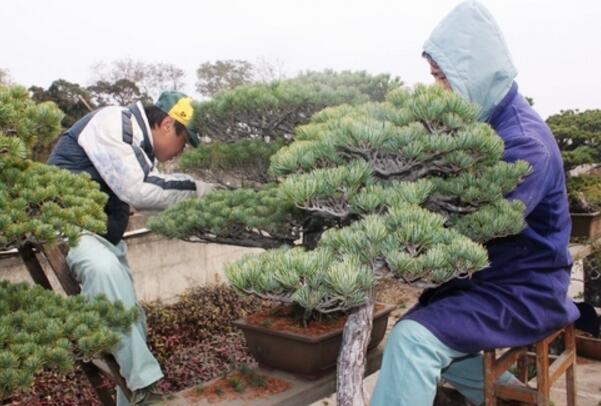
Whether in the methods for growing Orange Jessamine or in how Orange Jessamine overwinters, we have always mentioned the importance of pruning. But among the flower enthusiasts growing Orange Jessamine, many are beginners who often prune the wrong places, or even when they prune correctly, the result does not look good. As for how to prune Orange Jessamine to make it look better, we need to start with timing and methods.
II. When to prune Orange Jessamine/Detailed methods
1. Pruning in April-May
For ordinary flower enthusiasts, it is best to prune Orange Jessamine in April-May each year. Specific method: keep the main trunk and branches, and cut off some clustered or leggy diseased and weak branches. In addition, if during this period you find that the main trunk branches have grown to a suitable thickness, you can also prune their branches.
Pruning method: after cutting off the diseased and weak branches, you also need to observe the plant's shape and prune again to achieve a beautiful effect. At this time, it is best to maintain: leave about 3 branches per node (length unrestricted), achieving an orderly balance of density and spacing. After doing this, although your Orange Jessamine has not yet bloomed, the overall look will certainly be good.
2. Pinching before flowering
Before flowering, in order to concentrate nutrients and produce more flowers, Orange Jessamine needs to be pinched. So-called pinching means removing the upper part of the branch tips of the Orange Jessamine plant. This not only promotes the growth of new buds, but also controls the plant's growth vigor, laying a foundation for more flowers.
Pruning method: pinch when Orange Jessamine has grown new branches but they have not yet matured. As for how much to remove, this is not fixed; everyone can do it according to their own preference. The premise is a relatively attractive shape, so that your Orange Jessamine can be even more beautiful.
3. Bud removal
For how to prune Orange Jessamine, removing buds at the appropriate time is very important. This method is used when the plant grows unwanted buds.
Pruning method: you can remove the excess buds. This not only ensures the normal growth of Orange Jessamine, but also maintains the plant's appearance and avoids the phenomenon of branches growing chaotically.
4. Leaf removal
For how to prune Orange Jessamine to make it more beautiful, in addition to pinching and bud removal, leaf removal is also very necessary, because it can help the branches and leaves become more coordinated. In addition, leaf removal can also keep Orange Jessamine in a full-of-vitality state.
Pruning method: according to the growth shape of Orange Jessamine, you can prune the leaves accordingly. Flower enthusiasts with a strong sense of three-dimensionality can often make the plant more beautiful after removing leaves.
5. Pruning during dormancy
For a relatively densely growing plant like Orange Jessamine, proper pruning is very important. If it grows too densely, it will consume too many nutrients. After winter arrives, Orange Jessamine will go dormant, and at this time it is not suitable to fertilize. Therefore, in late autumn when the plant is about to enter the overwintering period, you should prune the plant.
Pruning method: you should cut off relatively dense branches or overly long branches. Pruning in this way can make the branches grow more extended and make the form of the branches more wonderful and moving. This is a relatively good method.
Overall, the pruning time for Orange Jessamine is very critical. If you use the correct pruning method at the correct time, when June/July arrives, your Orange Jessamine will bloom with beautiful flowers. It is worth mentioning that during the flowering period of Orange Jessamine, you should not prune, as it is easy to make mistakes, and its floral fragrance is very strong; if you smell it too much up close, you may easily feel dizzy.
Detailed explanation of indoor Azalea growing methods and precautions
Azalea, also known by aliases such as yingshanhong, shanshiliu, shanzhizhu, hongzhizhu, and shanjuan. There are many kinds of Azalea, and the leaf shapes of Azalea vary. Its flowers are born 2-6 in clusters at the branch tips, the corolla is broadly funnel-shaped, and the capsule is ovoid. At present, Azalea has become one of the most beloved important flowering plants at home and abroad. Let us tell you the growing methods and precautions for Azalea!
Growing methods:
I. Environmental conditions: For cultivating Azalea, it is best to have both indoor and outdoor environments. The indoor environment is used in winter. The outdoor site is used in summer and autumn, and muddy ground is best; cement ground is taboo. The site should be spacious, ventilated, and shaded. A shade shed should be built above, covered with reed curtains or using natural tree shade as protection. A light transmittance of about 30% is suitable, and exposure to the evening sun must be strictly avoided.
II. Potting soil requirements: Azalea likes loose, highly permeable, well-drained acidic soil rich in humus, with a pH value of 5.0-6.0. If clay or alkaline soil is used, hardly one in a hundred will survive. Especially for summer azaleas and foreign azaleas, mountain soil is indispensable. Mountain soil also needs to be improved. At present, 3 kinds of prepared culture soil are commonly used.
III. Flower pot selection: For cultivating Azalea, generally two kinds of pots are chosen: clay pots and purple clay pots. Clay pots have good aeration and water permeability, and production units all use these pots for cultivation. Finished Azaleas, especially already shaped Azaleas, are generally planted in beautiful and elegant purple clay pots for indoor and outdoor display. Purple clay pots have a fine texture, rich colors, and beautiful shapes, which can double their ornamental value.
IV. Improving water quality: For watering Azalea, rainwater is best, followed by river water and pond water. If tap water is used, it is best to store the water for 1-2 days to let the chlorine evaporate before use. When using it, add 0.2% ferrous sulfate, and water once every 7-10 days during the growing season. Regular use ensures that the soil is acidic.
V. Fertilizer and water management: Azalea likes shady and humid conditions and should not be too dry. During the flowering period, even more water is needed. In winter, Azalea has entered dormancy and does not need much water. Generally, water once every 4-5 days, preferably around noon on clear and warm days;
VI. Outdoor shading: Before being moved out and before flowering, it should receive more sunlight; during the flowering period, short periods of shading are needed at noon, with a light transmittance of 60%;
VII. Shaping and pruning: Azalea grows relatively slowly, so generally let it grow naturally, and only shape it after flowering, cutting off leggy branches, diseased and weak branches, deformed branches, and damaged branches.
VIII. Disease and pest control: For the lace bug (also known as the crown net bug), spray 40% dimethoate 1500 times solution during the damage period, once every 7 days, for 3 consecutive times. The control method for the terminal bud leaf roller is mainly manual capture and killing; larvae or pupae can also be killed by spraying 40% dimethoate emulsifiable concentrate 2000 times solution or dichlorvos 1500 times solution.
Precautions:
1. Azalea roots are as thin as hair strands, with few thick main roots. It fears both dryness and wetness, and especially fears heavy fertilizer. If watered too much, the roots soak in water; if too dry, the branches and leaves shrivel and the leaf petals fall off, posing a great threat to the plant. As for applying heavy fertilizer, it can endanger its life.
2. After the flowers fade, the remaining flowers must be cut off to avoid seed formation consuming nutrients. After new branches sprout, appropriately thin the branches, deciding whether to keep or remove them according to the plant's growth vigor.
3. Azalea is most suitable for planting in clay pots, because clay pots absorb water and allow air through, which is beneficial to root growth and development and makes the branches and leaves lush.
4. There are particular requirements for the placement of potted Azaleas. Generally, they should be placed on a southeast-facing balcony, and they must be ventilated, with as little movement as possible. Without ventilation, they are prone to black spot disease and massive leaf drop.
5. Azalea's light requirements should also be moderate. Avoid direct light in summer.
6. Thin buds and leaves in time, removing part of the overly numerous and dense buds and leaves, so that air can circulate and nutrients can concentrate in the flower buds. After the flower buds form, increase nutrition and apply an appropriate amount of more phosphorus and potassium fertilizer, otherwise the flower buds will turn into leaf buds.
7. The main reasons for Azalea leaf drop and failure to bloom are: too strong direct light in summer, freezing damage from severe cold, too much watering, too concentrated fertilizing, being kept indoors for too long, being placed in a place with poor air circulation or a dark and damp place, exposure to acid rain, etc. Therefore, these situations should be avoided during care.
8. Repotting and changing soil does not need to be done every year, generally once every 2 to 3 years. Try to minimize damage to the roots. The time should be after the flowers fade or in autumn. At the same time, spray thiophanate to prevent diseases.
9. The main pests of Azalea are red spider mites, aphids, etc., which can be killed by spraying fenvalerate, etc., with good results. If they are not dead after three days, spray once more.
10. The main propagation method for Azalea is cuttings. Around Grain in Ear, choose new branches 5 cm to 10 cm long, cut them off at the branching point, strip off the lower leaves, keep 3 to 4 top leaves, insert 1/3 of the branch into the soil, spray enough water, and cover with plastic film. Strengthen management at ordinary times, and transplant after one year.
[Conclusion]Bai Juyi praised it: "Idly break off two branches and hold them in hand; look closely, it seems not of the mortal world. Among flowers, this one is Xi Shi; bauhinia and peony are all Mo Mu."
More plant information>>
|Plectranthus amboinicus|Marigold cultivation|Care methods for Polyscias fruticosa|Flower pictures and names|Effects of Epipremnum aureum|Bowl lotus|
|Orange Jessamine bonsai|How to grow Schlumbergera|How to grow cactus|How to grow Gardenia|Effects of lavender|
| Foliage plants | Aquatic plants | Flowering plants | Carnivorous plants | Bryophytes |
|Integrated wardrobes |Rural small villa renderings |Shelf decoration pictures |Ceiling keel pictures |Nanmu furniture pictures|
Sweet Osmanthus: Sweet Osmanthus tree cultivation techniques
SweetOsmanthus has a strong fragrance but is not pungent; it is a mellow, long-lasting, extremely beautiful taste. Picking a cluster of osmanthus branches from a blooming osmanthus tree, its fragrance will still remain for a long time. Osmanthus wine brewed from osmanthus, osmanthus cake made from it, and brewed osmanthus tea will all bring us the rich fragrance of osmanthus.
Sweet Osmanthus: Sweet Osmanthus tree cultivation techniques
——————————————————————————————————————————————
[Plant profile]
——————————————————————————————————————————————
Chinese name:Sweet Osmanthus
Scientific name:Osmanthus fragrans
Aliases:Yuegui, muxi, muxi
Family:Oleaceae Oleaceae
Genus:Osmanthus Osmanthus
Origin and distribution:Sweet Osmanthus is native to southwestern China. Wild plants are found in Sichuan, Yunnan, Guangxi, Guangdong, and Hubei, and a wild community is distributed in Zhouluo, Liuyang, Hunan; it is also distributed in India, Nepal, and Cambodia.
Morphological characteristics:Evergreen shrub or small tree; leaves opposite, mostly elliptical or oblong-elliptical, leaf surface smooth, leathery, leaf margins serrate; blooms in autumn, flowers clustered in leaf axils, corolla split to the base, with milky white, yellow, orange-red and other colors, extremely fragrant; drupe purple-black when mature.
Growth habits of Sweet Osmanthus
——————————————————————————————————————————————
Sweet Osmanthus likes warmth and is suitable for growing in slightly acidic sandy soil that is well-drained, with deep soil layers, loose and fertile, and rich in humus. It is not tolerant of drought or barrenness. In poor soil, it grows sparse branches and leaves, the leaf color turns yellow, it rarely blooms, and in severe cases the entire Sweet Osmanthus plant dies. Young trees need some shade, and after maturity they require relatively sufficient light.
Sweet Osmanthus tree cultivation techniques
——————————————————————————————————————————————
▲ Potting: On cloudy and rainy days in spring and autumn is the best time to plant Sweet Osmanthus trees. Choose a location that is well-ventilated, well-drained, and warm. Planting requires slightly acidic soil. The composition of the potting soil for potted Sweet Osmanthus is: 2 parts leaf mold, 3 parts sandy soil, 3 parts garden soil, 2 parts decomposed cake fertilizer. After mixing evenly, pot it or repot it.
▲ Light and temperature: In winter, move potted Sweet Osmanthus indoors to a sunny place, fully expose it to direct light, and keep the room temperature above 5°C, but it must not exceed 10°C. After the Sweet Osmanthus tree sprouts in April of the following year, move it outdoors, first place it in a wind-sheltered, sunny spot, and after stable growth gradually move it to a ventilated, sunny, or semi-shady environment.
▲ Water and fertilizer: Before new shoots of Sweet Osmanthus emerge, keep the soil moist, and do not water with fertilizer water. Generally, apply nitrogen fertilizer once in spring and phosphorus and potassium fertilizer once in summer, so that flowers are abundant and leaves are lush. Before winter, apply overwintering organic fertilizer once, mainly decomposed cake fertilizer and barnyard manure. Avoid concentrated fertilizer, especially human waste. Potted Sweet Osmanthus in northern winters should be watered less. After being moved out in April, appropriately increase the amount of water. During the peak growing season, an appropriate amount of dilute fertilizer water can be applied, and during the flowering season the fertilizer water can be slightly more concentrated.
▲ Shaping: According to the tree form of Sweet Osmanthus, set the main framework well, and remove other root suckers, leggy branches, overly dense branches, diseased and weak branches, and crossing branches. For trees that are strong at the top and weak at the bottom, the upper branches can be shortened by 1/3, and at the same time apply healing and antiseptic film to the pruning cuts to protect the wounds, so that the overall tree vigor becomes strong and healthy.
" Conclusion:Sweet Osmanthus is a plant very suitable for artificial cultivation. Planted in a courtyard, it can not only remove odors, but also has excellent feng shui symbolism. Whenever a breeze passes, fragrance lingers throughout the room, and the mood naturally becomes great without one realizing it. Small Sweet Osmanthus trees can also be grown in pots.
[More plant encyclopedia]
Aloe Jasmine Radiation-proof plants Copper coin grass Potted plants Bonsai making Drug plants Mistletoe Indoor flowers Money tree Lucky bamboo
Hydroponic lucky bamboo Potted plant making Anthurium Mint Lithops Geranium Garden Schlumbergera Spathiphyllum Snake plant Kunlun snow chrysanthemum
Water lily Flower pot Violet Magnolia Winter jasmine Mimosa Blue enchantress Hydroponic cyclamen Dumb cane Pingan tree Lucky bamboo
Peperomia Qingxiangmu Chinese rose Money tree flowering Serissa Hydrangea Bamboo fern Mosquito repellent grass Rubber tree Buddhist pine Fuchsia
Ivy Cymbidium Jade plant Bowl lotus Orange Jessamine