-
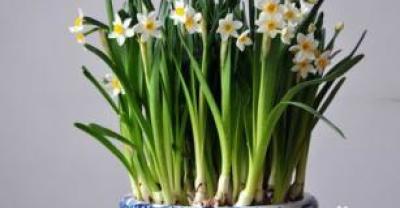
How to grow Murraya paniculata (orange jasmine) in pots? Detailed guide to cultivation methods and techniques
The flowers of Murraya paniculata are beautiful, but growing it in pots is by no means simple, and many flower lovers run into trouble when cultivating potted Murraya paniculata. So, Murraya paniculata...
-
Cultivation Methods and Care Tips for Orange Jessamine
Orange jessamine, also known as wanli xiang, qianli xiang, guoshan xiang, sijijing and so on, thrives in hot weather, generally grows along the coast, and is mainly distributed in Taiwan, China, Hainan and other places...
-

What is orange juice cod liver oil? Characteristics and suitable groups
Cod liver oil is a traditional medical and nutritional health product, with a good reputation among urban and rural people and a certain market both domestically and internationally. In recent years, with the development of the beverage industry and the improvement of consumption levels, orange juice beverages have become increasingly popular, and their consumption has continued to increase. Under these circumstances, a product combining cod liver oil and orange juice was developed - orange juice cod liver oil. Orange juice cod liver oil not only relieves heat and quenches thirst, allowing people to taste the unique flavor of orange juice beverages, but also provides the vitamin A and vitamin D essential to the human body
-
Are the new shoots currently sprouting on the mandarin orange tree late autumn shoots?
Are the shoots currently sprouting late autumn shoots? My sugar mandarin oranges will have a trial crop next year. Should these shoots be kept or removed? When is flower bud differentiation? When should girdling begin? Currently, it is already late autumn, about 20 days away from the Start of Winter solar term. Shoots sprouted by sugar mandarin oranges in late autumn are of course late autumn shoots. The start of flower bud differentiation in sugar mandarin oranges generally begins at the end of October or the beginning of November. That is, before this time, the last autumn shoots of plants planned to bear fruit the following year should be able to fully mature before their flower bud differentiation period.
-
How to control the citrus black scale in orange orchards? The pure yellow aphelinid wasp comes to the rescue
[Morphological characteristics] Female wasp body length 0.92-1.18 mm, yellow, without color spots. The posterior margin of the scutellum has dark brown stripes. The base of the forewing has short black stripes; the ventral side of the antennal scape is dark brown, and the remaining segments are deep fuscous. Legs yellow. Compound eyes with fine hairs. Thoracic hairs thick and black; the scutellum bears 4 hairs; the forewing is 2.25 times as long as wide; the ovipositor is 1.9-2.01 times the length of the middle tibia. Male wasp body length 0.71-0.92 mm; the forewing is wider than that of the female, 2.2-2.33 times as long as wide. Important differences from Aphytis chrysomphali: the pure yellow aphelinid wasp of the citrus black scale is a bisexual species, and the propodeum is shorter, 0.75-0.8 times the length of the scutellum. The fan-shaped projections are large and elongated. Strongly overlapping; the thorax and venter of the mature pupa are dark brown, with only the abdominal tip lighter in color. Aphytis chrysomphali is a unisexual species, with males rarely seen in nature; the propodeum is longer, equal to or slightly longer than the scutellum. The posterior margin is broadly arched; the fan-shaped projections are small, rounded, and not overlapping. The mature pupa is yellow, with only a single black longitudinal line on the mesothoracic ventrite.
-
How to Propagate Orange Jessamine (Aglaia odorata)? Two Propagation Methods and Key Points Explained
Unlike many flowering plants, orange jessamine is best propagated during the plum rain season in summer. This plant has rather particular habits and prefers a high-temperature, high-humidity environment during propagation, which is when it is easiest to keep the cuttings alive. Generally, there are three methods for propagating orange jessamine.
条件筛选