-
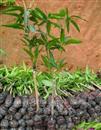
Key Points of Mango Grafting and Seedling Cultivation Techniques
1. Selection of scions: Collect scions from a certified mother stock orchard or from superior individual trees of mature mother trees. The mother trees must be of pure variety, high and stable yield, good quality, and free of quarantine pests and diseases. Where conditions permit, nurseries should establish scion orchards specifically for collecting scions. Select branches from the outer periphery of the canopy exposed to sunlight, vigorous, well-developed, with plump buds, and free of pests and diseases - 1-year-old or 2-year-old mature lignified branches. Generally, autumn grafting uses current-year spring and summer shoots, while spring and summer grafting uses last year's autumn shoots or current-year spring shoots. Branches that are flowering, fruiting, or have just finished fruiting, as well as shaded weak branches, are not suitable for scions. Leaves can be removed 10-15 days in advance; after the petioles drop off, soak the collected scions in 1000 times carbendazim solution for 3 minutes, then air-dry before grafting immediately, which can improve the survival rate. Collected scions should be grafted promptly; if kept for more than 3 days, they must be stored at low temperature with moisture retention. If scions are collected from other locations, bundle them well, wrap with wet paper or wet cloth, and place in a cardboard box lined with plastic film. During transport, protect against sun exposure and heat buildup or dehydration and shrinkage.
-
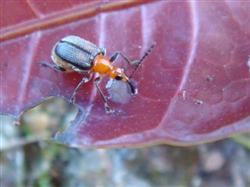
What are the control methods for mango weevil infestation?
1. The mango leaf-cutting weevil is widely distributed. Adult beetles feed on tender mango leaves, causing the leaves to dry up; or the female lays eggs on tender leaves and bites the tender leaves off at the base, affecting plant growth. Control methods: ① During the period of new shoot growth, pick up the bitten-off fallen leaves from affected plants once every 3 days, dry them in the sun and burn them to kill the larvae;...
-
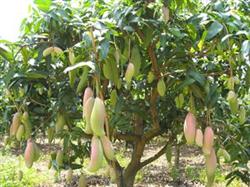
What are the key management techniques for a mango orchard?
Strengthening the comprehensive management of a mango orchard means promoting vigorous tree growth to achieve high and stable yields, excellent quality and improved economic returns. Specifically, work should start from the following aspects: 1. Soil cultivation must be meticulous. Ensure a good soil aggregate structure in the surface growing layer, avoid soil compaction, and...
-
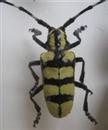
What are the control methods for the mango stem borer (Rhytidodera simulans)?
Distribution and damage: it occurs both domestically and abroad, with varying degrees of occurrence in Yunnan, Guangdong, Guangxi, Fujian and other areas of China. The larvae bore into and feed on the branches of fruit trees such as mango and cashew, usually entering through young branches and gradually boring downward into larger branches and the trunk, seriously affecting the growth vigor of the plant and ultimately causing the death of the entire plant....
-
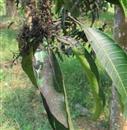
How to prevent and control mango sooty mold? Introduction to practical methods
What is mango sooty mold? How to prevent and control this fungal disease. Currently, 6 pathogens causing mango sooty mold have been identified in China. It damages leaves, branches and shoots, and fruit, affecting leaf photosynthesis and fruit appearance. Control methods: First, rational close planting and pruning to keep the canopy well ventilated and exposed to light. ...
-
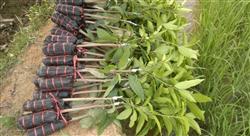
Pollution-free mango seedling cultivation method
How are pollution-free mango seedlings grown? What methods are there? Pollution-free mango seedling cultivation methods: 1. Seed pretreatment: Collect locally grown mango fruits or seeds (polyembryonic varieties), such as Zhanjiang native mango, Hainan native mango, Guangxi almond mango, Yunnan small mango, Fujian red flower mango; monoembryonic varieties are suitable for use as seed. Remove the flesh from the collected fruits, rinse them clean with water, and discard seeds that float and those with soft or shriveled seed shells. If seeds are collected from other places, process them at the collection site, sun-dry the qualified seeds until the seed shells are dry, then mix in coconut coir, charcoal powder or fermented sawdust for moisture-retaining transport; after transport back, treat the seeds as locally collected fruits by shelling and sprouting, then air-dry. Seeds used for mango rootstock should come from seeds of mature, plump fruits eaten from vigorously growing trees. In production, seeds left over from processing are also used, or even large quantities of plump fruits are purchased and piled until rotten to extract the seeds; after the seeds are extracted, immediately wash off the flesh, air-dry, and sow right away. Sowing must be completed within 7 days, otherwise the germination rate will be affected.
-
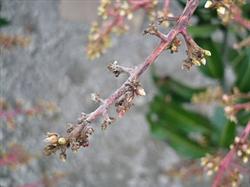
How to prevent and control mango powdery mildew? Key control points explained in one article
How to prevent and control mango powdery mildew? Please advise. Powdery mildew is an important disease of mango during the flowering period, damaging inflorescences, young fruit and tender leaves. It occurs in production areas in Guangdong, Hainan, Yunnan, Guangxi and other parts of China. It has also been reported in India, Pakistan, Brazil, South Africa, Australia, Sri Lanka and other countries abroad. Symptoms...
-
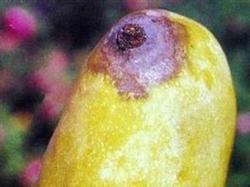
What is mango stem-end rot? Getting to know this mango disease
What is mango stem-end rot? How to prevent and control this fungal disease. It damages fruit during storage, causing the fruit to rot; when it attacks branches it is called gummosis. Harvesting fruit after rain or in damp conditions, and leaving no fruit stalk, favour the occurrence of this disease. Control methods: (1) Clean the orchard in winter, and routinely apply extra lime and potassium fertilizer; during the flowering and fruit...
-
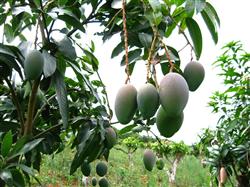
How to control the mango stem borer in mango cultivation?
How to control the mango stem borer when growing mangoes? Please explain the methods. The mango stem borer belongs to the order Coleoptera, family Cerambycidae, and occurs in all mango-producing areas of southern China. Its larvae bore into and feed on branches and trunks, weakening the affected plants; in severe cases they can cause the plants to die, and infested branches break easily in the wind. This pest has 1 generation per year and mainly overwinters as...
-
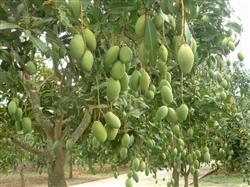
How to prevent and control mango powdery mildew? A detailed guide to practical methods
How to prevent and control powdery mildew when growing mangoes? Please explain the methods. Powdery mildew is an important disease of mango during the flowering period, affecting flower panicles, young fruit and tender leaves. It occurs in producing areas in Guangdong, Hainan, Yunnan, Guangxi and other parts of China. It has also been reported in India, Pakistan, Brazil, South Africa, Australia, Sri Lanka and other countries abroad...
条件筛选