Pollution-free mango seedling cultivation method
How are pollution-free mango seedlings grown? What methods are there? Pollution-free mango seedling cultivation methods: 1. Seed pretreatment: Collect locally grown mango fruits or seeds (polyembryonic varieties), such as Zhanjiang native mango, Hainan native mango, Guangxi almond mango, Yunnan small mango, Fujian red flower mango; monoembryonic varieties are suitable for use as seed. Remove the flesh from the collected fruits, rinse them clean with water, and discard seeds that float and those with soft or shriveled seed shells. If seeds are collected from other places, process them at the collection site, sun-dry the qualified seeds until the seed shells are dry, then mix in coconut coir, charcoal powder or fermented sawdust for moisture-retaining transport; after transport back, treat the seeds as locally collected fruits by shelling and sprouting, then air-dry. Seeds used for mango rootstock should come from seeds of mature, plump fruits eaten from vigorously growing trees. In production, seeds left over from processing are also used, or even large quantities of plump fruits are purchased and piled until rotten to extract the seeds; after the seeds are extracted, immediately wash off the flesh, air-dry, and sow right away. Sowing must be completed within 7 days, otherwise the germination rate will be affected.
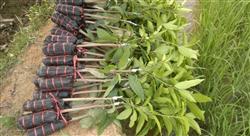
How are pollution-free mango seedlings grown? What methods are there
Pollution-free mango seedling cultivation methods:
1. Seed pretreatment: Collect locally grown mango fruits or seeds (polyembryonic varieties), such as Zhanjiang native mango, Hainan native mango, Guangxi almond mango, Yunnan small mango, Fujian red flower mango; monoembryonic varieties are suitable for use as seed. Remove the flesh from the collected fruits, rinse them clean with water, and discard seeds that float and those with soft or shriveled seed shells. If seeds are collected from other places, process them at the collection site, sun-dry the qualified seeds until the seed shells are dry, then mix in coconut coir, charcoal powder or fermented sawdust for moisture-retaining transport; after transport back, treat the seeds as locally collected fruits by shelling and sprouting, then air-dry. Seeds used for mango rootstock should come from seeds of mature, plump fruits eaten from vigorously growing trees. In production, seeds left over from processing are also used, or even large quantities of plump fruits are purchased and piled until rotten to extract the seeds; after the seeds are extracted, immediately wash off the flesh, air-dry, and sow right away. Sowing must be completed within 7 days, otherwise the germination rate will be affected.
Before sowing, the shells must first be removed to promote sprouting. For air-dried seeds, clamp the seed stalk near the ventral shoulder with pruning shears, twist downward, and the seed shell will tear open along the suture line; then tear off the shell on the other side to remove the seed.
2. Sowing: Shelled seeds can be sown directly, but sowing after sprouting gives better results. For the sprouting method, first build a sand bed about 12 cm thick and water it to make the sand bed moist. At a plant spacing of 1 cm and row spacing of 3-5 cm, place the seeds with the hilum facing downward in rows on the sand bed with 50%-60% shade, then cover with 1 cm of clean fine sand and water thoroughly. After that, spray water 1-2 times a day to keep the sand bed moist and prevent underground pests; after 20 days the seeds have basically sprouted. The seedlings can be transferred to separate beds before the cotyledons expand. When transferring, use a spacing of 18 cm x 25 cm and transplant separately according to seedling size, watering thoroughly to settle the roots. For nursery bag cultivation, transplant the seedlings into bags at 1 seedling per bag, then cover with soil and water. If sowing directly without sprouting, they can be planted directly into nursery bags or sown into the seedbed at a spacing of 18 cm x 25 cm, and then management can be strengthened.
Plow the nursery land to a depth of 20 cm and break up the soil. Before plowing, apply farmyard manure mixed with superphosphate after decomposition at 3000-4000 kg of farmyard manure + 30 kg of superphosphate per 667 sq m into the soil, mixing thoroughly and evenly. Then fill 17 cm x 25 cm nursery bags with the mixed nutrient soil, bury the bags (polyethylene plastic bags) in the soil, and arrange them in rows; the width of each row should be suitable for 6 bags, and the length depends on the plot, with a bed spacing of 60-80 cm.
3. Seedling management: Rootstock seedling roots are shallow, weak, and young in tissue, with poor stress resistance and susceptibility to pests and diseases, so protection and management must be strengthened.
(1) Watering: In drought conditions, water frequently; especially newly sprouted seedlings must be watered daily to keep the seedbed moist, but not waterlogged.
(2) Shading: From seed germination to seedling growth, before the cotyledons turn green, proper shading is needed. It is best to build a shade shed over the seedbed with black shade netting of 50%-75% light transmittance to prevent sunburn damage to the seedlings.
(3) Thinning and bed transfer: The survival rate is highest when seedlings are transferred to separate beds just as the young shoots emerge and the leaves have not yet expanded, or when the first leaves have matured but the second flush has not yet emerged. This is because when transferred at these two times, the seedlings have many lateral roots, and the nutrients stored in the seed embryo can still continue to support seedling growth. If transferred when the first sprouted leaves have expanded but not yet turned green, or after the second flush has emerged, the survival rate is low. Do not damage the roots when transferring; transplant with the embryo and roots together. Some varieties can produce several small seedlings from one seed, so carefully separate the embryos together with the seedlings and do not break the endosperm. To improve the uniformity of growth and survival rate of the seedlings, separate large, medium, and small seedlings when transplanting. Mango seedling cultivation now advocates bag seedlings, because bag seedlings have a high survival rate and fast growth after planting. Seedlings being transferred to separate beds are directly transplanted into nursery bags, then watered and shaded after planting, and watered once every 1-2 days thereafter until they survive.
(4) Pest and disease control: The main pests and diseases of seedlings are the mango shoot borer and anthracnose.
(5) Fertilization: After the seedlings survive, fertilize once, and then fertilize once every 1 month, alternately drenching with 0.5% urea and 1% compound fertilizer solution. After half a year, fertilize once every 1.5 months; it can be broadcast after rain or watered in after broadcasting, applying 5 kg of urea or 5 kg of compound fertilizer per 667 sq m, used alternately.
Before the young shoots of the seedlings turn green, spray once every 7 days with trichlorfon 800-1000 times + carbendazim 200 times, or 400 times + thiophanate-methyl 1000 times, for 3 consecutive sprays.
Click to get more mango cultivation techniques
Click to get more fruit cultivation techniques