-
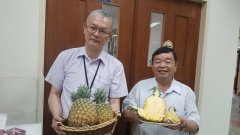
A new pineapple variety has arrived from Taiwan, China! Hailed as the "mango pineapple," "Tainung No. 23" is expected to become the rising star of the market
The Chiayi Agricultural Experiment Branch of the Taiwan Agricultural Research Institute today announced a new pineapple variety, "Tainung No. 23," developed through 24 years of breeding efforts by crossing "Tainung No. 19" as the female parent with "Tainung No. 21" as the male parent. Farmers affectionately call it the "mango pineapple." Its sugar-to-acid ratio
-
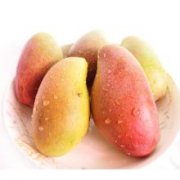
How to ripen mangoes so they turn yellow quickly? How long does an unripe mango take to ripen naturally? What should I do if I cut open a green mango and it is too unripe?
What methods are there to ripen an unripe mango? How long does an unripe mango take to ripen naturally? What should I do if I cut open a green mango and it is too unripe? Do you know the answers to these questions? If not, then you can take a look at the answers below; they may be helpful to you.
-
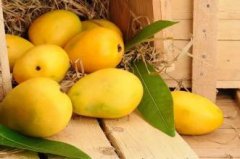
Why mangoes rot before they ripen, and can wrapping a mango in newspaper ripen it and turn it yellow?
Do you like eating mangoes? But the green mangoes you usually buy are not particularly ripe, so do you know how to ripen green mangoes? Would you like to find out, so the mangoes you want to eat ripen sooner without rotting? Why do mangoes rot before they ripen? When mangoes are green
-
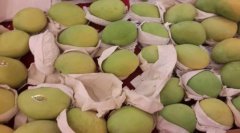
What is the fastest way to ripen mangoes so they turn yellow without rotting?
Mango is a fruit that ripens rather late; generally the mangoes sold in fruit shops are all artificially ripened, and chemical ripening agents are used, which is very bad. Eating too much fruit ripened this way with chemicals can harm your body. So is there any better ripening method?
-
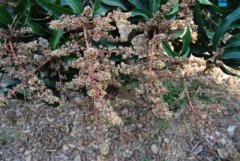
Symptoms and Control Methods of Mango Powdery Mildew
What do the symptoms of mango powdery mildew look like? What are the ecological causes of its occurrence? How should it be controlled, and what are the control methods? Symptoms: This disease can occur on mango inflorescences, young leaves, young fruit and young stems. Generally, a powdery fungal growth can be seen on the affected parts. On young stems and leaves, small lesions in the early stage are surrounded by a brown ring; later the lesions merge into large white patches, which then gradually turn blue-purple. Severely affected young stems and leaves often become deformed; when the lesions continue to develop and encircle the flower stalk, the small fruit on it will begin to turn yellow and drop, so a severely affected mango tree will bear no fruit at all. In the later stage of the disease, the fungal growth at the lesions turns grayish-black. After fruit that has previously been affected develops and grows, a purple network pattern appears on the surface, affecting the commercial value of the fruit.
条件筛选