How to prevent and control mango powdery mildew? Key control points explained in one article
How to prevent and control mango powdery mildew? Please advise. Powdery mildew is an important disease of mango during the flowering period, damaging inflorescences, young fruit and tender leaves. It occurs in production areas in Guangdong, Hainan, Yunnan, Guangxi and other parts of China. It has also been reported in India, Pakistan, Brazil, South Africa, Australia, Sri Lanka and other countries abroad. Symptoms...
How to prevent and control mango powdery mildew? Please advise
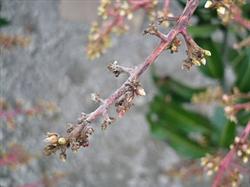
Powdery mildew is an important disease of mango during the flowering period, damaging inflorescences, young fruit and tender leaves. It occurs in production areas in Guangdong, Hainan, Yunnan, Guangxi and other parts of China. It has also been reported in India, Pakistan, Brazil, South Africa, Australia, Sri Lanka and other countries abroad. Symptoms Mango powdery mildew mainly damages inflorescences and tender leaves, and also damages fruit; the symptoms are basically the same: on the affected organs, some scattered powdery white small patches first appear, then gradually expand and merge with each other to form a layer of white powdery mildew, and the tissue under the mildew layer gradually turns brown and necrotic. Inflorescence Flower stalks and sepals are most susceptible. When these organs are infected, the flower buds stop developing and the diseased parts are covered with a white powdery mildew layer; the base of the inflorescence first turns brown, and the whole flowering branch gradually turns brown, causing flower drop. Leaves Symptoms mostly appear first on the underside of leaves. The white powdery mildew layer mostly occurs in the midrib area, and light gray patches appear on the affected leaf tissue. In severe cases, the affected leaves become deformed and fall early. Fruit It mainly damages young fruit. In severe cases, the white powdery layer often covers the entire fruit surface, and the epidermis of the diseased part turns brown and cracks; affected fruit easily drops. Although lightly diseased fruit may continue to grow, after the white powdery mildew layer falls off, the diseased part shows purple patches, cracks, and becomes lignified. Pathogen The pathogen of mango powdery mildew is Oidium mangiferae Berther, belonging to the Deuteromycotina. The white powdery mildew layer growing on the affected organs is the mycelium and conidia parasitizing on the epidermis; the conidia are oval, single-celled, colorless, and produced in chains. Its sexual stage has not been observed. Disease pattern Mango powdery mildew overwinters as mycelium in infected older leaves and branch tissues. In spring of the following year, when environmental conditions are suitable, the overwintering mycelium produces conidia, which are spread by airflow to cause infection. Temperature is the main factor affecting the occurrence of mango powdery mildew. When the monthly average temperature is 21-22°C, it is most suitable for the occurrence of powdery mildew. Humidity has less influence; when the relative humidity is about 70%, it is favorable for disease occurrence, but under drought conditions the disease also occurs severely. Excessive application of nitrogen fertilizer makes the tissues of branches and leaves soft and more susceptible to powdery mildew. Varieties such as Zihua mango, Guixiang mango, Qiu mango, and Yuexi No. 1 are relatively susceptible.
Control methods 1. Plant disease-resistant varieties. 2. Apply more organic fertilizer and phosphorus and potassium fertilizer, and control excessive application of chemical nitrogen fertilizer. 3. Chemical control should start spraying from the early flowering stage, once every 15-20 days. Effective agents include: 20% triadimefon emulsifiable concentrate 3000 times solution; 15% triadimefon wettable powder 3000-4000 times solution; 40% sulfur-carbendazim suspension concentrate 350-500 times solution; 250-300 mesh sulfur powder, etc. Note that sulfur agents should not be used when the temperature is too high, so as to avoid phytotoxicity.
Click to get more mango cultivation techniques
Click to get more fruit cultivation techniques