-
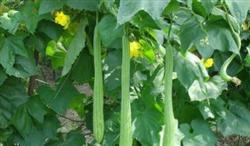
Dense-Planting Cultivation Techniques for Luffa (Sponge Gourd) in Winter-Warm Greenhouses during the Winter-Spring Season
Using winter-warm greenhouses for high-density off-season cultivation of luffa can greatly increase yields, with a per-mu yield of over 5000 kg and a per-mu income of 30,000-40,000 yuan. Variety selection: choose early-maturing varieties with strong cold tolerance, disease resistance and adaptability, such as Jiangshu No.1, Zaoza No.1, Cuilu Early Luffa, Yulu Early Luffa, and Wuye. Xiang...
-
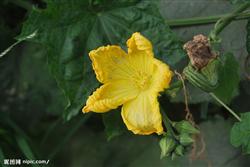
How to Prevent and Control Luffa Flower Rot? A Comprehensive Multi-Measure Prevention and Control Guide
Luffa flower rot is closely related to nutrient deficiency in the plant. Boron deficiency causes the stigma of luffa to turn black, and many vegetable growers mistake it for an infectious disease and treat it as such. Once the floral organs are damaged, there is no way to remedy it, so prevention must be done in advance. Before luffa flowering, spray with a 500-fold dilution of borax or a 1500-fold dilution of "Zhixin" boron fertilizer to prevent blackening of the stigma caused by boron deficiency....
-
Luffa leaves can treat livestock diseases, and the clever methods must be mastered
I. Sowing and seedling raising Before sowing luffa, treat the seeds with water at 55-60°C for 15 minutes, then soak them in water at 25°C for 4 hours, rinse off the mucus on the seed coat surface, then wrap the seeds in wet gauze and place them in an incubator to sprout. Select well-sprouted seeds and sow 1-2 seeds per pot, generally using about 500 grams of seed per mu. Before emergence...
-
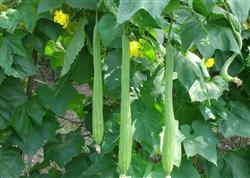
Detailed Explanation of Key Cultivation Techniques for Luffa (Sponge Gourd)
Luffa is deeply loved by people for its crisp texture and sweet taste. Summer luffa is planted from late April to early July and comes to market from June to October. Its cultivation method is as follows: Variety selection. For summer luffa, choose varieties that are heat-tolerant, early-maturing and high-yielding. Site selection. Summer luffa has no special requirements for the soil, as long as the previous crop was not a cucurbit...
-
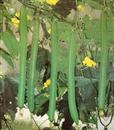
Autumn Planting Time and Key Techniques for Sponge Gourd (Luffa)
When autumn-planted sponge gourd is sown from mid-to-late July to mid-to-early August, its growing and fruiting period coincides with a season of high temperatures, temporarily scarce rain, and gradually rising autumn winds. This very easily leads to weak vine growth, few fruits, many pests and diseases, and low returns. Therefore, the following points should be noted in cultivation and management: 1. Cultivate strong seedlings and ensure a full stand. (1) Seed selection. Choose early-maturing...
-
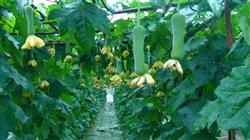
Detailed Explanation of Key Points of Luffa Cultivation and Management Techniques
Sow and raise seedlings in early to mid-March. Local varieties such as Hangzhou iron-skin luffa and Linhai white luffa can be selected, with a seeding rate of 20O-300 grams per mu. April (1) Planting: Luffa prefers fertile soil rich in humus. Deeply plow and level the soil to make beds. Bed width (including ditch) 2.6-3.3 m, one row per bed, hole spacing 50 cm,...
-
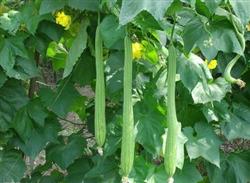
Key Technical Points for Greenhouse Luffa Cultivation and Management
How should luffa be managed when grown in a greenhouse? Please help advise. For greenhouse luffa management, you can refer to the following: Adjust temperature and light well. Luffa requires relatively high temperatures throughout its entire growth period. The suitable temperature for growth is 20°C-24°C, and the suitable temperature for fruit development is 24°C-28°C. At around 15°C, luffa grows slowly, and below 10...
-
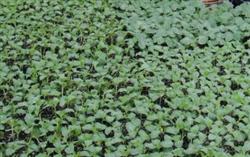
How to grow luffa seedlings? Master these methods to grow strong seedlings
How to grow luffa seedlings? Here is an introduction. To achieve early maturity and high yield, in the north seedlings are often raised in cold frames from late March to April, using 200-250 grams of seed per mu of field. The seedbed needs sufficient base fertilizer, made into a 2-meter-wide bed with the surface leveled, watered thoroughly, and covered with film to warm up before sowing. Because luffa seed coats are thick and germination is slow, before sowing soak the seeds in a 100-fold solution of Xin Gaozhi Mo (New High-Lipid Film) and then use conventional methods for sprouting treatment...
-

Detailed Explanation of Symptoms and Control Methods of Downy Mildew in Luffa
Symptoms and Control Methods of Powdery Mildew in Luffa
-

Practical Methods for Cleverly Using Luffa to Treat Livestock Diseases
Cleverly Using Luffa to Treat Livestock Diseases
条件筛选