-

How do you stop a bonsai boxwood from blooming? Let me teach you a few practical methods.
Boxwood bonsai has become an artistic treasure for its small evergreen leaves, slow growth and resistance to losing shape. Generally speaking, the material for boxwood bonsai is mostly taken from wild old stumps growing by the water. Wild old stumps bloom and set seed very easily. Some people think that boxwood blooming is very "spectacular" and is a great sight. The author currently keeps more than a hundred pots of wild boxwood stump bonsai, and through years of management practice and careful observation, the author has found that boxwood blooming is not a good thing. This is because boxwood blooming has three disadvantages: First, it ruins the leaf appearance. The bud stage of boxwood is long, lasting from August of the previous year to March of the following spring. The fine, dense buds are tucked
-
What is the Jilin white raccoon dog? Let us introduce you to this raccoon dog breed
The Institute of Special Wild Economic Animals and Plants, Chinese Academy of Agricultural Sciences, used the mutant white gene from the wild coat color (the common color type), and after 16 years of research, finally succeeded in breeding the new color type white raccoon dog we now have, the Jilin white raccoon dog. Phenotypically, the new color type white raccoon dog has two forms: one retains the wild-type coat color only on the eye rims, ear edges, nose tip, paws and tail tip, while the guard hairs and underfur on all other parts of the body are pure white; the other has pure white guard hairs and underfur on all parts of the body. The two white raccoon dogs are the same as the wild-type raccoon dog in body shape, appearance, habits and reproductive capacity,
-
A Complete Guide to the Key Technical Points for Establishing an Apricot Orchard for Kernel Production
Apricot trees are fruit trees that love sunlight, tolerate drought, and fear waterlogging and frost, so an orchard should be established on a sunny, high, and dry site; it must not be established on shady slopes, waterlogged lowlands, or valley bottoms where cold air easily settles. Apricot trees are long-lived fruit trees; generally even 100- to 200-year-old trees still bear heavily, so the planned row and plant spacing should be somewhat large. However, to meet the need for early high yields, temporary trees can be set up when the orchard is established, and gradually thinned out or transplanted as the trees age. The row and plant spacing for the permanent rows can be designed at 4 m x 6 m, and for temporarily densified orchards at 2 m x 3 m; by around 10 years of age the temporary trees should be dealt with in time.
-
Fujian Tea, also known as Carmona, let us get to know this plant
Scientific name: Carmona microphylla. Aliases: Carmona. Family and genus: Boraginaceae, Carmona genus. Phylum: Angiosperms. Class: Dicotyledons. Subclass: Sympetalae. Morphological characteristics: A shrub, 1-3 m tall, much branched; young branches cylindrical, with minute stiff hairs. Leaves alternate on long shoots, clustered on short shoots, leathery, obovate or spoon-shaped obovate, 0.9-5 cm long, 0.6-2.3 cm wide, base gradually
-
How is the condition of Euonymus japonicus disease? Let us help you recognize the common disease symptoms
1. Symptoms: In the early stage of the disease, there are small yellow spots on the leaves, which gradually turn yellowish-brown and expand into round or irregular spots. The diameter of the spots is 2 mm to 10 mm. In the later stage, the spots become grayish-brown or grayish-white, with darker edges, and many small black dots form on the spots. In severe cases, the spots merge into one large area, and the leaves turn yellow and fall off. 2. Disease pattern: The pathogen overwinters in the form of mycelium and other structures on diseased leaves or fallen leaves, serving as the primary infection source. Spores are spread by wind and rain. In the spring of the following year, as the temperature rises, conidia are produced,
-
What to Do When Spider Plant Leaf Tips Turn Brown and Dry? A Complete Guide to Prevention and Treatment
Spider plant (Chlorophytum comosum) has fresh green leaves shaped like orchid leaves, fresh and elegant, and is a common and beloved household foliage plant. It also has the unique effect of purifying indoor air, bringing people even greater benefits, which is one of the important reasons people like to grow it indoors. Spider plant is called the "air plant," and it truly lives up to the name: those stolons extending from the leaf axils, both firm and soft, hang down and outward from the rim of the pot, reaching several feet in length, with each stolon tip bearing new plantlets of various sizes, fresh green as if washed, gently swaying in the wind. If
-

US and Canada romaine lettuce causes illness, FDA urgently issues import controls
Is there a problem with US and Canada romaine lettuce? Why are people saying to avoid eating US and Canada romaine lettuce for now? The FDA urgently issued import controls tonight, calling on the public to pay attention. Let's take a look together. Taiwan's annual imports of romaine lettuce total 4,976 metric tons, with imports from the US accounting for
-

Foxtail Millet Cultivation Techniques: Field Management Measures and Pest and Disease Control Methods
Foxtail millet cultivation techniques and field management - do you know them? Soil selection and land preparation with basal fertilizer application, sowing and thinning, weed control and intertillage with earthing up - are you clear on all of these? And there is also pest and disease control - if you do not understand, let us take a look together. (1) Soil selection
-

What is the shape and taste of foxtail millet, and how long is its growth period?
Do you know foxtail millet? Do you know what its morphology is like? When is its growth period? Let's take a look together. Foxtail millet is a type of millet. Foxtail millet originated in China and evolved from green foxtail (chromosome number 2n=18), and they cross easily with one another.
-
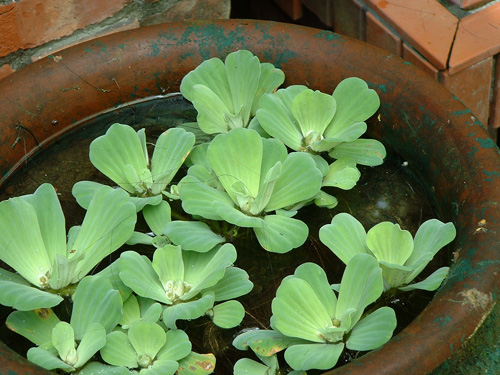
Pistia stratiotes (Water Cabbage, Water Lettuce) Introduction and Detailed Ecological Habits
Pistia stratiotes (Water Cabbage, Water Lettuce) Scientific name: pistiastratiotes Alias: Water Lotus, Large Duckweed, Water Lily, Fat Pig Grass, Water Hibiscus, Water Floating Lotus Family and Genus: Araceae Pistia Genus Morphological characteristics: Perennial floating herb. With stolons, leaves basal, rosette-like clustered, sessile
条件筛选