-

Wooden Tongue Disease in Cattle Is Highly Prevalent in Autumn, Farmers Need to Pay Attention to Prevention and Treatment
Wooden tongue disease in cattle is a type of excess heat syndrome caused by accumulated heat in the heart meridian and swelling and hardening of the tongue body. The symptoms of this disease are characterized by: the tongue body is swollen and hard, shaped like a wooden stick, and cannot move freely. This disease often occurs in autumn, mostly due to the dry autumn climate combined with excessive labor, rushing about too quickly, prolonged thirst without drinking, or feeding grain in excess while the animal is hot, which causes heat pathogen to accumulate in the heart and chest and attack upward to the tongue. Treatment: First, use crushed scallion leaves to rub and massage the surface of the cow's tongue until the tongue becomes soft. Then choose one of the following methods for treatment: (1) Coptis chinensis 2
-
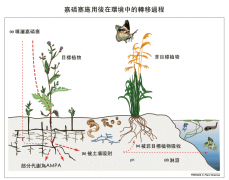
Taiwan, China's pesticide use hits a 17-year high; is China's use large?
Do you know how large pesticide use is? Taiwan, China's pesticide use has hit a 17-year high; come and see what the figures are. A US court ordered a sky-high payout over glyphosate, and chlorpyrifos was banned to protect infants; will Taiwan, China follow suit? China's pesticide use per unit area is at the
-
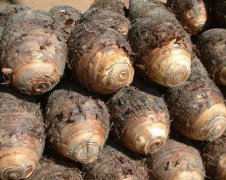
Organic rice costs too much, so is organic taro cultivation technology and yield better?
Do you know whether it is better to grow organic rice or organic taro? In fact, the organic rice market is now saturated. If you grow organic rice, you will not make much money. It would be better to try growing organic taro, which can bring high returns and is easier than growing
-
Detailed Explanation of High-Quality and High-Yield Cultivation Techniques for Pinellia ternata
Pinellia ternata is a commonly used precious traditional Chinese medicine, and its commercial supply mainly relies on harvesting wild resources. In recent years, due to changes in the environment, climate, and resources, the contradiction between supply and demand has become increasingly tense. Because cultivation development has been slow, the market has long been in short supply, and prices have remained stable and continued to rise. In many places, Typhonium flagelliforme (water pinellia) is used as a substitute. In southern provinces such as Jiangxi and Guangxi, cultivation of Typhonium flagelliforme has appeared. The state has repeatedly ordered that Typhonium flagelliforme be listed as a counterfeit, prohibiting pharmaceutical factories from using the counterfeit Typhonium flagelliforme to replace Pinellia ternata as a raw material. For various reasons, its wild resources are being dug up less and less, resulting in shortage. Artificial cultivation, due to problems such as low reproductive capacity and variety degeneration, has limited the improvement of yield and quality and cannot timely supply the strong market demand. The amount available on the market decreases year by year, while domestic medicinal demand and export volume increase significantly year by year. Its selling price keeps rising. In the winter of 2005, the medicinal market offered 55-65 yuan/kg, up 33.3% from the same-period price of 45 yuan. Both export and domestic sales are in tight demand, and there are still not many goods available, making it a hot variety in medicinal market transactions, with good market and cultivation prospects. Traditional methods of cultivating Pinellia ternata generally yield 500-750 kg of fresh tubers per mu, with a drying ratio of 25%-30%, and an annual yield of 125-200 kg. However, according to high-yield practical experience in producing areas, high-yield fields have an average tuber yield of 850-1500 kg fresh weight, an increase of 50%-100%, a significant yield increase, with an output value of more than 10000 yuan per mu and considerable benefits. Therefore, for medicinal farmers to obtain higher yields and high benefits from cultivating Pinellia ternata, in addition to good routine field management, they must also grasp the following key links:
-
How to achieve high yield, high quality and high efficiency in Pinellia ternata cultivation? A detailed explanation of cultivation techniques
Pinellia ternata is a commonly used precious traditional Chinese medicine, and for a long time its commercial supply has mainly relied on collecting wild resources. In recent years, changes in the environment, climate and resources have led to the gradual depletion of wild resources, while artificial cultivation has developed slowly, the market has long been in short supply, and prices have continued to rise. In the winter of 2005 the medicinal herb market price was 55 to 65 yuan per kg, while in the same period of 2004 the price was 45 yuan per kg. With traditional methods, Pinellia ternata cultivation generally yields 500 to 750 kg of fresh tubers per mu, with a drying ratio of 25% to 30%, and a yield of 125 kg per mu
-
What are the key points of high-efficiency cultivation techniques for Pinellia ternata?
Pinellia ternata, a plant of the genus Pinellia in the Araceae family, is a commonly used traditional Chinese medicinal herb. Its dried tubers are used as medicine, mainly to treat cough, asthma with excessive phlegm, nausea and vomiting, and other conditions. In recent years, it has been found that Pinellia protein has anti-early-pregnancy and anti-tumor effects, making it one of the scarce Chinese medicinal herbs for many years. Xihe County, Gansu Province is a suitable growing area for Pinellia ternata. The Pinellia produced there is white in color, high in starch, and good in shape, and is well received by users, who call it Xi Pinellia. After the successful transition from wild cultivation to artificial planting of Pinellia in Xihe County, growing Pinellia became one of the main sources for local people to escape poverty and increase economic income. However, long
-
Detailed Explanation of the Biological Characteristics and High-Yield Cultivation Techniques of Agaricus bitorguis
Agaricus bitorguis (Quel.) Sacc., also known as the double-ringed mushroom or the large fleshy mushroom, is a high-temperature grass-inhabiting fungus that grows on grassland. In recent years it has been domesticated and introduced. Compared with the button mushroom (Agaricus bisporus), it has broader adaptability and stronger stress resistance, and is suitable for extensive cultivation. It is relatively tolerant of heat, drought, water and carbon dioxide, does not produce a mycelial mat, does not exude yellow liquid, and comes to market 1 month earlier than the button mushroom, giving it an advantage in production season. It has been reported that abroad each ton of compost can
-
Key Points of High-Yield Bag Cultivation Techniques for Tea Tree Mushroom
The tea tree mushroom, scientifically named Yangliu mushroom, also known as tea tree mushroom or tea mushroom, grows singly, in pairs, or in clusters, with a plump cap and crisp stipe; eaten fresh, it is crisp and refreshing with a delicious taste. When dried by roasting, it has an even more unique flavor, rich and fragrant, sweet and delicious, and is a highly popular mountain delicacy at folk weddings and festive banquets. It is suitable for year-round production to supply the market, and it has unique curative effects in lowering cholesterol, promoting diuresis, strengthening the spleen, and treating low fever and bedwetting in children. It is the latest high-yield, contaminant-resistant, beautifully shaped, wide-temperature, high-quality high-yield strain launched in recent years, among which "Tea Tree Mushroom No. 9" fruits at
-
Detailed Explanation of Key Points for High-Yield Cultivation Techniques of Nameko Mushroom
Nameko mushroom, also known as Pholiota microspora, is mainly cultivated using sawdust as the substrate, though log cultivation is also used, and the cultivation methods are diverse. Developing Nameko mushroom production is a wealth-building project with low investment, quick returns, high yield, good benefits, and low risk. The finished Nameko mushroom products can be sold domestically and also exported to earn foreign exchange, making it a path to wealth for mountain farmers to escape poverty and achieve moderate prosperity. 1. Site: Choose a flat terrain, well-ventilated, clean environment, and pollution-free location for cultivation. The mushroom house can use wooden poles as the frame, surrounded by plastic film or straw curtains
-
Detailed Explanation of Key Techniques for High-Yield Cultivation of the Giant Winter Peach
The giant winter peach, also known as the Red Snow Giant Peach, is currently one of the largest winter peach varieties in China. Its fruit sugar content reaches as high as 19.6%, and its ripening period coincides with the Mid-Autumn Festival and National Day holidays, making it highly favored by fruit growers and consumers in recent years and well worth promoting. I. Variety Characteristics: The fruit of this variety is nearly round, with an average single fruit weight of 400 grams. The background color is creamy yellow, with more than 60% of the fruit surface being bright red. The flesh is creamy white, crisp and tender, clingstone, and extremely sweet. The fruit is highly resistant to storage and transportation, and can be stored for more than 35 days at room temperature.
条件筛选