-
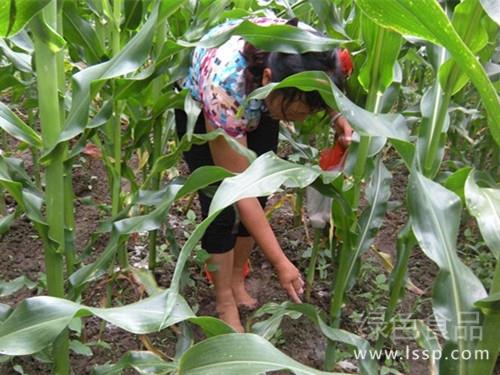
Corn with potassium deficiency loses water and wilts; applying potassium fertilizer can ensure high yield
Potassium deficiency causes water loss and wilting; for high corn yield, apply potassium fertilizer
-
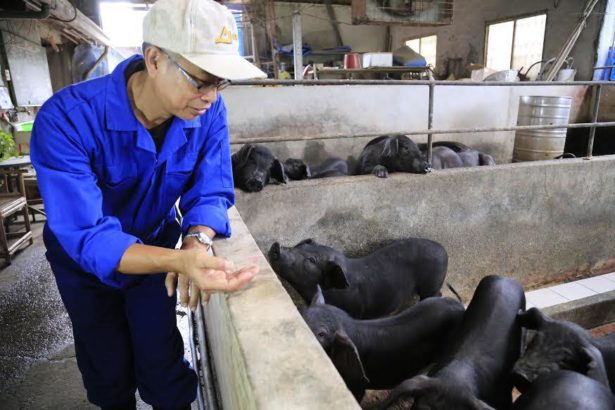
The Battle Over Epidemic Prevention and Food Waste 02"Pig Farmers' Civil War: Feeding Food Waste to Pigs Is High-Risk and Outdated VS Food Waste Can Be Sorted More Carefully in Addition to High-Temperature Boiling
The Battle Over Epidemic Prevention and Food Waste 02"Pig Farmers' Civil War: Feeding Food Waste to Pigs Is High-Risk and Outdated VS Food Waste Can Be Sorted More Carefully in Addition to High-Temperature Boiling
-

Detailed Explanation of High-Yield Cultivation Techniques for Codonopsis pilosula
The Chinese medicinal herb Codonopsis pilosula (poor man's ginseng) uses its root as medicine, and it grows at forest edges or in thickets. It is distributed in western Sichuan, Gansu, Shanxi, Henan, Inner Mongolia, Hebei, Shaanxi, Northeast China and other places. It is cultivated in most provinces and cities across the country. Its taste is sweet, and its nature is neutral. I. Biological Characteristics: It has strong cold resistance and prefers cool mountainous areas. It can be planted in mountainous areas at an altitude of 800-2000 m. Deep soil layers, good drainage, and sandy loam soil rich in humus are best. Continuous cropping is avoided. II. Propagation Methods: Codonopsis pilosula adopts sexual reproduction, divided into direct sowing and seedling transplanting.
-
Codonopsis stems and leaves are a high-quality feed with high nutritional value.
Codonopsis is a valuable traditional Chinese medicinal herb, with its dried roots used as medicine; it has the effects of tonifying qi and nourishing blood, harmonizing the spleen and stomach, promoting fluid production, and clearing the lungs. Its stems and leaves were often discarded in the past. However, in recent years, research has found that Codonopsis stems and leaves contain volatile oils, various amino acids, macro- and trace elements, alkaloids, starch, and more. Farmers at the Sifangpa medicinal herb farm in our county dry and crush the stems and leaves, then add them to feed at a ratio of 20-30% to feed pigs, producing a clear weight-gain effect. When used to feed poultry, not only are the egg-laying rate, egg production, and average egg weight increased, but tests also show that the cholesterol content is somewhat reduced.
-
Detailed Explanation of Key Techniques for High-Yield Cultivation of Codonopsis pilosula
Codonopsis pilosula (poor man's ginseng) gets its name from its place of origin, "Shangdang Commandery," and is a perennial herbaceous vine of the Campanulaceae family. Its root is used as medicine. It is distributed across various provinces in the Northeast, Northwest and other regions. At present, the largest area under artificial cultivation is Weiyuan County in our province, which enjoys the reputation of "China's Hometown of Codonopsis pilosula." Pharmacological experiments have shown that Codonopsis pilosula has a blood-sugar-raising effect, can increase red blood cells and hemoglobin levels, raise blood concentration and reduce white blood cells, and also has blood-pressure-lowering and coagulation-promoting effects. Its taste is sweet, and its nature is neutral. It has the functions of tonifying qi, enriching blood and promoting fluid production. It is used for spleen deficiency, poor appetite with loose stools, fatigue of the limbs, shortness of breath and
-
Detailed Explanation of Key Points for High-Yield Cultivation Techniques of Pinellia
Pinellia is a perennial herbaceous plant of the Araceae family, also known as Banzi, Sanxingcao, and Sanpianye. Its nature and flavor are pungent, warm, and toxic. It has the effects of drying dampness and transforming phlegm, harmonizing the stomach and strengthening the spleen, and descending adverse qi to stop vomiting. It mainly treats phlegm-dampness and water retention, chest and abdominal distension, headache, and insomnia. In our province, this medicinal herb is distributed in Tianshui, Longnan, Pingliang, and other places. Its high-yield cultivation techniques are introduced as follows: 1 Morphological characteristics Perennial herb, underground tuber spherical to oblate, 1-2 cm in diameter, with numerous fibrous roots at the lower part. The leaf of a 1-year-old plant is a single leaf, and the leaves of 2-3-year-old plants are deeply divided into three
-
Key Techniques for High-Quality and High-Yield Cultivation and Management of Pinellia ternata
I. Site Selection and Preparation. Pinellia ternata prefers a warm and humid environment. The planting site should be chosen as a small flat area on gentle mountain slopes at high altitude, with loose, fertile, moist soil and not strong sunlight. The land should be plowed and broken up several times. Apply 3000-4000 kg of farmyard manure per mu as base fertilizer. Make raised beds 20 cm high and 100-120 cm wide. Since Pinellia ternata is a shade-tolerant plant, it can be intercropped under orchards and tall crops. II. Propagation Methods. (1) Corm propagation. In November-December, select disease-free,
-
Key Techniques for High-Quality and High-Yield Cultivation of Pinellia ternata
1. Site selection and land preparation Creating a good growing and cultivation environment is the basic condition for high yield of Pinellia ternata. Under long-term wild ecological conditions, Pinellia ternata has developed characteristics of preferring a mild and humid climate and shaded environment, fearing high temperatures, drought and intense sunlight, and being able to tolerate cold. Therefore, the planting site for Pinellia ternata should be selected in sandy loam soil on sunny-facing terraces, terraced fields or gentle slopes close to a water source. The soil is required to be loose, fertile and well-drained. The previous crop is best as corn or rapeseed. After selecting the site, in combination with autumn plowing and land preparation, apply per mu decomposed chicken manure
-
New Formula for Fast-Growing, High-Yield Cultivation of Tea Tree Mushroom
Tea tree mushroom, also known as Agrocybe aegerita, is a rare and delicious health food that sells well in the market, with the current fresh mushroom price reaching 20 yuan/kg. At present, the yield of artificially cultivated tea tree mushroom is low, mainly constrained by the spawn and cultivation substrate formula. Several relatively ideal new cultivation substrate formulas are introduced as follows: 1. Tea seed shell powder 70%, rice bran 20%, tea seed cake meal 5%, sucrose 2%, lime 1%, gypsum 1%, potassium dihydrogen phosphate 1%. Take the dry materials according to the formula proportions, with a material-to-water ratio of 1:1.25, mix thoroughly
-
Pollution-free, High-quality and High-efficiency Cultivation Techniques for Chuzhou Chrysanthemum
Chuzhou Chrysanthemum was originally named "Chiju" (pond chrysanthemum), and together with Zhejiang "Hangju" (Hangzhou chrysanthemum), Henan "Huaiju" (Huai chrysanthemum), and Bozhou "Boju" (Bozhou chrysanthemum), it is collectively known as one of China's four famous chrysanthemums. Chuzhou Chrysanthemum is not only enjoyed as an ornamental flower, but is also a precious dual-purpose product for both medicine and tea. During the Guangxu period of the Qing Dynasty, "Chuzhou Chrysanthemum" was once listed as a tribute item, hence it is also called "Gongju" (tribute chrysanthemum) or "Chugongju" (Chuzhou tribute chrysanthemum). It is currently a product under origin protection in China, and the eastern Anhui region is cultivating and developing it on a large scale. 1 Biological Characteristics 1.1 Morphological Characteristics Chuzhou Chrysanthemum belongs to the Asteraceae family and is a perennial root plant, with a plant height of 60-
条件筛选