-

New hybrid rice combinations achieve high yields in Hengxian
Recently, the new hybrid rice combinations "T You 551, Yue You 938, and Taixiang No. 5" introduced and trial-planted in Hengxian all achieved high yields upon expert inspection. The new hybrid rice combinations "T You 551, Yue You 938, and Taixiang No. 5" introduced in Hengxian were trial-planted on 140 mu across 3 villages and slopes in Nannan Township. Recently, the Hengxian Seed Company invited experts to conduct on-site inspection of the 3 new hybrid rice combinations. After experts randomly spot-checked 3 farming households on site, the inspection results showed: T You 551 rice had a wet grain yield of 650 kg per mu, and a dry grain yield per mu
-
What to Do About the High Egg Breakage Rate in Hot Weather
The problem of egg breakage has always plagued every chicken farm, especially in hot weather, when high temperatures shorten the storage time of eggs, and broken and contaminated eggs spoil within 2 days and cannot be sold. Therefore, here are several methods for reducing the breakage rate in hot weather: Environment and temperature. The physiological characteristics of chickens determine that the ideal temperature for laying hens is 18°C-23°C, within which production performance is best; when the temperature exceeds 30°C, laying hens eat less, drink more water, and produce more droppings; when the house
-
Pig eczema is highly prevalent in summer, and farmers must take strict precautions
Pig eczema, also known as pig damp-toxin disease, is mainly caused by pigs living in a damp environment for a long time. It is generally most severe during the high-temperature seasons of summer and autumn. Symptoms: affected pigs mostly develop the disease suddenly; at the beginning, the skin under the jaw, on the abdomen and on both sides of the perineum turns red, with broad bean-sized nodules appearing, and the pigs are restless due to itching. As the condition worsens, blisters and papules appear, and after they rupture they are often accompanied by yellow exudate, scabs and scales. If acute cases are not treated in time, they often become chronic, with the pig's skin becoming thick and rough and itching, and the pigs often rub against walls or trees to relieve the itching, leading to loss of hair over the whole body.
-
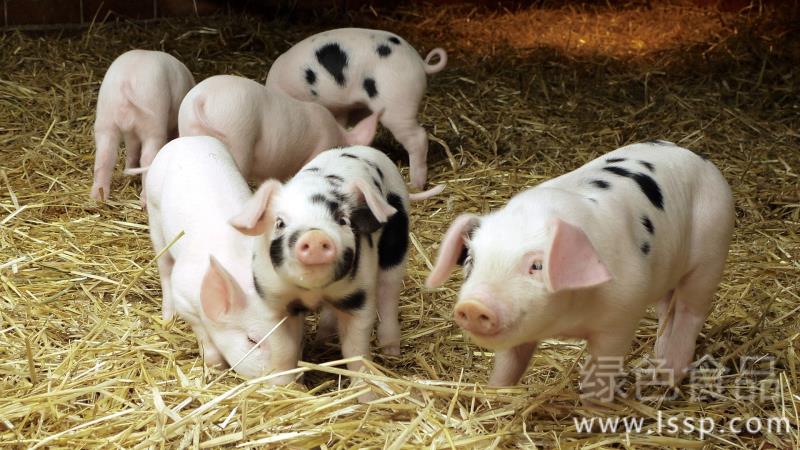
Pork prices are so high, so why is pig farming still not profitable?
Why is pig farming still not profitable when pork prices are high?
-
Detailed Explanation of Key Points for High-Benefit Soybean Cultivation Techniques
Soybean is one of China's important oil crops, and Shandong soybeans are renowned throughout China. Shandong Province has unique advantages in soybean seed breeding and is a stable year-round soybean seed production base. Its improved varieties are sold to hundreds of counties and cities across most of Shandong, as well as Henan, Jiangsu, Anhui, Shanxi, Hebei and other provinces, and have long been known as hybrid soybeans, becoming a famous brand product in the Huang-Huai River basin. High-yield soybean cultivation techniques are one of the important technical measures for achieving high yields. To obtain a higher yield level, improved varieties must be matched with improved methods to achieve the goal of high yield and bountiful harvest.
-
How to Grow High-Yield Soybeans? A Detailed Guide to the "Four Changes and One Addition" Cultivation Technique
Traditional drill sowing of soybeans results in narrow rows and overcrowding, and along with various other factors, yields have long hovered around 100-150 kg. Through years of experimental research, we have developed a new approach that can increase soybean yields by more than 40%, namely the "Four Changes and One Addition" technique. The usual measures for increasing soybean yields include, besides selecting new high-quality, high-yield varieties, paying attention to crop rotation. According to experiments, after years of continuous cropping, soybeans show slow growth, short plants, yellowing lower leaves, early leaf drop, and few pods with small seeds. Experiments
-
Detailed Explanation of High-Yield Soybean Cultivation Techniques in the Northern High-Cold Region
The scope covered by this model includes the vast areas of the northern part of the third accumulated temperature zone and the fourth accumulated temperature zone in Nehe, Keshan, Yi'an, Kedong in northern Qiqihar, Heilongjiang, and Wudalianchi, Nenjiang, Bei'an, Xunke, Aihui, Sunwu and other counties (cities and districts) of Heihe City. The soybean planting area in this region is about 10 million mu, which has a decisive influence on soybean production in the entire province and even the whole country. This region has a large cultivated land area, a high degree of mechanization, and a commodity rate as high as 70%. It is an important soybean export base for the province and the country.
-
Early-maturing soybean Chaofeng No. 3: an excellent variety with super-high yield, high resistance and high efficiency
Chaofeng No. 3 soybean is an early-maturing variety with super-high yield, multiple resistance and high efficiency, bred over 8 years by researchers at the Research Institute of Jilin Province Northern Seed Industry Company. This variety overcomes the prominent problems of the past, when large-scale production applications were not high-yielding, had poor internal quality, failed to meet national quality standards, and were prone to pod shattering in dry years, resulting in high but unstable yields and high yields without high returns. In March 2007, it successfully passed provincial certification. Chaofeng No. 3 has a growth period of 110 days, and from sowing to harvest requires an active accumulated temperature of 2300°C
-
Key High-Yield Techniques for Cultivating Oyster Mushrooms on Rice Straw
High-Yield Techniques for Cultivating Oyster Mushrooms on Rice Straw 1. Selecting spawn: Experiments show that the relatively ideal strains include: the low-temperature type 792 and 118 oyster mushrooms; the medium-temperature type Xinnong No. 1, 9400 oyster mushroom, and Hypsizygus marmoreus; the high-temperature type Hainan No. 2, etc. (All of these spawns can be provided by the Binhai County Edible Fungi Research Institute.) 2. Seasonal scheduling: Along the middle and lower reaches of the Yangtze River, sowing can be done from early August to mid-February of the following year, with mid-September to mid-November being the best sowing period. 3. Rice straw selection: Choose fully dried, mold-free, golden-colored rice straw
-
High-Dimension Jujube
A rare jujube tree planted in the courtyard, a naturally mutated excellent new large-fruited fresh-eating jujube variety. It overcomes the characteristics of fresh-eating large jujube varieties: Dongzao is small in size, Xuezao has poor sweetness, and Lizao has uneven fruit sizes. This variety has large fruit, with an average single fruit weight of about 80 grams, and a maximum of up to 103 grams. The fruit color is purplish red, the peel is glossy, and the flesh is pale yellow; it is tender, crisp, sweet, and fragrant, with a soluble solids content of 28%-34%, and an excellent taste. It matures in mid-to-late October and is self-pollinating. Suitable planting areas are at latitude 2
条件筛选