-
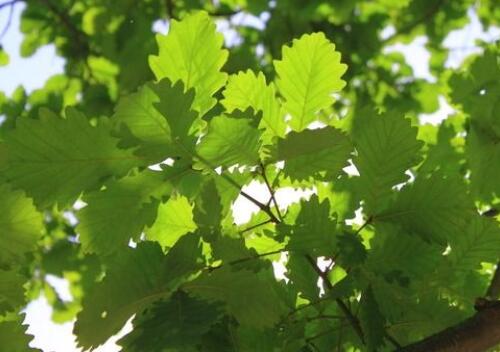
Can You Eat the Acorns of the Oak, America's National Tree? Appearance, Planting Methods and Fruiting Time
Oak, also known as the oak tree, the Mongolian oak, or the sharp-toothed white oak, is a general term for plants in the Fagaceae family, the largest flowering plant in the world, with some living up to 400 years old, and is the national tree of the United States. So what does an oak look like? When is it planted, and when does it fruit? Can its fruit be eaten? How is it grown? From Fagaceae reference materials we learn
-
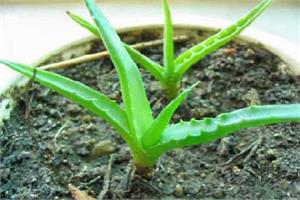
How to plant aloe vera without roots? Follow the instructions, do not cut corners
How to plant aloe vera without roots: follow the instructions, do not cut corners
-

What are the cultivation methods and precautions for the corn plant (Dracaena fragrans)
Morphological characteristics of the corn plant. The corn plant is an evergreen tree that can reach a height of over 6 m. The leaves are clustered at the top of the stem, 40-90 cm long and 6-10 cm wide, broadly linear, with slightly blunt tips, curving into an arch shape; the leaf margins are wavy and undulating, bright green, with parallel veins, glossy, and nearly stalkless. The panicle is terminal, with small flowers borne in clusters
-

30 Questions on Corn Cultivation Explained in Detail, the Most Comprehensive Collection of Questions Ever
1. Why does planting second-generation seed lead to reduced yield? Modern corn production uses the heterosis of first-generation hybrids to achieve high yield and stress resistance. Heterosis refers to two related traits...
-

How to Grow Fruit Corn? A Guide to Cultivation Techniques and Management Key Points
Fruit Corn Cultivation Technique Guide: Fruit corn is a type of sweet corn suitable for eating raw. Compared with ordinary sweet corn, its main characteristics are thin skin, abundant juice, ...
-

Cultivating a happy life in my own corner of the world
The woods carry the sound of rustling leaves, that is the finger of autumn. The sunlight warms the walls, and the night blows it cool. Autumn has rubbed away the old leaves, do you want to hear...
-
A detailed guide to sweet corn cultivation techniques, teaching you how to grow sweet corn
Corn is a food that everyone loves, and it is also an important staple grain in the north. Corn tastes sweet and delicious. Through breeding, there is a sweeter type of corn that can be eaten raw as a fruit...
-

Introduction to the Saiwai Pleurotus cornucopiae No. 8 Variety and Its Main Characteristics
Saiwai Pleurotus cornucopiae No. 8: After 5 years of effort and joint research, the scientific and technical personnel of Luzheng Group Company have now bred a new variety of Pleurotus cornucopiae suitable for field cultivation in northern regions - Saiwai Pleurotus cornucopiae No. 8. This marks another new step forward for Luzheng Group in edible mushroom breeding. This variety is now available to the public, priced at 100 yuan per unit.
-

How do you grow corn poppy (Flanders poppy) so it thrives?
Corn poppy, also known as Flanders poppy, grows 30-80 cm tall, the whole plant sparsely hairy, leaves alternate, oblong, irregularly pinnatifid. Flowers solitary, on long stalks, drooping in bud, upright after opening, petals 4, thin and glossy, flower colors include pure white, purple-red, pink, red, rose-red, variegated, etc., flowering period May-June.
-
How to Grow and Care for the Corn Plant (Dracaena fragrans)
Light: For indoor growing, place it near a south-facing window. Around midday in summer, be careful to prevent exposure to strong light. In winter, place it near a south window so it receives more sunlight and grows robustly. Temperature: The optimal temperature for growth is 20-25°C. When the temperature falls below 13°C, it enters a dormant state.
条件筛选