A detailed guide to sweet corn cultivation techniques, teaching you how to grow sweet corn
Corn is a food that everyone loves, and it is also an important staple grain in the north. Corn tastes sweet and delicious. Through breeding, there is a sweeter type of corn that can be eaten raw as a fruit. It has thin skin, plenty of juice, a crisp texture and sweet flavor, and it is also very good when cooked. So how is sweet corn grown? Here are the cultivation techniques for sweet corn.
Key points for growing sweet corn:
Sowing in stages: To prevent cross-pollination from lowering quality, sweet corn should be grown in isolation from other types of corn. Isolation can be achieved by planting distance (more than 300 m) or flowering period (more than 30 days), or by using barriers such as hills, forests, or buildings. Sweet corn has a short harvest period and is difficult to keep fresh, so sowing in stages allows harvesting and marketing in batches. Generally, sowing can be done from late March to early August, and with heat-preservation facilities in early spring it can be done a little earlier, but sowing should be avoided between late May and mid-June. Corn sown in this period has its flowering and pollination period during the July-August summer drought, which easily causes bald tips, missing kernels, or empty stalks.
Sprouting before sowing: For growing sweet corn, it is best to choose sandy loam fields with higher fertility and sufficient fertilizer and water, and the land should be finely prepared before sowing. Sweet corn seeds are shriveled, have small endosperm, low germination and emergence rates, and weak seedlings. To achieve uniform, complete, and strong seedlings, whether direct sowing or raising seedlings for transplanting, it is best to sprout the seeds before sowing.
Scientific fertilization: Sweet corn has flat leaves and a loose plant type, and the planting density is preferably 3500-4000 plants per mu. In fertilization, apply base fertilizer appropriately, apply seedling fertilizer early, apply ear fertilizer heavily, combine nitrogen, phosphorus, and potassium, and encourage increased application of organic fertilizer. For fields of medium fertility, the total chemical fertilizer application should be controlled at about 15 kg of pure nitrogen, 6 kg of phosphorus (phosphorus pentoxide), and 6 kg of potassium (potassium oxide).
Careful management: Sweet corn seedlings grow weakly and are prone to pests later, so field management should be done in a timely manner. After emergence, check the seedlings and fill gaps promptly, and remove weeds. During the seedling and mid-growth stages, remove tillers and excess small ears, and in the mid-to-late stages, control pests such as corn borers well. The harvest period of sweet corn is about 3 days earlier than that of ordinary sweet corn. About 20 days after pollination, the best harvest time can be determined in time according to the color of the silks and field tasting.
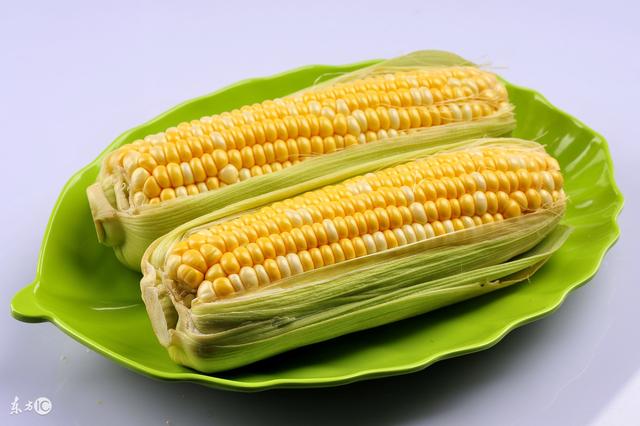
Sweet corn cultivation techniques:
1. Choosing the planting site:The planting site should have fertile and loose soil, sufficient sunlight, and convenient drainage and irrigation, and the field must not accumulate water. This is an important foundation for obtaining high yield.
2. Raising seedlings:Raising seedlings in nutrient cups (trays) for transplanting is beneficial for seedling management, ensuring the effective number of plants per mu, ensuring uniform growth, and saving seeds. Nutrient cups of 8×8 or 6×6 can be used, and nutrient trays of 5×5 can be used, with 48 cells per tray and one seed per cell. Direct sowing of seeds is beneficial for emergence. When sowing, place the seed embryo vertically downward and cover with 1.5-2 cm of soil. Use garbage soil for covering, but do not use large (coarse) clods, so as not to affect emergence. Use garbage soil or burned soil for the nutrient soil, and per mu add 2 kg of zinc sulfate and 5 kg of calcium magnesium phosphate and mix well. After sowing, keep the nutrient cups moist to ensure the seeds absorb water and germinate.
3. Transplanting:For directional transplanting, transplant promptly from the two-leaf-one-heart stage to the three-leaf-one-heart stage. When transplanting, ensure that the leaves of each plant face the same direction, which is beneficial for light penetration and ventilation and helps avoid poor pollination. For spring planting, plant 2800 plants per mu; for summer planting, plant 2600 plants per mu; for late autumn planting, plant 2800 plants per mu.
4. Fertilization:Base fertilizer should be the main fertilizer, accounting for more than 80% of the total fertilizer requirement. Based on a yield of 3000 jin of fresh ears per mu, each mu requires 18 kg of pure nitrogen. Calculated at a urea content of 46%, each mu requires about 40 kg of urea. Each mu requires 8 kg of phosphorus. Taking 16% superphosphate as an example, each mu requires 50 kg of superphosphate. Each mu requires 19 kg of potassium. Taking 50% potassium sulfate as an example, each mu requires 40 kg of potassium sulfate. Fertilizer is best applied by watering. The utilization rate of fertilizer buried in the soil is very low.
5. Topdressing: According to plant growth, consider whether to topdress and how much to apply. Topdressing should be applied by watering to ensure that plants can absorb the fertilizer in time. Topdressing is generally done during intertillage (5-6 leaves) or at tasseling.
6. Pay attention to pest and disease control:During the corn growing period, attention should be paid to controlling bacterial wilt (stalk rot) and large and small leaf spot diseases. For diseases, prevention should be the main approach. Before the rainy season arrives, spray medicine 1-2 times in time, or prevent promptly when field humidity is high. For insects, corn borers are the main pest. Observe carefully at tasseling and control promptly when pests are found. Generally, 1-2 treatments are enough.
7. Harvest in time:Generally, after flowering in summer, it matures in 18-22 days. Harvesting at the milk-ripe stage gives the best quality and the highest yield. At this time, the silks turn black and the kernels are light golden yellow. It is best when the color is similar to that on the comparison promotional picture.
Introducing one sweet corn variety:
Meinong Sweet Corn: About 90 days from emergence to fresh ear harvest, plant height 250 cm, ear position about 95 cm, highly resistant to many diseases such as northern and southern leaf blight, virus diseases, bacterial wilt, and banded leaf and sheath blight. The ear is cylindrical, the kernels are bright yellow, the 1000-kernel weight of fresh kernels is about 250 g, the number of kernel rows is 18-20, the ear length is 24-26 cm, the single weight of fresh ears is about 0.45 kg, and the general yield per mu is about 1300 kg. Its appearance quality, color, plumpness, and tenderness are good, the skin is thin and easy to chew, and the taste is good when steamed or boiled. It matures with green stalks and has good green retention. Tested by the Inspection and Testing Center for Cereal Quality Supervision of the Ministry of Agriculture: (dry basis) amino acids 12.18%, crude protein 13.5%, crude fat 9.54%, crude starch 43.62%, total sugar 33.4%, reducing sugar 5.73%. Highly resistant to many diseases such as northern and southern leaf blight, virus diseases, bacterial wilt, and banded leaf and sheath blight, and highly resistant to lodging.