How to Grow Fruit Corn? A Guide to Cultivation Techniques and Management Key Points
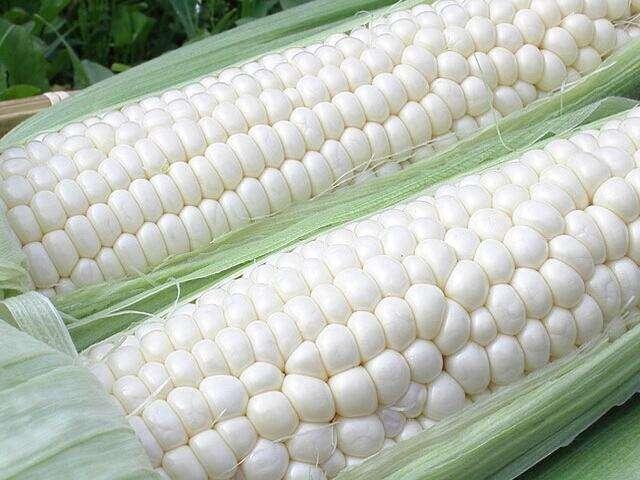
Fruit Corn Cultivation Technique Guide:
Fruit corn is a type of sweet corn suitable for eating raw,
compared with ordinary sweet corn,
its main characteristics are thin skin,
abundant juice,
crisp texture and sweetness,
it can be eaten directly raw,
or eaten after cooking,
suitable for fresh eating and processing into quick-frozen or vacuum-packed
products.
1
. Preparatory work before sowing
1.1
Site selection: The land should have good drainage and irrigation, good uniformity, and medium to above-medium soil fertility.
1.2
Set up isolation zones:
Because sweet corn pollinated by non-sweet corn will form non-sweet kernels.
Therefore,
planting different types of corn in the same
field requires isolation; within
200
meters around the sweet corn plot, ordinary corn must not be planted;
enhanced sweet corn and super-sweet corn should also be spaced
200
meters apart.
Time isolation measures can also be adopted,
that is, stagger the sowing dates of
different types of corn with similar maturity periods by
15~20
days,
so that their flowering periods do not coincide.
Fields harvested for sweet baby corn
do not need isolation.
1.3
Land preparation: Plow and harrow during the suitable cultivation period to make the soil loose. Build beds with a bed bottom width of
140
cm
(
about
4
chi
)
, bed surface width of
110
cm
(
about
3.5
chi
)
, and dig
30
cm deep drainage ditches around the field.
1.4
Seed preparation:
Before sowing, sun the seeds for two days,
remove impurities.
Sweet corn seeds do not need soaking; it is best to use
dry seeds for direct sowing, which gives a high emergence rate. Improper conditions or methods for soaking and sprouting will cause the germination rate to drop rapidly.
1.5
Control of underground pests and rodent damage:
Sweet corn seeds are easily damaged by underground pests and rodents,
at the time of sowing apply
broad-spectrum insecticide
3%
furamethyl granules in a small amount into the holes beside the seeds; the strange odor they release can prevent underground
pests and rodents from eating the seeds. Or use
3%
of Mirel granules
4
kg per mu scattered on the bed surface.
2
. Sowing and seedling raising
2.1
Sowing period: Generally in
4
late month; using plastic film mulching can advance sowing by
10-15
days; using film
seedling transplanting techniques
can advance sowing by
20
days.
The latest sowing period is before
7
month
10
day,
to ensure timely harvest before the early
frost. In early spring, if heat-preservation facilities are available, it can be appropriately earlier, but sowing should be avoided between
5
late month and
6
mid-month; corn sown in this period will have its flowering and pollination period coincide with the
7
-
8
month drought weather, which easily causes
plants to have bald tips, missing kernels, or empty stalks.
2.2
Planting density: Use a two-row plot design, with each plot row length of
5
m, randomly arranged, with three replications. Plant
spacing
25
cm, planting density of about
3500-4000
plants per mu. Use direct sowing, with hole sowing, per hole
2~3
seeds, cover with soil
3
cm
(
best covered with mushroom residue
)
, after sowing maintain field water-holding capacity at
80%
as appropriate.
Note:
After sowing sweet corn, the soil cover should be shallow,
because sweet corn seeds are relatively flat,
have low starch content,
and poor soil-penetrating
ability.
2.3
Spraying herbicide: Spray herbicide on the same day after sowing for weed control; per mu use
40%
a-
trazine
100
g plus
48%
lasso
150
ml, mix with water
100
jin, and spray evenly on the bed surface and ditch surface. When spraying, the soil moisture should be good
to ensure the effectiveness of the pesticide.
2.4
Sowing methods:
It is best to choose fields with relatively high fertility
and sufficient fertilizer and water, sandy loam soil, for cultivating fruit corn,
before sowing
finely prepare the land.
Sweet corn sowing rate
1-1.5 kg
/
667m2
. Sowing methods include mechanical sowing, seedling
transplanting, plastic film mulching, and staged sowing. Planting density is generally controlled at
3000-4000
plants.
3
. Field management
3.1
Apply sufficient base fertilizer and seed fertilizer:
Applying heavy base fertilizer,
and sufficient seed fertilizer is a key measure for high yield of sweet corn.
Base fertilizer
per mu use farmyard manure
2
tons plus superphosphate
50
kg, add an appropriate amount of water, pile and compost until decomposed. Before sowing, open two
shallow furrows on the bed surface, apply the decomposed organic fertilizer in bands into the furrows, and on top of the organic fertilizer apply compound fertilizer per mu
40
kg,
as base fertilizer and seed fertilizer for root absorption,
cover with soil
6
cm,
then sow the seeds according to plant spacing,
and cover with soil again
4-5
cm.
3.2
At the three-leaf stage, thin the seedlings early, leaving two plants per hole.
3.3
At the five-leaf stage, finalize the seedlings in time, leaving one plant per hole, do shallow intertillage to loosen the soil, then topdress, applying urea per mu
10
kg, and do a small hilling. Sweet corn seedlings are relatively tolerant of drought, but afraid of waterlogging; soaking overnight can cause seedling death, so it should be
drainage.
The five-leaf stage is the period that determines the total number of leaves,
and adequate water and fertilizer can increase the total number of leaves.
Sweet corn roots require
a large amount of oxygen,
and demand loose soil
with good aeration.
During the seedling stage, timely intertillage and loosening of the soil,
along with light earthing up, are important measures to encourage the roots to extend
vertically and deeply.
3.4
When the
7-8
th leaf unfolds, it marks the stage when the male and female growing cones begin to differentiate,
also called the large trumpet stage or booting stage,
and one should
timely intertill and loosen the soil, then apply topdressing, applying compound fertilizer per mu
20
kg, potassium chloride
15
kg, and earth up. This growth
stage is the period that determines ear size
and the number of kernel rows,
and sufficient water, fertilizer and light can promote the normal
development of pollen grains,
increase the number of spikelets,
reduce degenerated spikelets at the tip,
and increase the area of functional leaves above the ear.
At this stage, the
water requirement is greater than at the seedling stage, and the suitable soil moisture content is
70-80%
of field capacity, so timely irrigation and
drainage are needed.
3.5
Before tasseling, apply compound fertilizer per mu
20
kg, potassium chloride
7.5
kg, and earth up heavily, which can prevent lodging
and
suppress large weeds.
After tasseling,
2-4
days later pollen shedding begins,
and the silks of the female ear usually emerge
1-2
days after the male flowers begin to shed
pollen; if there is too much water or drought, or high temperature, or excessive planting density, silking will be delayed, and if delayed too long, it will affect
pollination.
The milk-ripe stage is the main period for increasing grain weight,
and applying potassium fertilizer can also increase it, while nitrogen fertilizer should be avoided as appropriate;
phosphorus deficiency will lead
to bare tips,
and phosphorus is mainly supplied in the base fertilizer.
The tasseling and flowering stage is the period when sweet corn is sensitive to water,
requiring soil
moisture content to reach
80%
of field capacity, and it is the period of greatest water demand in its whole life; "drought at flowering, yield cut by
half," and it may even prevent the male flowers from emerging; adequate water at the tasseling stage is extremely important for high yield.
4
. Pest and disease control:
When management is poor, weeds are abundant, plants are weak, or under continuous cropping or heavy rain, sweet corn is prone to infection by large and small leaf spot diseases; applying phosphorus
and potassium fertilizer can enhance plant disease resistance.
At the early stage of leaf spot disease, spray
2-3
times,
once every
7
days,
and commonly used pesticides include
50%
carbendazim
500
times solution;
70%
thiophanate-methyl
600
times solution;
90%
mancozeb
1000
times solution;
spray per mu
100-150
kg of solution.
Sheath blight is the same as rice sheath blight,
and planting sweet corn
in rice fields can transmit this disease;
for chemical control,
use one liang of daojiaoqing or
2
liang of daoning per mu, add water
100
kg;
or use
1%
jinggangmycin
500
g, add water
200
kg, and spray a coarse mist on the lower part of the plants. For armyworm control, use
2.5%
trichlorfon
powder and dust per mu
4-5
jin, which gives good insecticidal effect; or use
90%
trichlorfon or
50%
dichlorvos
1000-1500
times
solution, spraying per mu
100
kg. For corn borer control, granules can be applied to the leaf whorl, using
3%
of mirel granules
applied to the leaf whorl, which has long efficacy and good effect. Or use beauveria powder containing spores per gram
50-100
hundred million,
1
parts, made
into
10-20
times granule and applied to the leaf whorl with fairly good effect.
Or use bacillus thuringiensis for borer control containing spores per gram of
100
hundred million or more,
powder
1
jin, add water
750-1000
kg, and pour into the leaf whorl, which gives good borer control. The
pest control measures of applying or pouring into the leaf whorl should be carried out at the large trumpet stage.
When pests on the silks of the female ear are severe,
after the silks wither, biological insecticides
can be used,
B.T
emulsion or shachongshuang or padan or dashengong, etc., for control.
For aphid control, use
40%
dimethoate or
50-80%
dichlorvos emulsion
1500-2000
times solution, or use
50%
pirimicarb per mu
20-30
g.
5
. Timely harvest of fresh ears:
The green ears sold on the market are the ears of sweet corn from the late milk-ripe stage to the dough stage,
and the indicator of the best harvest time is grain moisture content
70%
, at which point sweetness is high and flavor is good. If harvested too late, the skin is thick and there is much residue, and sweetness declines. Harvested fresh ears should be
processed in time,
and should not be left overnight,
otherwise sweetness declines
and flavor is poor.
After quick freezing, fresh ears can be stored in cold storage
for a relatively long period, supplying the market out of season.
6
. Crop rotation:
Sweet corn is not suitable for continuous cropping. Reasonable rotation can reduce pests and diseases, reduce weed infestation, and restore soil fertility.