-
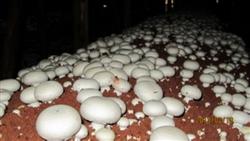
New Techniques and Management Key Points for Cultivating Button Mushrooms with Corncobs
1. Pressing water for the mycelium should be done at the right time. When mycelium emerges on the bed surface, it indicates that the mycelium has reached the bottom of the compost and has fully developed within the casing layer, and has already gained the ability to fruit. At this point, water should be sprayed at the right time to press the mycelium. Method: Increase ventilation to let strong wind blow into the mushroom shed, causing the mycelium on the soil surface to lie down; control the amount of water sprayed according to the mycelium development in the casing layer, generally...
-
New technique for cultivating Pleurotus nebrodensis on whole corn plants
Pleurotus nebrodensis tends to produce mushrooms erratically, that is, mushroom primordia do not emerge normally at the two ends of the bag but appear in the middle of the bag, which greatly affects yield. Paying attention to the following four points can effectively prevent erratic mushroom emergence in Pleurotus nebrodensis. First, the bag filling must be standardized. Try to fill the bags evenly and tightly, leaving no gaps, especially when filling bags by hand, where strict control is even more necessary. ...
-
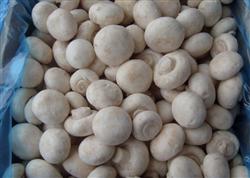
Detailed Explanation of the New Technique for Cultivating Button Mushrooms with Corncobs
A large amount of corn is grown in northern China, and after crushing, corncobs can be used for button mushroom cultivation. In recent years, the area used for cultivating button mushrooms with corncobs has grown rapidly. Corncobs contain 91.3% organic matter and 51.8% soluble carbohydrates, with a carbon-to-nitrogen ratio of 56.70:1. For a button mushroom cultivation area of 100 sq m, 200...
-

Efficient Cultivation Techniques for Oyster Mushrooms Grown on Corncobs
It is estimated that every 100 kg of corncobs can produce 100-150 kg of fresh oyster mushrooms, with a biological conversion rate of 150%-250%. Material selection and processing. Select fresh corncobs from the current year that are free of mold, expose them to sunlight for 2-3 days, and crush them to the size of corn kernels; screening is not required. Preparation of the growing substrate. Reference formula: corncobs 79%, soybean straw 15%, lime 4%, gypsum 1%, superphosphate 1%, urea 0.3%. Preparation method: first dissolve the lime and urea in water, then mix them into the material, with a water-to-material ratio of 1:1
-
Introduction to the Saiwai Pleurotus cornucopiae No. 8 Variety and Its Main Characteristics
Saiwai Pleurotus cornucopiae No. 8: After 5 years of effort and joint research, the scientific and technical personnel of Luzheng Group Company have now bred a new variety of Pleurotus cornucopiae suitable for field cultivation in northern regions - Saiwai Pleurotus cornucopiae No. 8. This marks another new step forward for Luzheng Group in edible mushroom breeding. This variety is now available to the public, priced at 100 yuan per unit.
-
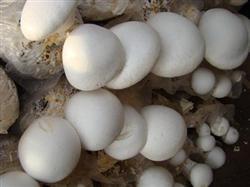
Techniques for Cultivating Bailing Mushroom (Pleurotus nebrodensis) with Corn Stalks
Bailing mushroom, also known as white Ferula mushroom, is a large, fleshy flat mushroom of extremely high quality that originally grew wild in arid grasslands. After artificial cultivation, it is just as rich in protein and amino acids as the wild mushroom, with the highest levels of glutamic acid and arginine. In addition, it also contains abundant vitamin D and various mineral elements, making it a...
-
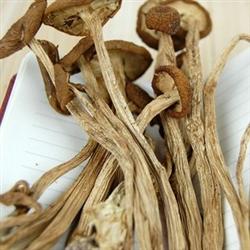
Corn intercropping with tea tree mushroom: planting methods and technical key points
How to intercrop tea tree mushroom with corn? Please refer to the following methods for corn intercropping with tea tree mushroom: 1. Choose a plot with flat land, sheltered from the wind and facing the sun, with convenient water sources, suitable for intercropping in a corn field. 2. Cultivation season. Meet the requirements for tea tree mushroom mycelium growth temperature of 10°C-35°C, optimum temperature 22°C-27°C; fruiting...
条件筛选