-
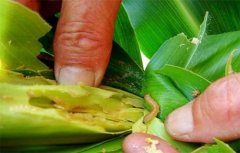
Corn borer damage symptoms, identification and control methods
The corn borer is a common pest that mainly damages crops such as sorghum and corn, hindering crop growth and worsening yield and quality problems. So how should it be controlled? Living habits: This insect is the main pest during the middle and late growth stages of sorghum, but
-

How to prevent and control common corn pests and diseases? A detailed explanation of prevention and control measures
Pest and Disease Control Strategies for Organic Corn Cultivation The diseases that easily occur during corn cultivation are leaf spot, smut, rust, and mosaic virus, while the pests include corn borers and aphids. The occurrence of pests and diseases is closely related to climatic conditions, so the timing of control should be decided according to climatic factors and field diseases
-
Technical guidance issued for Northeast region to promote early maturation of corn and protect autumn grain
This year, corn planting in the Northeast region encountered unfavorable weather such as drought and late spring cold, and the sowing period in most areas was 5-7 days later than usual. Since July, most areas have experienced sustained drought, with precipitation generally below normal, and the tasseling and silking stage of corn was generally about 5 days later than usual.
-
Temporary reserve auction launched, corn prices under pressure and trending downward
On Thursday, the fifth round of temporary reserve corn auctions in Northeast China began. This auction is planned to be held over two days, with a total of 3.028 million tons of temporary reserve corn to be offered. Since April 9, news of batch releases of Northeast temporary reserve corn onto the market has continued to pressure the nearby corn 1509 contract, and starch has also followed the decline due to falling corn raw material prices. Considering that the starch futures market price shows a discount pattern, the downside room for starch futures prices is limited.
-
Why the Temporary Corn Procurement Price Can No Longer Be Temporary
Domestic temporary procurement price rises while international market prices fall. The temporary corn procurement policy has reached its eighth year, and the news farmers received is that the temporary procurement price has been lowered from 1.12 yuan per jin to 1 yuan per jin - the first cut in eight years. In Inner Mongolia, the large-scale corn grower Wang Wuhou seemed to have been mentally prepared long ago:
-
Corn market fluctuates due to new temporary storage policy
1 yuan/jin may become the price ceiling A Soybeans and corn growth slightly worse than last year This year's corn production has declined slightly compared with last year, mainly because last year's corn production was very high. Zhang Xin, a purchaser in Xigangzi Town, Heihe City, said. According to Li Wei, a farmer in the Suihua area, due to
-
What is the recent basic growth status of corn in Northeast China?
This year, the weather in Northeast China has been fairly favorable for crop growth, and the grain filling has basically been completed, with the crop now entering the maturity stage. Recently the weather has been dry with suitable temperatures, and the solidification and dough stage have been good. If the weather continues to cooperate, in about another 10 days it will be a good time to harvest.
-
Coexistence of Bullish and Bearish Factors: Corn Market Unlikely to Perform Well
Currently, the domestic corn market can be described as having a coexistence of bullish and bearish factors. On the one hand, China's temporary storage corn procurement continues in full swing, but the market's interpretation of it is becoming increasingly rational. With temporary storage corn inventories about to break through the 200 million ton mark, the Dalian corn futures price has touched the policy ceiling level
-
Feed corn consumption expected to rebound in the coming market
Feed corn consumption expected to trend upward in the coming market. Earlier, after domestic corn market prices rose sharply for a period, the market has recently shown an overall pattern of stability in the north and weakness in the south, but judging from the current supply and demand situation in the domestic corn market, this north-stable, south-weak pattern is unlikely to last very long. On the one hand,
-
Reducing Corn Planting Area Becomes Agricultural Adjustment Priority
Pan Wenbo, deputy director of the Department of Crop Production Management of the Ministry of Agriculture, recently told Economic Observer Online that the overall approach for a new round of agricultural adjustment led by the Ministry of Agriculture has been formed. In the next step, in accordance with the food security strategy of "storing grain in the land" and "storing grain in technology," the government will adhere to
条件筛选