-
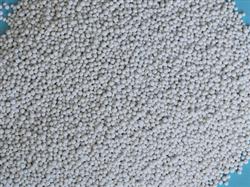
How to choose compound fertilizer correctly? You need to master the selection methods
How to choose compound fertilizer correctly? Please explain the methods. Compound fertilizer increases income and efficiency compared with single-element chemical fertilizers, and this is already widely recognized by farmers. But how to choose high-quality compound fertilizer to achieve the goal of low-consumption and high-efficiency fertilization is still difficult for most farmers to grasp, and in addition, the compound fertilizer types on the market are numerous and complex, with novel names and fancy packaging, which further increases the difficulty of identification.
-
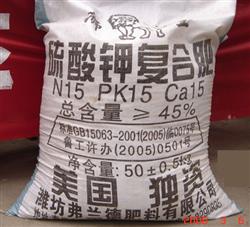
How to Identify Inferior Compound Fertilizer? These Methods Are Simple and Practical
How to identify inferior compound fertilizer? Please advise on methods. Identification of fake and inferior compound fertilizer can be done from the following points: Label identification method. The state has strict regulations on the labeling on compound fertilizer packaging bags: (1) It must be marked with the product name, trademark, nutrient content, production license number, standard number, net weight, factory name, ...
-
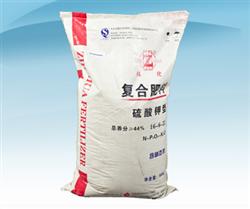
What is the difference between compound fertilizer and single-element fertilizer?
What is the difference between compound fertilizer and single-element fertilizer? Please explain that compound fertilizer refers to chemical fertilizer whose composition contains the three elements nitrogen, phosphorus and potassium, or any two of them. The advantages of compound fertilizer can be summarized in the following aspects: comprehensive nutrients and high content. The nutrients in each granule of compound fertilizer are evenly distributed, not only providing...
-
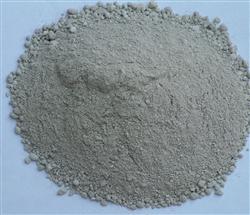
How can you tell good phosphate fertilizer from bad? These methods are simple and practical
The following methods for identifying good and poor phosphate fertilizer are introduced: observe the color and form. Phosphate fertilizer should be grayish white and powdery. If the color is white or yellow, it may be because the acid treatment was incomplete and its phosphorus content is low. Smell the odor. Phosphate fertilizer should have a slight sour odor. If it has no such odor, it means that during production...
-
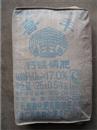
What happens after applying high-concentration phosphate fertilizer?
What happens when high-concentration phosphate fertilizer is applied? Please explain that the main component of ordinary superphosphate is monocalcium phosphate, and the fertilizer contains 14%-18% phosphorus; the secondary component is calcium sulfate, accounting for about 50%. Therefore, applying ordinary superphosphate not only provides crops with phosphorus nutrition, but also allows crops to obtain sulfur nutrition. However, superphosphate...
-
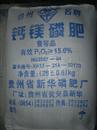
How to apply calcium magnesium phosphate fertilizer for better results
How to apply calcium magnesium phosphate fertilizer well? Calcium magnesium phosphate fertilizer is a multi-element fertilizer mainly containing phosphorus, along with calcium, magnesium, silicon and other components. Calcium magnesium phosphate fertilizer is insoluble in water, non-toxic, non-corrosive, not easily moisture-absorbing, not easily caking, and is a chemically alkaline fertilizer. It is widely suitable for various crops and phosphorus-deficient acidic soils. Application metho...
-
Which crops are suitable for potassium sulfate and potassium chloride application?
Which crops are suitable for potassium sulfate or potassium chloride application? Please give an introduction. Crop chloride tolerance refers to a crop's ability to endure chloride applied to the roots without suffering toxicity; the lower the concentration at which toxicity begins, the poorer the chloride tolerance. Among common crops, those with strong chloride tolerance include sugar beet, spinach, foxtail millet, kenaf, radish, chrysanthemum, rice, sorghum...
-
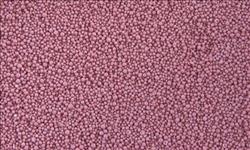
What are the methods for distinguishing potassium sulfate from potassium chloride?
How do you distinguish potassium sulfate from potassium chloride? Please give a detailed introduction. To distinguish potassium sulfate from potassium chloride, you can refer to the following methods: since potassium chloride is lower in price than potassium sulfate and cannot be used on chlorine-sensitive crops, to correctly distinguish and use these two fertilizers, note: first, when buying potash fertilizer, first look with your eyes at the appearance...
-
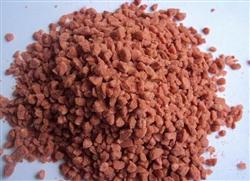
What is the difference between potassium sulfate and potassium chloride? How should they be applied?
What is the difference between potassium sulfate and potassium chloride? How should they be applied? Please explain the application techniques for potassium sulfate and potassium chloride. Potassium sulfate: readily soluble in water, with a K2O content of 50%, it forms white or pale red crystals, has better physical properties than potassium chloride, is less hygroscopic, does not easily cake during storage, and is an acidic fertilizer. Potassium chloride: ...
-
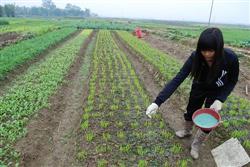
What precautions should be taken when applying potassium sulfate?
What should be noted when applying potassium sulfate? Please give guidance. Potassium sulfate is a high-quality potassium fertilizer with a relatively high potassium content. Potassium sulfate is a white crystalline substance, with a K2O content generally between 50% and 52%. It is easily soluble in water, has low hygroscopicity, and does not easily cake, giving it better physical properties than potassium chloride. Potassium sulfate is widely suitable for various...
条件筛选