An Introduction to the Action Characteristics and Application Methods of Qingku Like (Ralstonia Wilt Biofungicide)
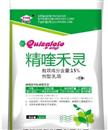
Qingku Like is a biological pesticide whose main ingredient is an extract of Chinese herbal medicines. It is mainly used to control bacterial diseases on crops, and common targets include bacterial wilt, soft rot, ginger blast, and canker. It is mostly used on crops prone to bacterial diseases, such as tomato, pepper, eggplant, tobacco, ginger, and peanut, and its positioning is mainly prevention and early control.
Compared with conventional chemical fungicides, Qingku Like acts in a relatively mild way and is friendlier to crops and the soil environment, making it suitable for repeated use during the crop growing period. Because bacterial wilt is a typical soil-borne disease and the pathogen mostly invades through the roots, foliar spraying alone is often ineffective. Therefore, in practice, root drenching is often used to let the solution penetrate into the root-zone soil, combined with foliar spraying to achieve both root and leaf effects.
In application, the principle of prevention first and early prevention and early treatment is generally followed. After transplanting and seedling recovery, before disease onset, or when scattered diseased plants first appear in the field, Qingku Like can be diluted and used as a root drench, applied several times in succession at intervals of a few days. The specific dilution ratio and number of applications should be based on the product label or the guidance of technical personnel, and the concentration should not be increased arbitrarily. Before mixing with other agents, it is best to conduct a small-area trial first and expand use only after confirming there are no adverse reactions.
In actual production, some farmers report unsatisfactory results, which is mostly related to timing that is too late, insufficient water volume for root drenching, or the field already having many diseased plants. Therefore, after diseased plants are found, they should be promptly pulled out and taken out of the field for disposal, and nearby healthy plants should be protected by focused drenching. At the same time, combining crop rotation, increased application of organic fertilizer, ridge cultivation, and other agronomic measures to reduce the accumulation of pathogens in the soil can better control the occurrence of bacterial diseases such as bacterial wilt.
Related Reading