Deep-sea fish species are diverse and each has unique survival characteristics.
Deep-sea fish generally refer to fish that live in deeper waters where light is faint, usually inhabiting water layers hundreds of meters below the surface or even deeper. Here the water pressure is high, the water temperature is low, and sunlight struggles to reach, so fish have developed forms clearly different from shallow-sea species. Common hairtail, cod, and monkfish seen in daily life are mostly marine fish active in deeper water layers.
To adapt to the dark environment, many deep-sea fish have particularly well-developed large eyes to capture faint light, while some species' eyes have already degenerated. Many deep-sea fish also have the ability to produce light, such as lanternfish and anglerfish, which can use light organs to lure prey or communicate with companions. Their mouths are usually large and their stomachs can stretch, making it easy to swallow food that is rarely encountered.
Roughly divided by habitat depth, the mesopelagic waters around several hundred meters are mostly inhabited by small species such as lanternfish and hatchetfish. Deeper waters are home to fish with peculiar appearances such as gulper eels, oarfish, and frilled sharks. In addition, there are benthic groups living close to the seafloor, whose body colors are mostly dark and very close to the surrounding seafloor environment.
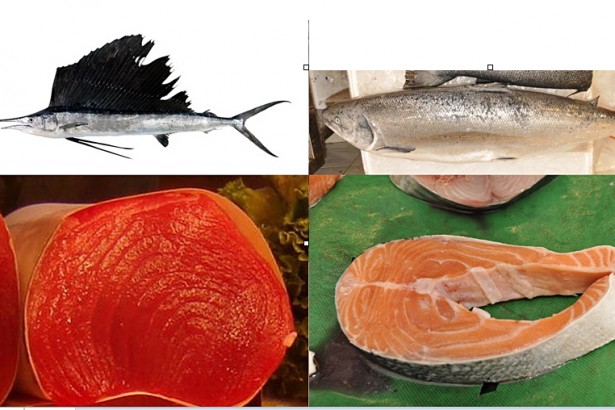
In terms of eating, deep-sea fish have firm flesh and are generally rich in high-quality protein and unsaturated fatty acids, suitable for methods such as steaming and stewing. When selecting, you can check whether the fish eyes are clear and bright, whether the gills are bright red, and whether the flesh is elastic. It should be noted that tuna, swordfish, and similar large migratory fish in the upper layers are not deep-sea fish in the strict sense. No matter which fish, it is recommended to eat it in moderation and change varieties frequently for a more balanced diet.
Related Reading