Tuna, swordfish, and salmon are fish at the top of the food chain rather than deep-sea fish, so they should not be eaten in large quantities.
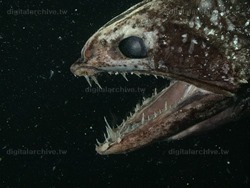
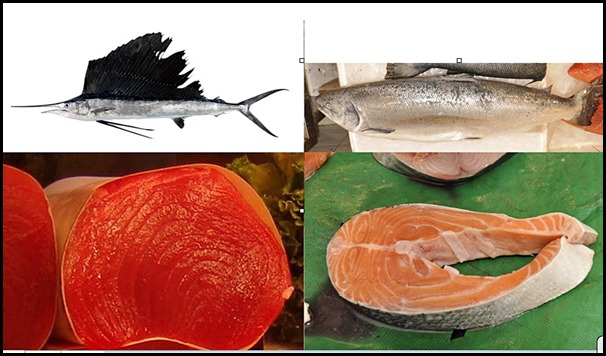
Taipei Veterans General Hospital published a study early this month, finding that a three-year-old girl who often ate deep-sea fish had mercury levels 20 times higher than the World Health Organization's permissible value. However, many scholars clarified that mercury content has nothing to do with the depth of the seawater in which a fish lives, and is more closely related to its position in the food chain. Tuna, swordfish and salmon are migratory fish that eat small fish to survive, placing them at the top of the food chain, so their accumulated mercury content is higher. Only fish living below 200 m, in waters the sunlight cannot reach, are called deep-sea fish. But whether deep-sea fish or salmon and tuna, their populations are relatively small, and for the sake of health or ecological conservation, the public should not eat them in excess.
Tuna, swordfish and salmon are not deep-sea fish
Wu Ming-ling, a physician in the Toxicology Division of Taipei Veterans General Hospital, collected 31 patients between 2007 and 2011 and found that six children had long eaten deep-sea fish and had high blood mercury and hair mercury levels. One three-year-old girl ate sea fish at least ten meals a week, and her blood mercury level reached 205.7 ppb, 40 times the 5-10 ppb recommended by the WHO. Wu Ming-ling compared the patients' dietary habits with the fish heavy metal survey conducted by the Ministry of Health and Welfare, and concluded that the patients must have consumed too much of large "deep-sea fish" such as tuna and salmon.
However, Shao Kuang-chao, a research fellow at the Biodiversity Research Center of Academia Sinica, said that the average seawater depth is about 200 m, beyond which sunlight cannot penetrate, and only fish living there are deep-sea fish. Tuna, salmon and swordfish are all migratory fish, and are not deep-sea fish at all.
In addition, in recent years, as vessel engine power has improved and detection instruments and technology have advanced, deep-sea fish have also become a target for fishing. But Hsu Cheng-yu said that deep-sea fish live a very long time and correspondingly take a long time to reproduce. For example, the deep-sea orange roughy of the South Pacific lives up to 100 years, but must pass 20~32 years before it can reproduce. After it was discovered in 1979, people overfished it, and the catch slid from 90,000 tonnes in 1990 all the way down to only 19,000 tonnes in 2009. "Before people could even figure out what it was, it was already on the verge of extinction."
Hsu Cheng-yu said that when choosing fish species, it is best to look for fish lower in the food chain with larger populations. Cheap and abundant Pacific saury can likewise supply DHA and EPA, and farmed fish such as golden pompano have the same effect. Although their DHA and EPA content may not be as high, the price is relatively cheap. "For the same money, you can eat a small piece of tuna or swordfish, or you can eat cheaper Pacific saury, eat more of it, and possibly get just as much nutrition."
At present, the Fisheries Agency and related units have all launched seafood purchasing guides to teach consumers to eat seafood while also taking ecological conservation into account. But Hsu Cheng-yu reminds that the seafood guide is only the most basic principle for identification. The most important thing is to establish a traceability system so that consumers can further understand the fishing process, whether the fish is wild or farmed, and the waters in which the fish grew, in order to safeguard consumer health and achieve sustainable fisheries.
A mini encyclopedia of ciguatera algae toxin:
Tropical marine fish poisoning is also called ciguatera toxin. It has now been confirmed to be the toxic dinoflagellate Gambierdiscus toxicus. This toxic dinoflagellate mainly parasitizes large algae such as red algae, brown algae and green algae, and attaches to the surface of coral reef rocks. When herbivorous fish ingest these toxic algae, the toxin begins to accumulate in the fish's body, poisoning the fish. Finally, through the food chain, humans eat these toxic fish and are poisoned.
Symptoms of tropical marine fish poisoning usually appear 1~24 hours after ingestion, and vary with the toxicity contained in the fish, the part of the fish eaten and the individual's sensitivity. Unlike the symptoms of other marine biotoxins, those poisoned experience a reversal in their perception of temperature.
(Source: http://ind.ntou.edu.tw/~fec/fecntou/2009/039/039_02.pdf)
(This article was funded by the Jianzhen Environmental Education Foundation for personnel expenses, but it does not interfere at all with news topic selection and interview writing, ensuring news independence.)