A Detailed Guide to Post-Emergence Corn Herbicide Types and Application Methods
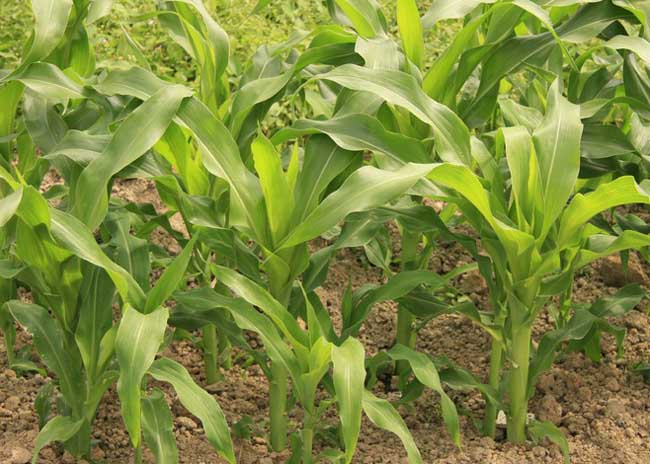
Summers are rainy, and weeds are widespread in corn fields. The main weeds include crabgrass, barnyardgrass, foxtail, goosegrass, redroot pigweed, purslane, copperleaf, and nutsedge. Corn is most severely harmed by weeds during the seedling stage. Chemical control saves time and labor, but the market is flooded with all kinds of corn field herbicides, and farmers often do not know how to choose. Many mistakenly select or misuse herbicides, causing unnecessary damage to corn growth. Therefore, understanding herbicide types and their correct use is the key to summer corn weed control.
Types of Post-Emergence Corn Herbicides
1. Single-agent herbicides
(1) Amide herbicides: This category is currently the most important type of herbicide for corn fields. It can be absorbed by weed sprouts and applied as a soil-sealing treatment before weeds germinate, effectively controlling annual grass weeds and some annual broadleaf weeds. There are many varieties in this category, such as acetochlor, alachlor, butachlor, metolachlor, and pretilachlor.
(2) Triazine herbicides: These can effectively control annual broadleaf weeds and annual grass weeds. They are mainly absorbed by weed roots, and can also be absorbed in small amounts by weed stems and leaves. Representative varieties include atrazine, cyanazine, simazine, and prometryn. Among them, atrazine is used more widely, is relatively safe for corn, and has the highest activity. However, atrazine should be mixed with acetochlor and similar products to reduce the dosage, improve weed control efficacy, and increase safety for subsequent crops.
(3) Phenoxy carboxylic acid herbicides: These are mainly used for post-emergence control of broadleaf weeds and nutsedge in corn. Representative varieties include MCPA sodium salt and 2,4-D butyl ester. Among them, MCPA sodium salt is widely used in corn fields to control nutsedge, but improper timing of use can easily cause phytotoxicity.
(4) Sulfonylurea herbicides: Nicosulfuron and rimsulfuron can be used in corn fields to control grass weeds, cyperaceae weeds, and some broadleaf weeds. Thifensulfuron can be used in corn fields to control annual broadleaf weeds.
(5) Other herbicides: Paraquat and glyphosate are non-selective herbicides that can be used for directed spraying after corn reaches 40 cm in height, effectively controlling various weeds. Fluroxypyr, dicamba, bromoxynil, bentazone, and other varieties can also be used to control broadleaf weeds in corn fields.
2. Mixed-agent herbicides
(1) Acetochlor and atrazine 1:1 mixture: The earliest produced mixed herbicides of this type were acetochlor-atrazine compound and acetochlor-atrazine suspension concentrate. They can be used after corn sowing before emergence and in the early post-emergence stage to control annual grass weeds and broadleaf weeds, and are safe for corn and subsequent crops. Similar products include butachlor + acetochlor + atrazine, butachlor + atrazine, alachlor + acetochlor + atrazine, metolachlor + atrazine, and pretilachlor + atrazine.
(2) Acetochlor and atrazine 2:3 mixture: This mixed herbicide can be used after corn sowing before emergence and in the early post-emergence stage to control annual grass weeds and broadleaf weeds in corn fields. It is safe for corn, but in particularly dry years it may reduce safety for subsequent wheat. A product with similar performance is the chlorotoluron + acetochlor + atrazine mixture, which can greatly improve safety for subsequent wheat, but it must not be used post-emergence in corn.
(3) Prometryn and atrazine mixture: This can effectively control annual grass weeds and broadleaf weeds in corn fields. Applied after corn sowing before emergence, its weed control effect is stable and less affected by soil moisture. However, when rainfall is heavy, greater leaching will reduce weed control efficacy. When applied during the corn growing period, adverse environmental conditions such as high temperature and drought can induce phytotoxicity in corn.
(4) Nicosulfuron and atrazine mixture: This is an ideal herbicide mixture. It can not only effectively control various annual weeds, but also control perennial grass weeds and cyperaceae weeds. It is convenient to apply and safe for corn and subsequent crops. However, it must not be mixed with organophosphate insecticides before or after use; it can be mixed with pyrethroid insecticides.
(5) Acetochlor, atrazine, and paraquat mixture: It has both non-selective and soil-sealing weed control effects, and can effectively control various weeds in corn fields when applied during the corn growing period. There are many similar products, and there are also herbicide mixtures that replace paraquat with glyphosate.
Application Methods of Post-Emergence Corn Herbicides
In chemical weed control in corn fields, paying attention to selecting suitable herbicides, grasping the optimal application timing, strictly applying safe and effective dosages, and adopting correct application methods are the keys to ensuring chemical weed control efficacy and corn safety.
1. Correctly select herbicides
(1) Select herbicides according to the control target. Look at which weed population is dominant in the field, and choose a herbicide with a corresponding weed control spectrum.
(2) Select applicable herbicides according to the field crop. For corn fields, choose herbicides specifically for corn fields.
(3) Select herbicides according to the application period. Those used after sowing before emergence must not be used post-emergence; those for soil treatment must not be used for stem and leaf treatment.
(4) Consider safety to adjacent crops and subsequent crops.
2. Strictly follow dosages
Herbicide dosages must strictly follow the standards specified in the instructions, and the dosage must not be increased at will. When 2 or more herbicides are mixed, the dosage of each herbicide should be 1/3 to 1/2 of its conventional dosage. The spray liquid volume per mu (after diluting the original liquid with water) should be no less than 30 kg for soil treatment without straw return, no less than 45 kg for straw return, and for stem and leaf treatment, no less than 30 kg when weeds are small and no less than 45 kg when weeds are large.
3. Scientific mixing and combination
When using a single herbicide, attention should be paid to calculating the dosage according to the safe and effective dosage of the herbicide and the actual area of the corn field. When mixing 2 or more herbicides at the same time, it is necessary to choose those with different weed control spectra, but the applicable crops, periods, and application methods must match and be basically consistent. When mixing wettable powder with emulsifiable concentrate, first dissolve the wettable powder in a small amount of water to make a stock solution, then add the emulsifiable concentrate. When preparing the spray liquid, first fill half the sprayer with water, then add the secondarily diluted pesticide stock solution, finally add enough water, shake fully, and then spray.