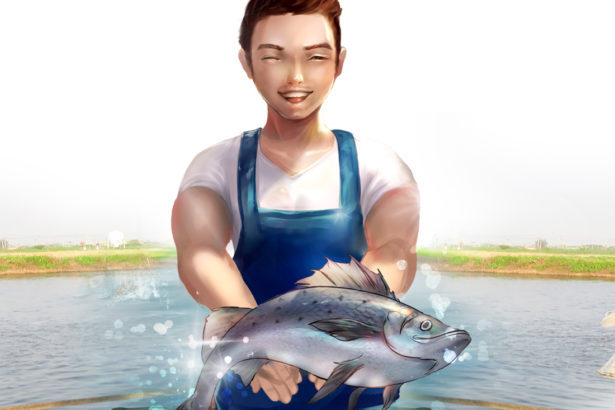
The Nile perch is a large freshwater predatory fish native to Africa
The Nile perch is a large freshwater fish native to Africa. Taxonomically it belongs to the family Latidae, and it is mainly distributed in the Nile River system and large lakes such as Lake Victoria and Lake Chad, where it is an important commercial fish species. Its body is elongated and spindle-shaped, with a grayish-green back and silvery-white sides, a large mouth opening, and a protruding lower jaw; in appearance it is clearly different from the commonly seen mandarin fish.
The most striking features of this fish are its large size and fast growth, and it is considered one of the largest freshwater fish in the world, with adults generally reaching tens of kilograms. The Nile perch is aggressive in temperament and is a carnivorous fish, feeding mainly on small fish, small shrimp and other aquatic animals. After being introduced into new waters, it easily squeezes out the living space of native fish species; the ecological changes in Lake Victoria are a frequently cited example.
In terms of food value, Nile perch has white flesh, a tender texture and few intermuscular bones, and a relatively high protein content. It is suitable for many cooking methods, such as steaming, braising and pan-frying. On the international market it is mostly traded in the form of frozen fillets, and it is an important commercial fish species. Because it grows quickly and has a strong ability to adapt to the environment, pond or cage aquaculture is also carried out in some regions, and it is regarded as a species with relatively high economic value for farming.
It should be noted that the Nile perch is not the same kind of fish as the commonly seen mandarin fish, barramundi or largemouth bass, and when selecting them they can be distinguished by body size, body color and mouth features. At the same time, it is aggressive and has a large appetite, so when farmed artificially it should not be mixed with fish or shrimp that are too small. In routine management, attention should also be paid to keeping water quality and water temperature stable to reduce the occurrence of disease.
Related Reading