What is the difference between sea bass and mandarin fish? Mainly look at these points
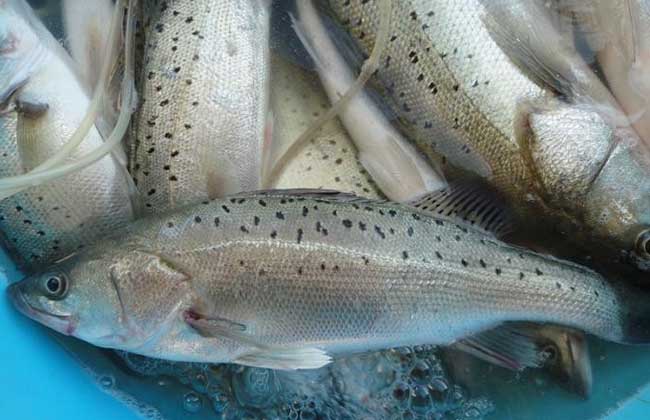
Sea bass is one of the common commercial fish; Japanese sea bass, largemouth bass, European perch and four-gill bass can all be called sea bass. Mandarin fish, whose scientific name is Siniperca chuatsi, also known as jihua fish, huaji fish, etc., is one of China's "four great freshwater famous fish". Its flesh is tender, with few bones and plenty of meat, and its meat is flaky and delicious, truly a fine product among fish. Now let us take a look at the differences between sea bass and mandarin fish.
Differences in family and genus between sea bass and mandarin fish
1. Sea bass: Sea bass belongs to the animal kingdom, phylum Chordata, class Osteichthyes, order Perciformes, family Lateolabracidae, genus Lateolabrax.
2. Mandarin fish: Mandarin fish belongs to the animal kingdom, phylum Chordata, subphylum Vertebrata, class Osteichthyes, subclass Actinopterygii, order Perciformes, family Serranidae, genus Siniperca.
Morphological differences between sea bass and mandarin fish
1. Sea bass: The sea bass has an elongated, laterally compressed body, a pointed snout, a large terminal mouth with an oblique cleft, a lower jaw slightly protruding beyond the upper jaw, and the upper jaw extending below the posterior margin of the eye. Both jaws, the vomer and the palatine bones all bear small teeth. The back is slightly arched, and both the dorsal and ventral surfaces are bluntly rounded. The head is medium-sized and somewhat pointed. The body length can reach 102 cm, usually weighing 1.5-2.5 kg, with the largest individuals reaching over 15 kg.
2. Mandarin fish: The mandarin fish has a laterally compressed body with an arched back, yellow or pale green in color, with black vertical stripes and small patches. The mouth is large and protractile, with the lower jaw projecting forward and upward. Both jaws and the palatine bones bear villiform fine teeth, and it also has well-developed canine teeth. The dorsal fin is composed of sharp spines.
Differences in distribution between sea bass and mandarin fish
1. Sea bass: Japanese sea bass is mainly produced in the Sea of Japan, the Yellow Sea, the Bohai Sea and other places. California bass is native to the United States, Canada and Mexico and other places. Four-gill bass is distributed in the Yellow Sea, Bohai Sea and East China Sea. European perch is distributed in the temperate and frigid zones of Eurasia, and in China it is only produced in the **Irtysh River and Ulungur River basins.
2. Mandarin fish: The mandarin fish is a fierce carnivorous fish, often feeding on other fish and also eating shrimp. It often inhabits the bottom layer of still or slow-flowing waters. After the weather warms up in spring, it often goes to shallow coastal waters to feed, mostly at night. After rain, it often spawns in rapid currents and likes to gather in groups. Mandarin fish is widely distributed, and apart from the Qinghai-Tibet Plateau, it is found in all major river systems across the country.
Differences in effects between sea bass and mandarin fish
1. Sea bass: Sea bass is sweet in taste and neutral in nature, entering the liver, spleen and kidney meridians. It has the effects of benefiting the spleen and stomach and tonifying the liver and kidneys. It is mainly used for diarrhea and dysentery due to spleen deficiency, indigestion, malnutrition in children, pertussis, edema, weakness and atrophy of muscles and bones, restless fetus, and chronic non-healing sores and ulcers.
2. Mandarin fish: Mandarin fish is sweet in taste, neutral in nature and non-toxic, entering the spleen and stomach meridians. It has the nourishing effects of tonifying qi and blood and benefiting the spleen and stomach.