Sea Fish Pictures: Get to Know Common Sea Fish Species and Their Physical Features
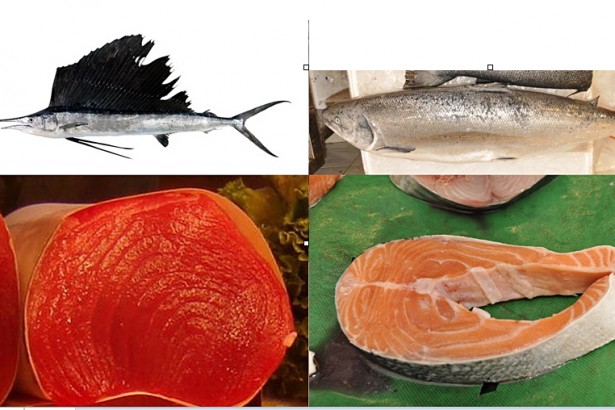
Sea fish pictures refer to image materials that use marine fish as the subject for photography or illustration, covering common species such as hairtail (beltfish), yellow croaker, Spanish mackerel, pomfret, turbot, and grouper, as well as large migratory fish like tuna, sailfish, and salmon. These pictures are often used for species identification, market purchasing reference, and popular science teaching, and are one of the important ways to intuitively learn about sea fish.
Through sea fish pictures, you can get a preliminary grasp of the physical features of different species. For example, hairtail has a slender body and is silver-gray all over; turbot has a flat body with both eyes concentrated on one side of the body; yellow croaker has a body color leaning toward golden yellow and a relatively large head; sardines are small in size and mostly move in schools. When comparing pictures, focus on observing body shape, body color, fins, and head morphology, as these are the key points for distinguishing species.
There are also some easily confused points when identifying fish from pictures. Turbot and yellow croaker are both sea fish; they simply live in different water layers and sea environments. And although tuna, sailfish, and salmon live in the open ocean year-round, they belong to migratory upper-layer fish and are not equivalent to deep-sea fish. Therefore, judging a fish's habits or nutritional characteristics from a single picture alone is often not accurate enough, and it still needs to be cross-checked with textual materials.
In practical use, sea fish pictures need to be both clear and true to life. Some commercial promotional images have been beautified, and there may be a gap between them and the real thing. When purchasing, more attention should be paid to freshness features such as whether the fish eyes are clear and bright, whether the gills are bright red, and whether the flesh is elastic. Only by using pictures as an auxiliary tool together with species knowledge can consumers and farmers be helped to make more suitable judgments.
Related Reading