Is yellow croaker a saltwater fish or a freshwater fish?
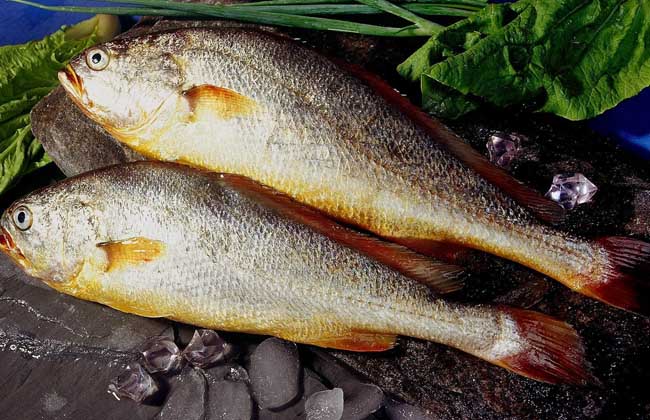
Yellow croaker is a fish people eat fairly often in their daily diet, and there are quite a few ways to prepare it. It can be used not only for sweet-and-sour fish, but also for braising, making fish soup, and more. No matter how it is prepared, it is very nutritious. However, many friends do not know where this delicious ingredient comes from. Let us take a look below at whether yellow croaker is a saltwater fish!
Is yellow croaker a saltwater fish?
Yellow croaker is a saltwater fish. Yellow croaker is divided into large yellow croaker and small yellow croaker. Large yellow croaker is distributed in the southern Yellow Sea, the East China Sea and the South China Sea. It usually inhabits deeper sea areas, migrates to offshore waters to spawn from April to June, disperses along the coast to feed after spawning, and migrates back to deeper sea areas in autumn and winter. Small yellow croaker is distributed in China's Yellow Sea, Bohai Sea, East China Sea and the west coast of Korea. The fish migrates to the coast in spring, and after spawning from March to June, it disperses in offshore waters to feed, returns to deep sea in late autumn, and overwinters in the deep sea in winter. Yellow croaker generally has an omnivorous diet, mainly feeding on fish and shrimp.
How to select yellow croaker
1. More than 2/3 of the base of the fin rays of the dorsal fin and anal fin is covered with small cycloid scales. The fish scales are uniform in color, with a natural yellow.
2. Fresh, high-quality yellow croaker has eyes that are black and shiny.
3. The body has no wounds, the fish body is elongated and oval, the head is relatively large, the caudal peduncle is relatively slender, the upper body is yellowish brown, the belly is golden yellow, the fins are yellow or grayish yellow, and the lips are orange-red.
What are the common saltwater fish?
1. Ribbonfish: Ribbonfish is also called hairtail, cutlass fish, and so on. It belongs to migratory fish and is extremely difficult to keep alive in small ponds or relatively small sea areas. Ribbonfish cannot reproduce successfully without migration, so there is still no artificial farming of ribbonfish, and it is mainly caught in offshore waters.
2. Spanish mackerel: Spanish mackerel is also called seerfish, king mackerel, and there are many species. It grows in China's Yellow Sea and Bohai Sea. It is a warm-water upper-layer fish that feeds on small and medium-sized upper-layer fish. It migrates in schools in summer and autumn, and also belongs to migratory fish. It cannot be artificially farmed.
3. Small yellow croaker: Small yellow croaker is also known as big-eye, flower-colored, small cucumber, ancient fish, yellow croaker, and so on. Its body shape resembles that of large yellow croaker, but the head is longer, the eyes are smaller, and the scales are larger. The body length is about more than 20 cm. It is a schooling migratory fish in the bottom layer of offshore waters and cannot be artificially farmed.
4. Large yellow croaker: Large yellow croaker is also known as yellow fish, king fish, large fresh, large yellow croaker, golden dragon, golden yellow dragon, and so on. It is a warm-temperate offshore schooling migratory fish and cannot be artificially farmed.
5. Flatfish: Flatfish is flounder. Adult fish lurk on the seabed to live, mostly feeding on starfish and other small animals, and are not suitable for artificial farming.
6. Pomfret: Pomfret is also called butterfish. It is a migratory fish and is very difficult to artificially farm.
7. Sardine: Sardine is also called sardinella. Sardine is a warm-water offshore fish and belongs to one type of schooling migratory fish. It is extremely difficult to artificially farm.