The complete growth process of sunflowers from sowing to flowering and seed production
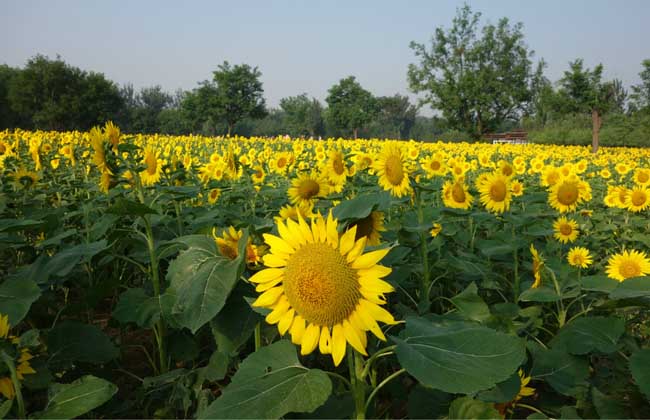
The growth period of sunflowers refers to the number of days from emergence to seed maturity, generally 85 to 120 days or more. The length of the growth period varies depending on the variety, sowing date and cultivation conditions. The entire growth period is divided into four growth stages: the seedling stage, the bud stage, the flowering stage and the maturity stage. Let's take a look at the growth process of sunflowers together!
Seedling stage
The period from emergence to bud formation in sunflowers is called the seedling stage, generally requiring 35 to 50 days, or 28 to 35 days for summer sowing. This stage is when the leaves and flower primordia form and the florets differentiate. The seedling stage is the stage when sunflowers have the strongest drought resistance. Above-ground growth is slow, while the root system below ground grows quickly, soon forming a strong root system.
Bud stage
When a star-shaped body 1 cm in diameter appears at the top of the sunflower, it is commonly known as the bud stage. From bud formation to flowering generally takes about 20 days. This is a period when vegetative growth and reproductive growth proceed together, and it is also the most vigorous stage in the plant's life. During this period, sunflowers need the most fertilizer and water, accounting for about 40 to 50% of the total fertilizer and water requirement. If the need for water and fertilizer cannot be met in time, the yield will be seriously affected.
Flowering stage
When 75% of the plants in a sunflower field have open ray florets, the flowering stage begins. For a single flower head, from the opening of the ray florets to the completion of disk floret opening generally takes 6 to 9 days, with the second to fifth days being the peak flowering period of that inflorescence. The number of florets opening during these 4 days accounts for about 75% of the total. Flowers mostly open between 4 and 6 in the morning and are pollinated the next morning. Unpollinated stigmas can remain without wilting for 7 to 10 days. Sunflowers have a very low seed-setting rate from self-pollination, only about 3%, while cross-pollination gives a high seed-setting rate. However, if temperatures are high, there is much rain, humidity is high, light is insufficient, or the soil is dry, the seed-setting rate will be greatly reduced. Therefore, measures such as adjusting the sowing date, timely fertilizing and watering, controlling pests and diseases, and introducing bees or artificial supplementary pollination can increase the seed-setting rate.
Maturity stage
The maturity stage of sunflowers refers to the period from flowering to maturity, 25 to 55 days for spring sowing and 25 to 40 days for summer sowing, with differences among varieties. About 15 days after flowering and pollination is the seed formation stage. The maturity stage of sunflowers requires clear weather, a relatively large difference between day and night temperatures, and suitable soil moisture.