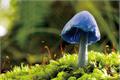
The sky-blue mushroom is a well-known blue wild fungus of New Zealand
The sky-blue mushroom is a wild fungus known for its blue color, mainly distributed in New Zealand, with scattered records of it also found in places such as India. It is small in size, yet it is one of the rare blue mushrooms in the world, drawing wide attention because its color is so unusual; it has even appeared on New Zealand's banknotes, becoming an iconic image of the local natural ecology.
In appearance, the cap of the sky-blue mushroom is a striking blue, nearly spherical when young and gradually flattening out as it matures. Its gills tend toward pink, and its spore print is also pink in tone, forming a sharp contrast with the blue cap, which is also an important feature for identifying it. As for where the blue comes from, it is generally thought to be related to the pigments contained in its body, making it stand out especially brightly in damp, dim forests.
As to whether the sky-blue mushroom can be eaten, there is currently no clear record of it being consumed, and since quite a few species in the genus Entoloma to which it belongs are toxic, it is not recommended for consumption. This also serves as a reminder that judging whether a mushroom is poisonous cannot rely on whether its color is bright alone; some folk remedies passed around are not reliable, and when encountering a wild mushroom you do not recognize, the safest approach is to look but not pick.
In the ecosystem, the sky-blue mushroom plays the role of a decomposer, helping break down dead branches and fallen leaves in the forest and participating in nutrient cycling. It is rather particular about its growing environment, appearing mostly in damp forests with well-preserved vegetation, so it is also often regarded as one of the indicators of forest ecological conditions. Protecting this kind of unique fungus is in fact also protecting the biodiversity of the entire forest.
Related reading