Mushrooms on dung heaps run rampant in Brazil with no one eating them, yet in Japan they became a precious delicacy
Gold goes unnoticed in a garbage heap, and men of letters and lofty ideals often find no way to serve their country, their skills left with no place to be put to use; such phenomena are commonplace, and some even see them as the norm. But the wild mushroom introduced to you today embodies the truth that "gold will always shine."
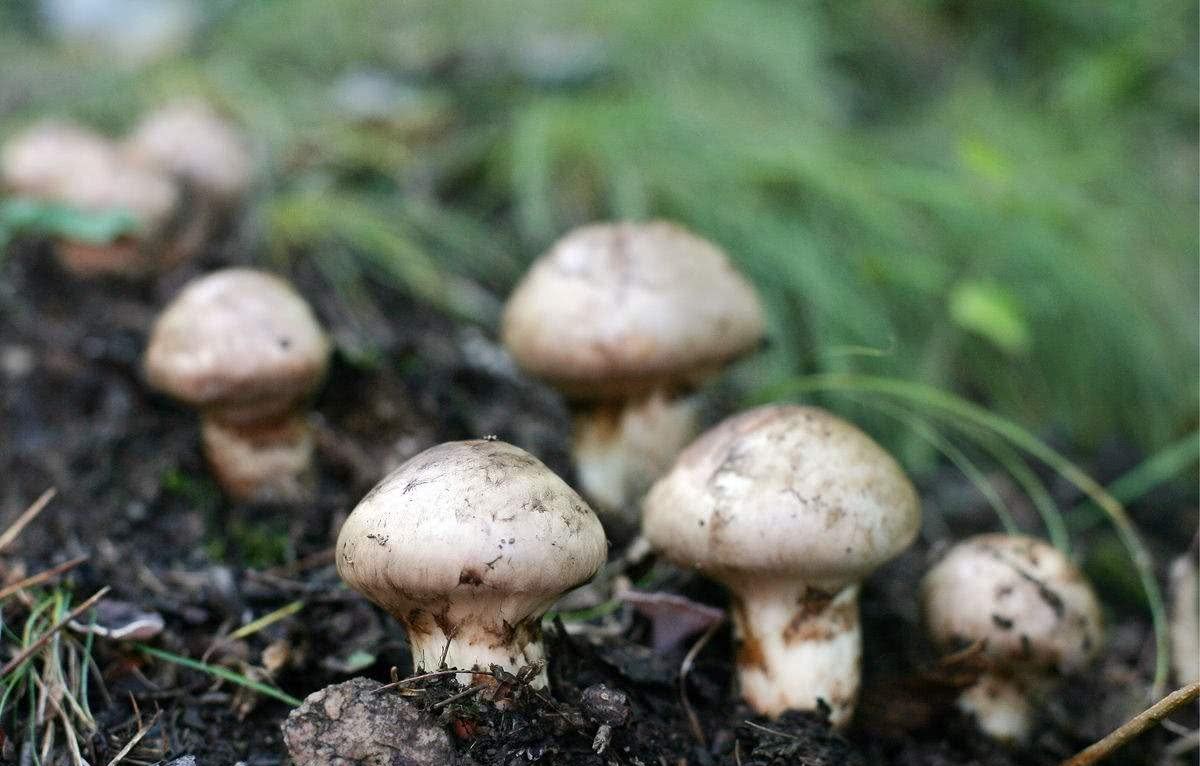
This wild mushroom is the "Himematsutake." Himematsutake originally comes from the outskirts of Sao Paulo, Brazil, so it is also called the "Brazilian mushroom." This mushroom is unremarkable, even quite plain, because it lives a saprophytic life, usually growing on rotting trees or on dung heaps and other sites rich in humus. Farmers in rural Brazil would occasionally gather this mushroom from their livestock's dung heaps to take home and eat, and otherwise paid it little attention, letting it grow even to the point of running rampant. It was also because of this mushroom's overabundance that the locals did not value it much, so much so that it proliferated all over the ground with few people bothering to eat it.
But a clever Japanese immigrant noticed something intriguing: he found that the local illness rate was somewhat lower than in other areas. Could it be related to the locals eating this mushroom? So he traveled a great distance, crossing the Pacific Ocean, to bring this strain of mushroom back to Japan, and laboratory results confirmed his conjecture: this mushroom indeed had the function of resisting disease. And so this unremarkable mushroom took off unstoppably in Japan, gradually becoming a precious delicacy there.
The Himematsutake mushroom has a tender texture, a unique aroma, and is non-toxic. First, its edible value is undeniable, so it can serve as a culinary delicacy. Second, and most importantly, its functions are extremely powerful: it contains active polysaccharides, in amounts even several times that of lingzhi (reishi), with effects of strengthening human immunity and enhancing the activity of immune cells. Precisely because of this, this Himematsutake has the effect of inhibiting viruses and fighting tumors.
This news spread rapidly from the laboratory in Tokyo to the outside world, and Himematsutake instantly became famous. Before long it was introduced to Japan for artificial cultivation and sale. Because Japan's land is small and it cannot be cultivated on a large scale, while market demand for it was strong, this mushroom became "gold on the dung heap." For a time its price soared, and it became a precious food in Japan.
The most common way to eat Himematsutake is to use it to make chicken soup, which not only preserves the deliciousness of Himematsutake but also preserves its nutritional value. It is understood that regularly eating Himematsutake also has many benefits such as strengthening the brain, reducing inflammation, benefiting the kidneys, lowering blood sugar, improving diabetes, and lowering cholesterol.
Through the history of Himematsutake's development, we can draw some inspiration: even a tiny mushroom can "turn over and sing as a liberated serf," so as long as we have real talent and learning, we need not fear that opportunity will be long in coming.
Dear friends, I wonder whether you have ever seen Himematsutake? Have you ever eaten Himematsutake? You are welcome to leave a comment and share!