Red photinia (Photinia × fraseri) cuttings root easily and are well suited for garden hedge landscaping
Red photinia cuttings refer to young plants raised by propagating red photinia branches through cuttings; they belong to the colorful-leaf tree species of the genus Photinia in the rose family (Rosaceae). Compared with growing from seed, cuttings preserve the superior traits of the mother plant relatively well, and the resulting plants grow uniformly and to consistent specifications, making it a very widely used propagation method in nursery production.
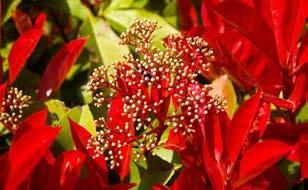
The most striking feature of these plants is that the tender leaves of new shoots are bright red, gradually turning green as the branches and leaves mature, creating a red-and-green intermingled landscape effect that is very eye-catching. The root system of cutting-raised plants emerges from the cut end of the cuttings and consists mostly of fibrous roots; when transplanted, they recover from transplant shock fairly quickly and their survival performance is also quite satisfactory, making them suitable for mass cultivation.
When propagating, semi-lignified vigorous branches are usually chosen as cuttings; after insertion, the medium should be kept moist and shade provided as appropriate, with attention to ventilation and cooling during hot periods. Once roots have formed and the plants have survived, light exposure should be increased gradually, and after a period of hardening off they can be transplanted; water promptly in the early stage after transplanting, and once established, apply light fertilizer frequently to encourage a full, bushy plant shape.
Red photinia cuttings are commonly used for hedges and color-block landscaping, and can also be grown into small trees or topiary balls; they are very common along roads, in residential communities and in garden green spaces. Routine care requires watching for leaf diseases and pests such as aphids and stinging caterpillars (slug moths), achieving early detection and early control, and combining this with regular pruning to stimulate new leaf growth, which makes the red-leaf ornamental effect last longer.
Related Reading