Reasons for Yellowing Leaves on Crape Myrtle and Care Methods
Crape myrtle is a shrub plant and a relatively rare flowering shrub species, with high ornamental and cultivation value. It is generally seen in courtyard decoration and landscape design, though it can now also be grown in pots.
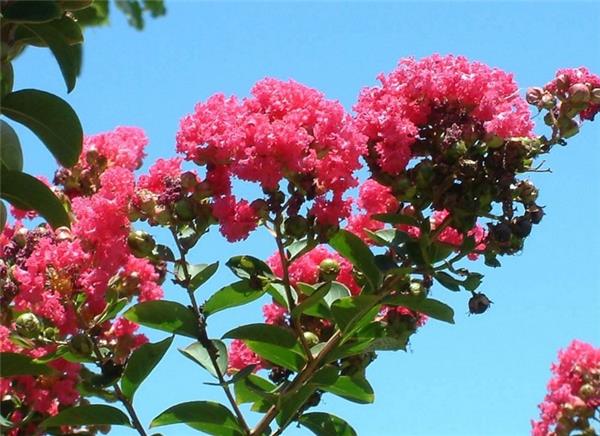
I. Propagation Methods of Crape Myrtle
Seed propagation: Seeds are collected in November to December, and seeds with a high degree of maturity should be harvested. After collection, remove the fruit skin, dry them slightly, and store them dry in a container. In March of the following year, they can be broadcast or sown in rows on a seedbed. After sowing, cover with a layer of fine soil, with a thickness such that the seeds are no longer visible. To maintain a certain temperature, a small arch shed can be used as cover.
Cutting propagation: For hardwood cuttings, select 1-year-old thick and sturdy branches and cut them into 15 cm long cuttings. This can be done before the branches sprout, from mid-to-late March to early April. Softwood cuttings are done in July to August. Cut healthy new branches of the current year that are semi-lignified into cuttings about 9 cm long, with a flat cut at the upper end and 2 to 3 leaves retained. Cut the lower end into a horseshoe shape to promote rooting. The cutting depth only needs to reach 3 to 4 cm.
Division propagation: In early March to April, or in autumn, dig out the root suckers of the plant together with their roots, and then replant the new plants obtained.
Layering propagation: This mainly refers to air layering, carried out during the growing season. Select 1 to 2 living branches and in March to April, use a grafting knife to score and girdle the branch down to the xylem. Dilute rooting powder and apply it to the scored area. After it dries, wrap a plastic bag filled with loose garden soil around the scored area, water it, and tie it tightly. After 30 days, check for survival and rooting, then cut it off and plant it.
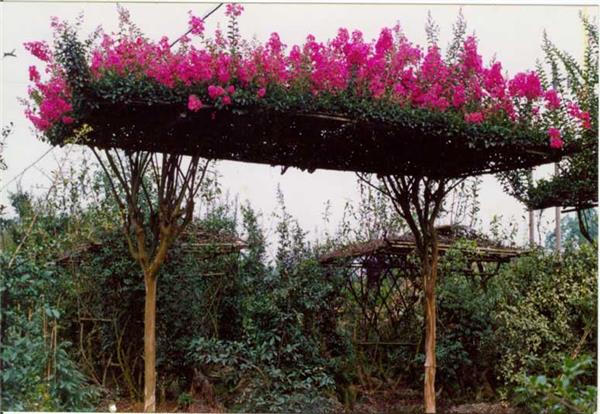
II. Cultivation Methods for Crape Myrtle
Soil: Crape myrtle is vigorous and easy to cultivate, with no strict requirements for soil, but it grows best in deep, fertile sandy loam.
Sunlight: Crape myrtle likes light, so it should be planted in a wind-sheltered, sunny spot or at the base of a south-facing courtyard wall. Insufficient light not only results in fewer or no flowers, but can even cause weak growth with thin branches and small leaves.
Watering: Crape myrtle is drought-tolerant and afraid of waterlogging. Each year, before spring growth begins and after leaf fall in autumn, water once with a green-up watering and once with a winter watering. At ordinary times, if it is not too dry, there is no need to water. During the rainy season, drainage should be done well to prevent root rot from excessive water.
Fertilizing: Crape myrtle can be fertilized each year after leaf fall in winter and before spring growth begins. Using human manure and urine or sesame paste residue is even better, as it can make the plant grow vigorously the following year with large, brightly colored flowers.
Pruning: Prune after leaf fall in autumn. Remove excessive-growth branches, dried branches, drooping branches, diseased and pest-infested branches, slender branches, and inward-growing branches. During the young tree stage, side branches on the lower part of the main trunk should also be cut off in time, so that the upper part of the main trunk can receive sufficient nutrients and form a good canopy.
Pests: During the growing season, crape myrtle is susceptible to damage from aphids, scale insects, stinging moths, and tortricid moths. If they occur, use dimethoate emulsifiable concentrate at 1000 times dilution to spray and kill scale insects and aphids, and use 80% dichlorvos emulsifiable concentrate at 1500 times dilution to spray and kill stinging moths and tortricid moths.
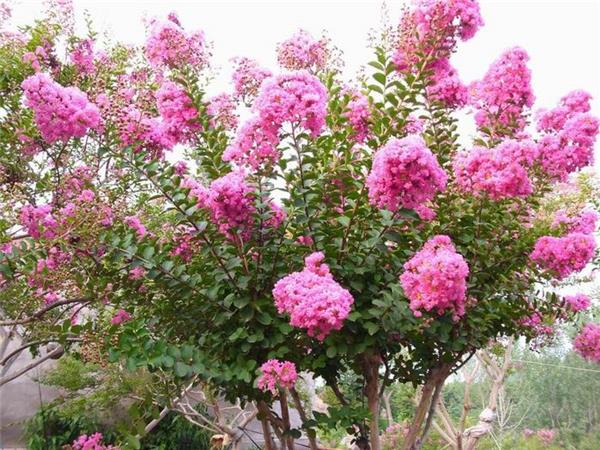
III. Reasons for Yellowing Leaves on Crape Myrtle
Natural aging: One reason for yellowing leaves on crape myrtle is normal metabolism. After growing for a period, some leaves of crape myrtle will turn yellow and drop after aging through metabolism. In this case, there is no need to worry; just do a good job with daily care and management.
Overwatering: Crape myrtle is drought-tolerant. If it is watered too much and the soil is too wet, prolonged water accumulation may cause the roots to lack oxygen and rot, so nutrients cannot be transported to the leaves, causing yellowing. At ordinary times, if it is not too dry, there is no need to water. During the rainy season, drainage should be done well to prevent root rot from excessive water.
Powdery mildew infection: Powdery mildew is a worldwide disease with a very wide range of hosts, and crape myrtle is an important target of its infection. After crape myrtle is affected by powdery mildew, the leaves often become withered and yellow and fall off, directly affecting tree vigor and ornamental effect. Pay attention to daily care to improve the plant's disease resistance. During the growing season, when the disease occurs, spray 80% zineb wettable powder at 500 times dilution, or 70% thiophanate-methyl at 1000 times dilution, or 20% triadimefon emulsifiable concentrate at 1500 times dilution, as well as 50% carbendazim wettable powder at 800 times dilution.
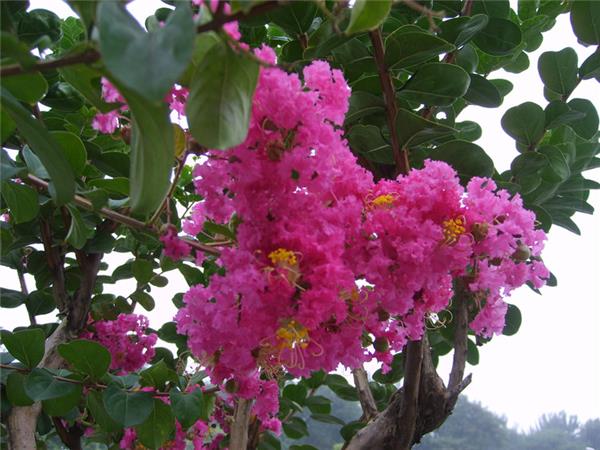
The main prevention and control method to avoid disease and pest infestation in crape myrtle still depends on daily care, such as frequent ventilation and avoiding water accumulation in the pot, so that you can grow healthy and beautiful crape myrtles.