Methods for Controlling Onion Downy Mildew and Key Field Management Points
Onion downy mildew is a common fungal disease in onion production, mainly affecting leaves and flower stalks, and it tends to become epidemic under conditions of low temperature and frequent rain with high field humidity. Onion fields that are continuously cropped, located in low-lying areas, or poorly drained often suffer more severe infection. It is one of the important diseases affecting onion yield and quality, and requires advance prevention and timely control.
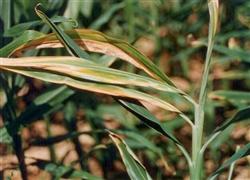
In the early stage of the disease, pale yellow to yellowish-white oval lesions appear on the leaves. When humidity is high, a grayish-purple mold layer grows on the surface of the lesions. In the later stage, the diseased leaves mostly wither from the leaf tip downward, twisting and bending over. Infected plants grow weakly, the bulbs develop poorly, and their commercial value drops noticeably. Once a primary infected plant appears in the field, the disease can spread rapidly.
Control of onion downy mildew should be based on agricultural measures. It is advisable to rotate with non-allium crops for more than two to three years, and to select varieties with better disease resistance and healthy, disease-free seed bulbs or seedlings; plant at a reasonable density, maintain ventilation and light penetration in the field, drain promptly after rain to reduce humidity, avoid excessive application of nitrogen fertilizer, and appropriately increase phosphorus and potassium fertilizer to strengthen the plants' disease resistance. Diseased plants should be promptly pulled out and taken out of the field for disposal to reduce the accumulation of inoculum.
Chemical control should achieve early detection and early application, spraying common fungicides such as metalaxyl, mancozeb, and dimethomorph promptly at the early stage of the disease or before and after continuous rainfall. When spraying, it should be uniform and thorough, with emphasis on protecting new leaves, and attention should be paid to alternating different types of fungicides to delay the development of resistance. At the same time, control the concentration and pre-harvest interval according to the product instructions, and stop applying chemicals before harvest.
Related Reading