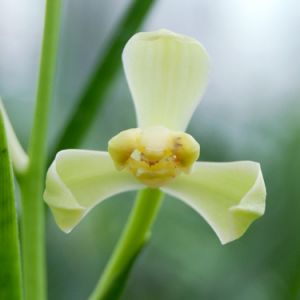
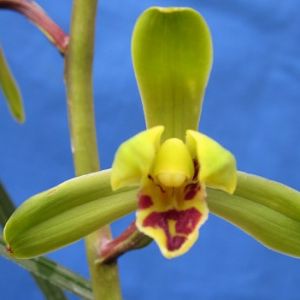
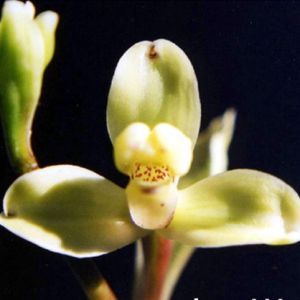
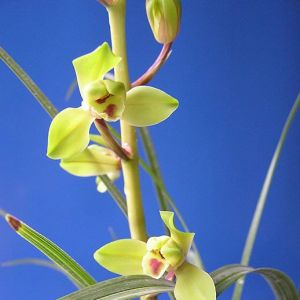
The omoto flower is the small spicate flower produced by the omoto plant (Rohdea japonica), symbolizing good fortune
The omoto flower refers to the flower produced by the perennial evergreen herbaceous plant Rohdea japonica (omoto). Its leaves grow in clumps from the base, broad, thick and upright, staying deep green all year round. Each year in early summer it sends up a scape from the leaf clump, with a dense spicate inflorescence forming at the tip. The flowers are small, mostly pale yellow-green, and it belongs to the type grown mainly for foliage but enjoyed for both flowers and fruit.
Morphologically, the inflorescence of Rohdea japonica is upright, with small flowers densely arranged along the rachis; the overall look is not showy, but it wins on being elegant and distinctive. After flowering it produces small spherical berries, which gradually turn red in autumn and can remain on the plant until winter, the green leaves and red berries setting each other off nicely. In traditional belief, Rohdea japonica symbolizes evergreen vitality and peace, and it is often used as an auspicious ornament for festivals and housewarmings.
For care, Rohdea japonica likes a warm, humid, semi-shaded environment and dislikes direct strong light; it is suited to loose, fertile, well-drained, slightly acidic soil. During the growing season, water by the principle of letting the soil dry between waterings and avoiding waterlogging in the pot; before and after flowering, a suitable supplement of phosphorus and potassium fertilizer can help flowering and fruit set. In winter, reduce watering and let the plant rest fully in a cool environment, making it easier to send up scapes and bloom the following year.
A fairly common problem is failure to bloom, which is mostly related to insufficient light, too much nitrogen fertilizer, or the plant still being too young; you can gradually increase scattered light and adjust the fertilizer ratio. Also note that the sap of Rohdea japonica is somewhat toxic, so it is best to wear gloves when pruning or repotting to avoid the sap contacting the mouth or nose. If there are children or pets at home, place it somewhere hard to reach to prevent accidental ingestion.
Related reading