Characteristics of Compound Powdered Fertilizer and Introduction to Correct Application Methods
Compound powdered fertilizer refers to a powdered fertilizer made by physically mixing and processing two or more single-element fertilizers or compound fertilizers, whose nutrients contain at least two of the three elements nitrogen, phosphorus and potassium. This type of fertilizer has a relatively complete range of nutrients, and a single application can supplement multiple nutrients at the same time; its powdered form dissolves relatively quickly, and its fertilizer effect also takes effect relatively rapidly.
In terms of nutrient composition, compound powdered fertilizer includes nitrogen-phosphorus type, nitrogen-potassium type, phosphorus-potassium type and nitrogen-phosphorus-potassium three-element type, etc., and the specification is generally marked on the packaging by total nutrient content. Compared with granular compound fertilizer, powdered products have a relatively simple processing technique, and after being applied to the soil they have a large contact area with the soil and release nutrients relatively quickly, but they are strongly hygroscopic and prone to caking, so moisture protection is needed during storage and transport.
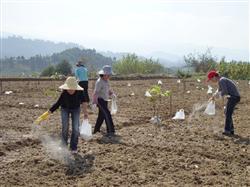
In terms of application, compound powdered fertilizer is mostly used as a base fertilizer, and can also be applied in furrows or holes followed by covering with soil; the amount used should be flexibly controlled according to soil fertility and crop type. Long-term single application of chemical fertilizer easily causes soil compaction and a decline in fertility, so it is best used in combination with organic fertilizer, combining land use with land nurturing. In addition, products formulated with chlorine-containing raw materials such as potassium chloride are not suitable for chlorine-sensitive crops such as tobacco and potatoes, and the nutrient sources should be noted when purchasing.
During storage, it should be placed in a dry and cool place, and used up as soon as possible after opening to avoid moisture absorption and caking that affect the uniformity of broadcasting. During application, do not let it come into direct contact with seeds, so as to avoid burning seeds and seedlings. The fertilizer effect is also affected by factors such as soil conditions, application timing, water management and weather; only by scientifically coordinating all management measures can the yield-increasing effect of compound powdered fertilizer be fully brought into play.
Related Reading