How to Propagate Rubber Plants: Cuttings and Air Layering Both Root Easily
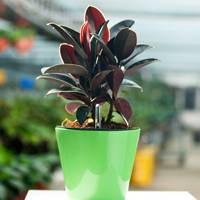
The rubber plant (Ficus elastica) is a common woody foliage plant with thick, glossy leaves and strong adaptability. If you want to grow a few more pots at home or share with friends, propagating it yourself is more than enough. Its commonly used propagation methods are cuttings and air layering; as long as the temperature and humidity are suitable, the survival rate is quite good for both.
Cuttings are the simplest method, generally done in late spring and early summer when temperatures are stable. Cut a healthy, semi-woody branch, keeping two or three buds; the cut will bleed white milky sap, which can be rinsed off with clean water or dipped in plant ash and left to dry before inserting. Insert the prepared branch into loose, breathable sandy soil, place it in a warm, bright spot without direct sunlight, and keep the soil slightly moist; it will soon take root and sprout.
Air layering is suitable for plants with thicker branches that are difficult to root from cuttings. On the chosen branch, make a small ring of bark removal, wrap the wound with moist sphagnum moss or mud, and then cover it with plastic film to retain moisture. Once new roots emerge from the wrapped area, cut the branch off and plant it separately, and you will have a complete rubber plant.
Care after propagation is equally important. Young plants should avoid harsh sun and heavy watering, and should be kept warm when temperatures are low; once new leaves grow, gradually shift to normal care. It is worth noting that the rubber plant's sap is somewhat irritating, so it is best to wear gloves when pruning and taking cuttings, wash your hands promptly after handling, and take extra care if there are young children or pets at home.
Related Reading