Characteristics and Care Methods of the Silk Floss Tree: An Introduction
The silk floss tree (Ceiba speciosa) is a large deciduous tree native to South America, belonging to the genus Ceiba in the Malvaceae family and a close relative of the common kapok tree (Bombax ceiba). It has a tall, upright form with a straight trunk, and its bark is covered with conical sharp spines, making it highly recognizable. It is widely cultivated in warm regions of China such as Guangdong, Guangxi, Fujian and Hainan, and is often used as a street tree and an ornamental garden tree.
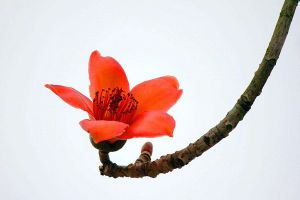
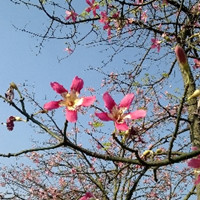
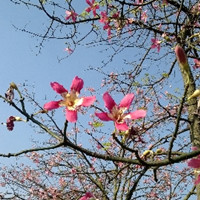
Its most attractive feature is its flowering season. Every year in late autumn and early winter, the silk floss tree enters full bloom, with pink flowers covering the branches, while most of its leaves have already fallen by then, making the tree full of blossoms especially striking, which is why it is also often called the beauty tree. This timing happens to be offset from the spring-flowering kapok tree, and planting the two together can also extend the overall flowering period.
As for care, the silk floss tree prefers a sunny, warm and humid environment and has strong drought tolerance, but it is not cold-hardy, so it should not be planted outdoors in regions where winter temperatures drop too low. It is not very demanding about soil, with loose, fertile, well-drained sandy loam being ideal. Once planted in the ground, it requires relatively minimal management; just make sure the roots are not waterlogged for long periods, and ensure good drainage during the rainy season.
In terms of its uses, the silk floss tree is a popular flowering tree in southern regions, suitable for planting along roadsides, in park green spaces and in courtyards, and its landscape effect is especially striking when it blooms in winter. One thing to note is that its trunk is spiny, so it is best to wear gloves during routine pruning and care, and its planting location should also reasonably avoid places where pedestrians might easily touch it.
Related Reading