Forsythia Flowers: Golden Branches in Early Spring - Characteristics, Care and Uses
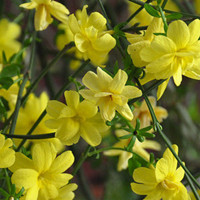
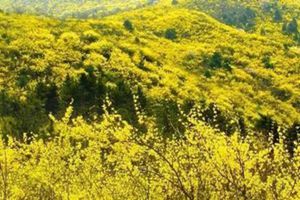
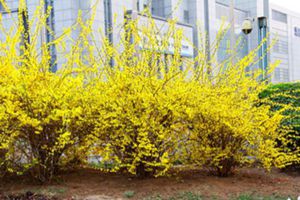
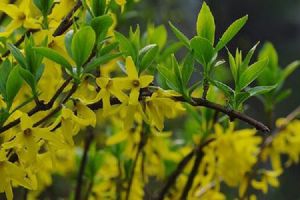
Forsythia flowers are the blooms of the deciduous shrub Forsythia, of the olive family (Oleaceae), and they usually open in early spring before the leaves appear. The flowers are golden yellow, with a corolla split into four petals, borne in clusters on the previous year's branches; when in full bloom the branches are covered in gold with scarcely a leaf in sight, making it a common early-spring flowering shrub.
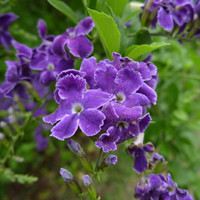
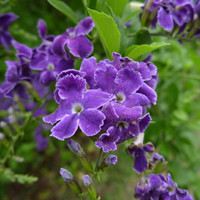
Many people confuse forsythia flowers with Duranta (golden dewdrop), but the two are not the same kind of plant at all. Duranta is an evergreen shrub, its flowers are mostly blue-purple, and its fruits hang in golden strings; both its family and its form differ from forsythia. What people usually call forsythia flowers generally refers to the true forsythia species that blooms yellow in early spring; in addition, the genus Forsythia contains related species such as the Korean golden-bell (Forsythia viridissima), whose flowers are similar in shape and which are also often used in garden display.
As for care, forsythia likes a sunny environment, is cold- and drought-tolerant, and is not fussy about soil; it grows best planted in a sunny spot with good drainage. Because the flower buds are mostly borne on one-year-old branches, pruning should be done after flowering; cutting out dead and overly dense branches and shortening some of them appropriately helps it bloom more the following year. It is also suitable for container growing and for bonsai, as its branches are supple and relatively easy to train and shape with wire.
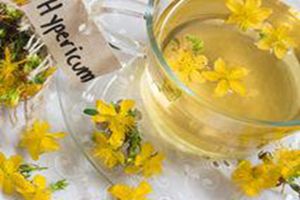
The uses of forsythia flowers are also fairly varied. Its fruit is a traditional Chinese medicinal material, generally believed to have effects such as clearing heat and removing toxins; the flowers can be used to make forsythia tea, and the branches are also good for flower arranging. In gardens it is often planted in groups on lawns, along roadsides, or used as a flowering hedge, and when it opens in masses in early spring it is very striking. Note that medicinal use should follow a doctor's advice, and it should not be taken in large amounts on one's own.
Related Reading