Is Forsythia a Woody Plant? Let's Get to Know Forsythia
Other Names for Forsythia
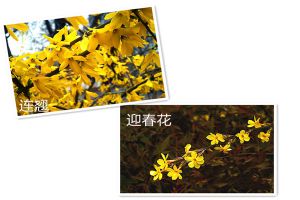
Forsythia, a deciduous shrub commonly known in Hong Kong, China as "a string of gold," is a plant of the genus Forsythia in the family Oleaceae. It is also called golden-bell, lianqiao shell, green forsythia, fallen forsythia, and yellow wonder elixir.
Geographical Distribution of Forsythia
Forsythia is produced in Hebei, Shanxi, Shaanxi, Shandong, western Anhui, Henan, Hubei, and Sichuan. It grows on hillside thickets, under forest canopies or in grassy areas, or in sparse forests of valleys and ravines, at an altitude of 250-2200 m. In China, it is cultivated everywhere except the South China region, and it is also cultivated in Japan.
Growth Habits of Forsythia
Forsythia likes sunlight and can tolerate shade. It prefers a warm, humid climate, is cold-hardy, and has relatively low soil requirements. It can grow normally in neutral, slightly acidic, or slightly alkaline soil.
Experiments show that forsythia can grow normally in areas at an altitude of 250 m-2200 m, with an average temperature of 12.1°C-17.3°C, an absolute maximum temperature of 36°C-39.4°C, and an absolute minimum temperature of -4.8°C-14.5°C. However, it grows better under site conditions with ample sunlight and deep, fertile, moist soil.
Main Values of Forsythia
1. Landscaping: Forsythia blooms in early spring before its leaves emerge. The flowers have a delicate fragrance, and the branches are covered in golden yellow, bright and lovely. It is an excellent early-spring flowering shrub. It is suitable for placement beside houses, by pavilion steps, at wall corners, under hedges, and along roadsides, and is also suitable for planting by streams, beside ponds, among rocks, and at the foot of rockeries. Because of its well-developed root system, it can be planted as a flowering hedge or as a bank-protecting tree.
2. Medicinal plant: The stems, leaves, fruits, and roots can all be used as medicine.
3. Dietary nutrition: Oil for consumption can be extracted from forsythia seeds.
4. Beauty and skincare: After collecting forsythia flowers and unripe fruits, boil them in water for 20 minutes, then use this water to wash your face every morning or before bed. It has good sterilizing, mite-killing, and skin-nourishing effects. With long-term consistent use, it can fade facial chloasma and butterfly-shaped spots and reduce acne and wrinkles.
The Flower Language of Forsythia
It is said that forsythia flowers hide an incredible magical power. They say that if you sleep with a small forsythia pressed under your pillow, you may dream of the appearance of your future husband. Therefore, its flower language is - magic. However, this is not evil witchcraft, but a goodwill magic. People born under the blessing of this flower have a magical and keen insight, an intuitive sixth sense, and will regard the person they fall in love with at first sight as a lifelong partner.
Related Articles
- How to prevent and control pests and diseases on desert rose? Ventilation and dryness are the key to prevention
- The three main causes of cotton diseases: climate, seeds and cultivation
- How to Grow Bird's Nest Fern in Water? Master Temperature, Light, and Water Change Techniques
- A Complete Guide to Identifying and Controlling Common Potted Flower Pests
- Do Carnivorous Plants Need Watering? Pot Watering and Wet/Dry Assessment Methods
- How to manage cotton during the flowering and boll-setting stage? Apply flowering and boll fertilizer heavily, use chemical regulation and pruning to prevent premature senescence
- How to Grow Chinese Hibiscus? Master These 5 Key Points for Blooms All Year Round
- How to Grow Tulips in Water? The Complete Process from Bulb Preparation to Blooming